Flagship Page

The True History of the Hanko

The hanko is not merely a convenient stamp. It is a small cultural form that has carried authority, trust, formality, ownership, responsibility, and social procedure across centuries. In Japan, seals first entered as instruments of the state, then supported courtly documentary order, later became central in warrior documents, spread through commerce and households, helped define modern personal formality, and today are being rethought in the age of electronic signatures.

hanko.co.jp History / Master Guide Reading time 14–18 minutes

The true history of the hanko does not begin with modern registered seals or bank seals. Its deeper origins lie in the East Asian world of states and documents. In China, seals became powerful early as forms of office and authority. In Japan, official seal use begins with the reception of Chinese institutions in the 7th century, then grows through ancient administration, court refinement, medieval rule, early modern commerce, and modern personal registration.

That is why the history of the hanko is not simply a story about a tool. It is also a history of Japanese order, trust, responsibility, and documentary life.

1. East Asian origins: the seal begins as state form

The earliest large stage of seal history lies not in Japan alone, but in East Asia.

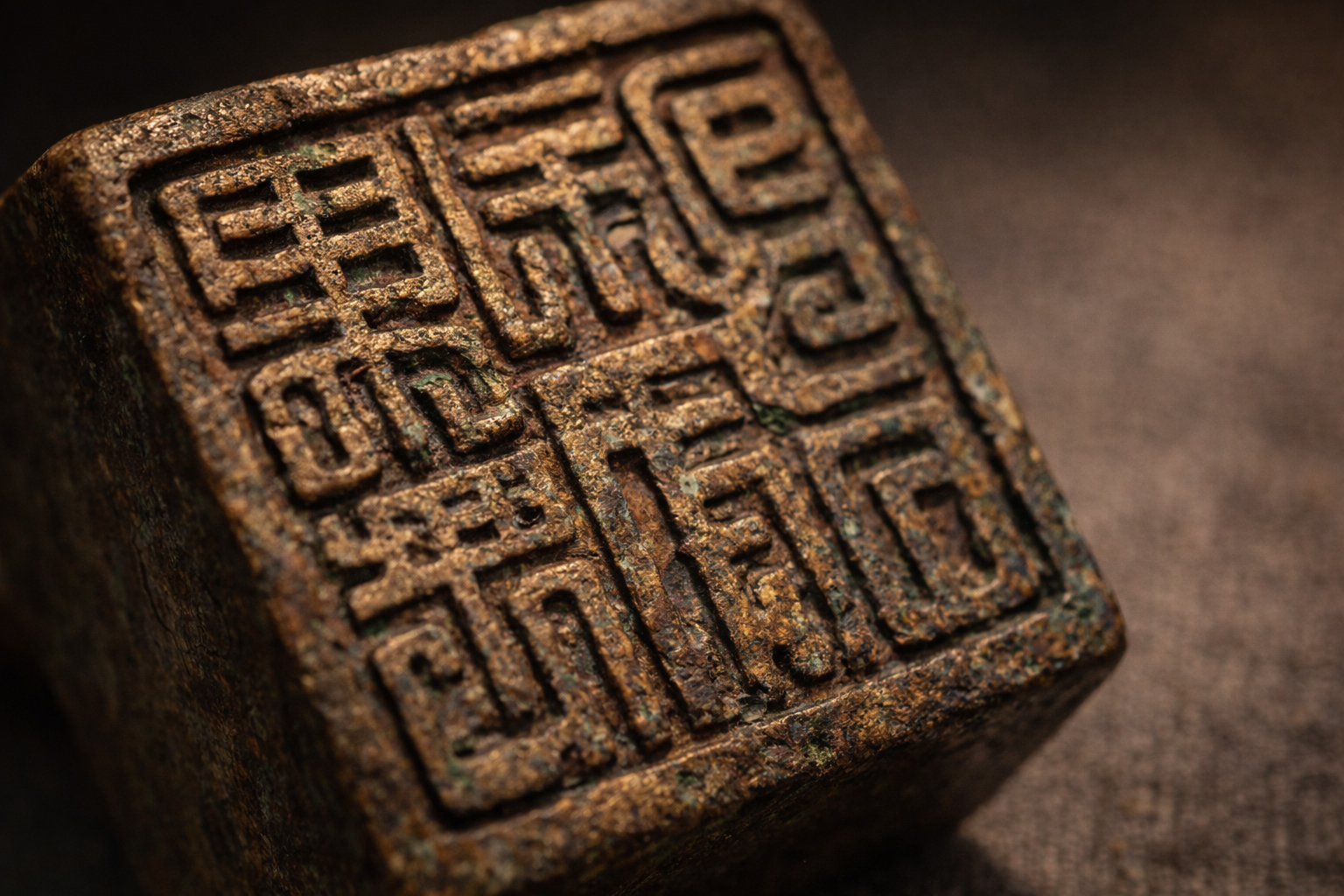
Close-up of an ancient metal seal

China as the matrix

In China, seals developed early as forms of office, rank, authority, command, and documentary legitimacy. They made ownership and rule visible and condensed political order into very small objects.

In this first major phase, the seal is not yet a private convenience. It is a technique of state and document.
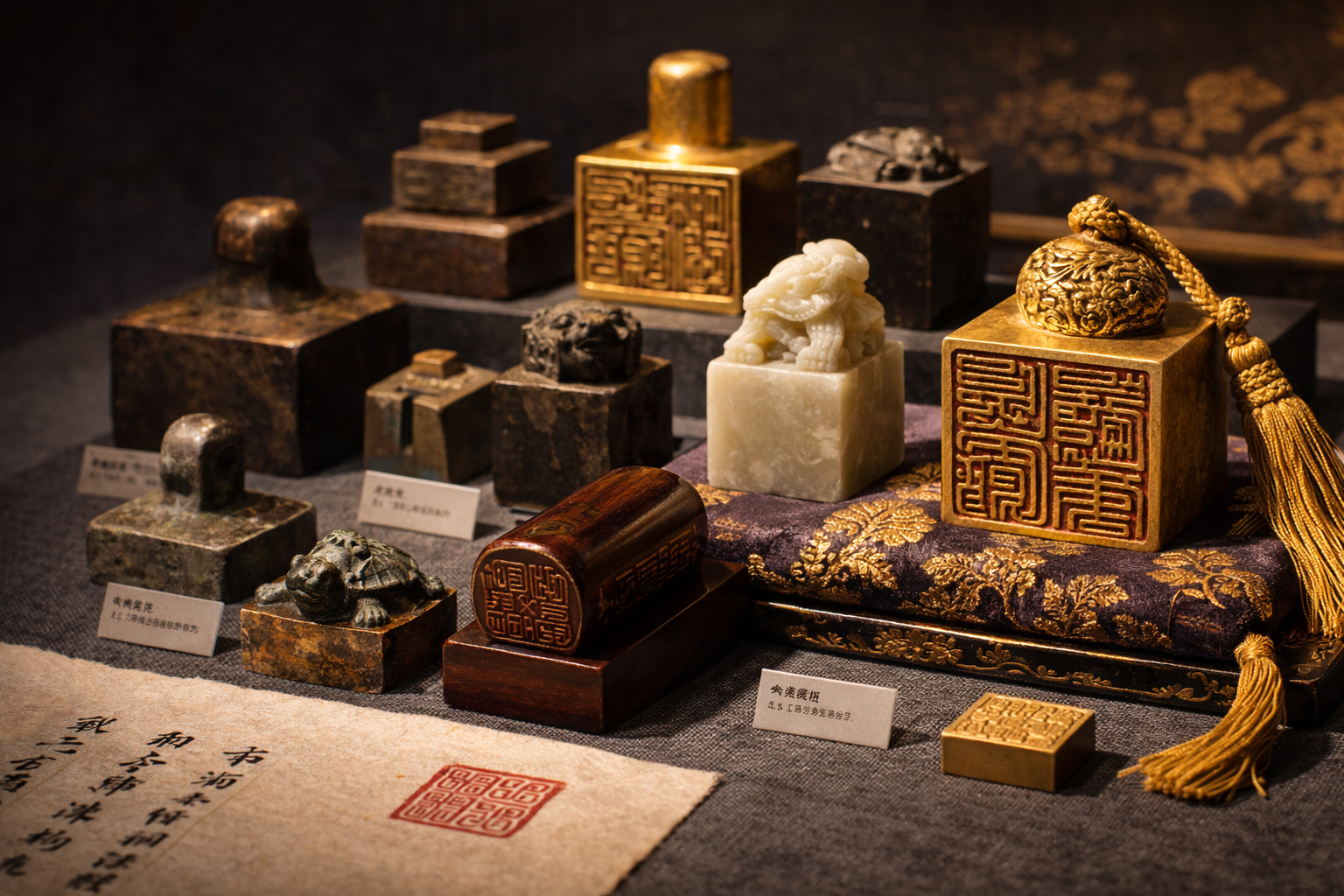
Gallery of seal artifacts

A shared East Asian world

From China, seal culture spread into Japan and Korea. But it did not become exactly the same culture everywhere. Each region developed its own political, documentary, and later social uses.

East Asian seal history is therefore both a shared story and a branching one.

The true history of the hanko begins with the seal as a technology that gives authority and form to documents.
— hanko.co.jp historical note

2. Ancient Japan: seals enter through state formation

In Japan, seal culture begins first on the side of government, not daily personal use.

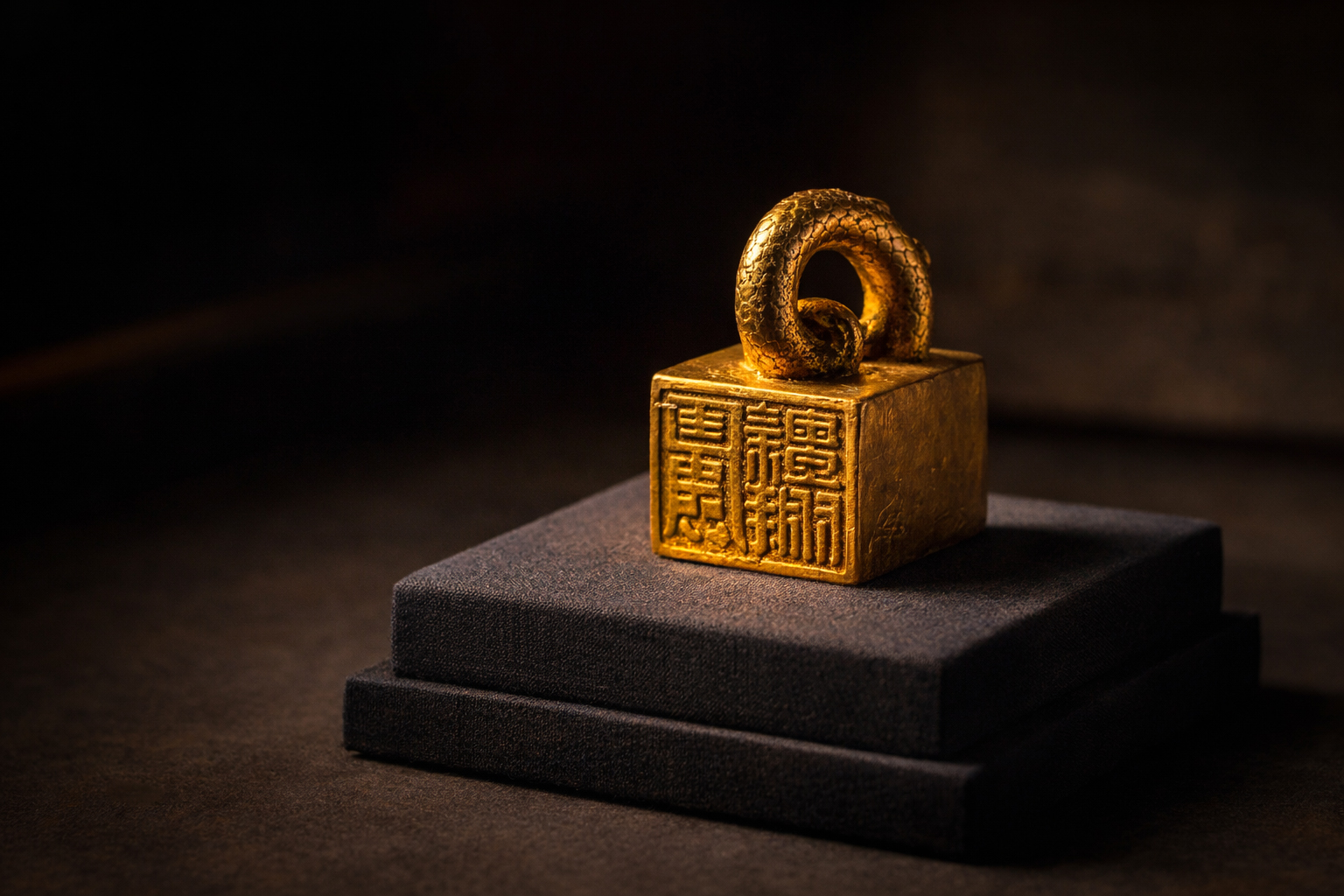
Gold seal treasure image

The symbolic prelude: the Gold Seal of Na

The Gold Seal of Na is not the direct ancestor of later everyday hanko culture. But it is an early and powerful symbol of the idea that authority and political recognition can be condensed into a seal.

Here the seal appears first as a mark of diplomacy and kingship.

Asuka-Nara administrative scene

Asuka and Nara

Official seal use in Japan begins with the reception of Chinese institutions in the 7th century. In Asuka, seals enter as part of state-building. In Nara, they are used more fully in administration, record, storehouses, temples, and the documentary life of the ritsuryō state.

Japanese seal culture thus begins on the side of public order.

Ancient seals are not yet everyday hanko

They first belong to document, record, office, and formal order.

3. From Heian to the medieval age: seals become marks of authority in motion

The institutional seal of ancient Japan changes its meaning in courtly and warrior worlds.

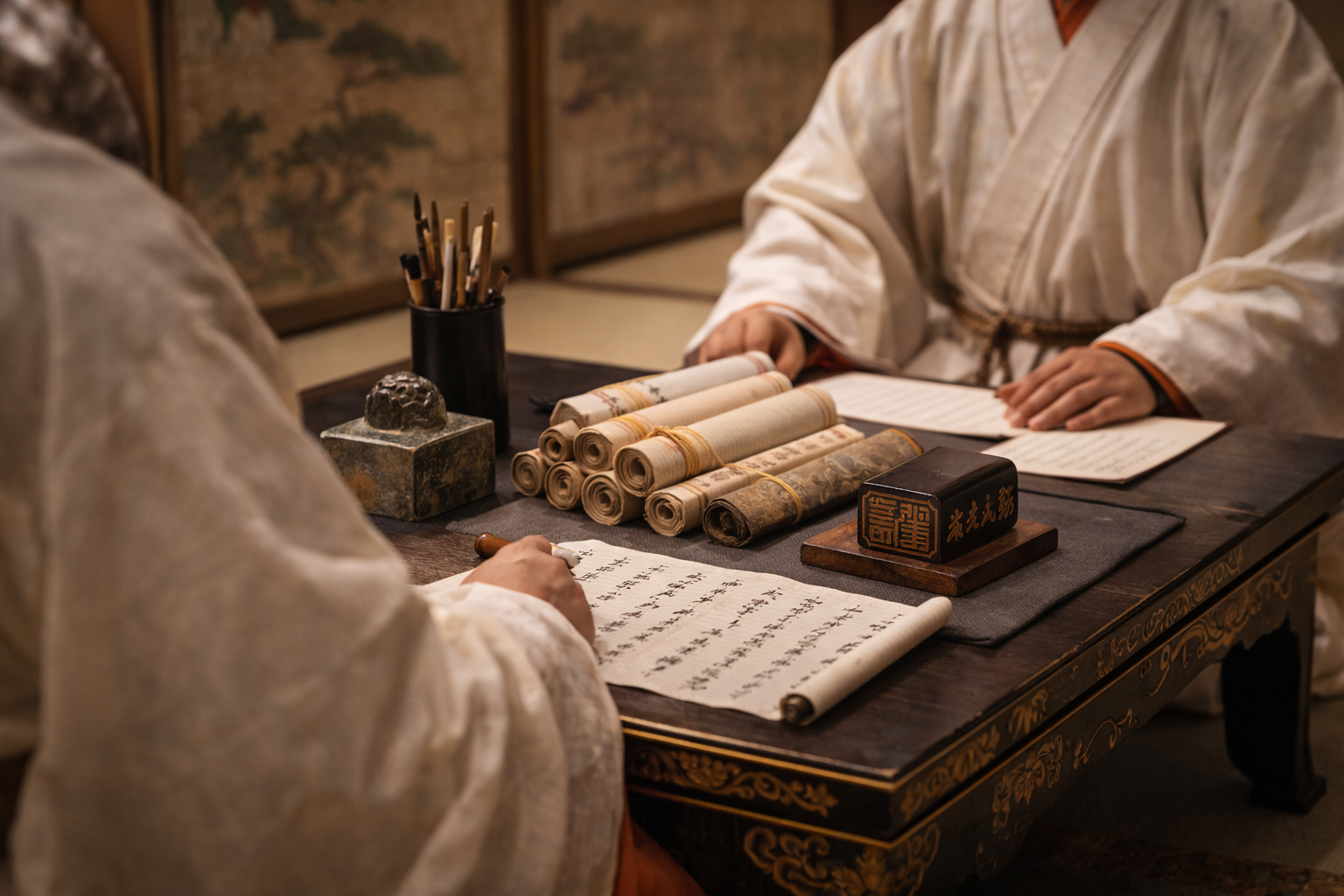
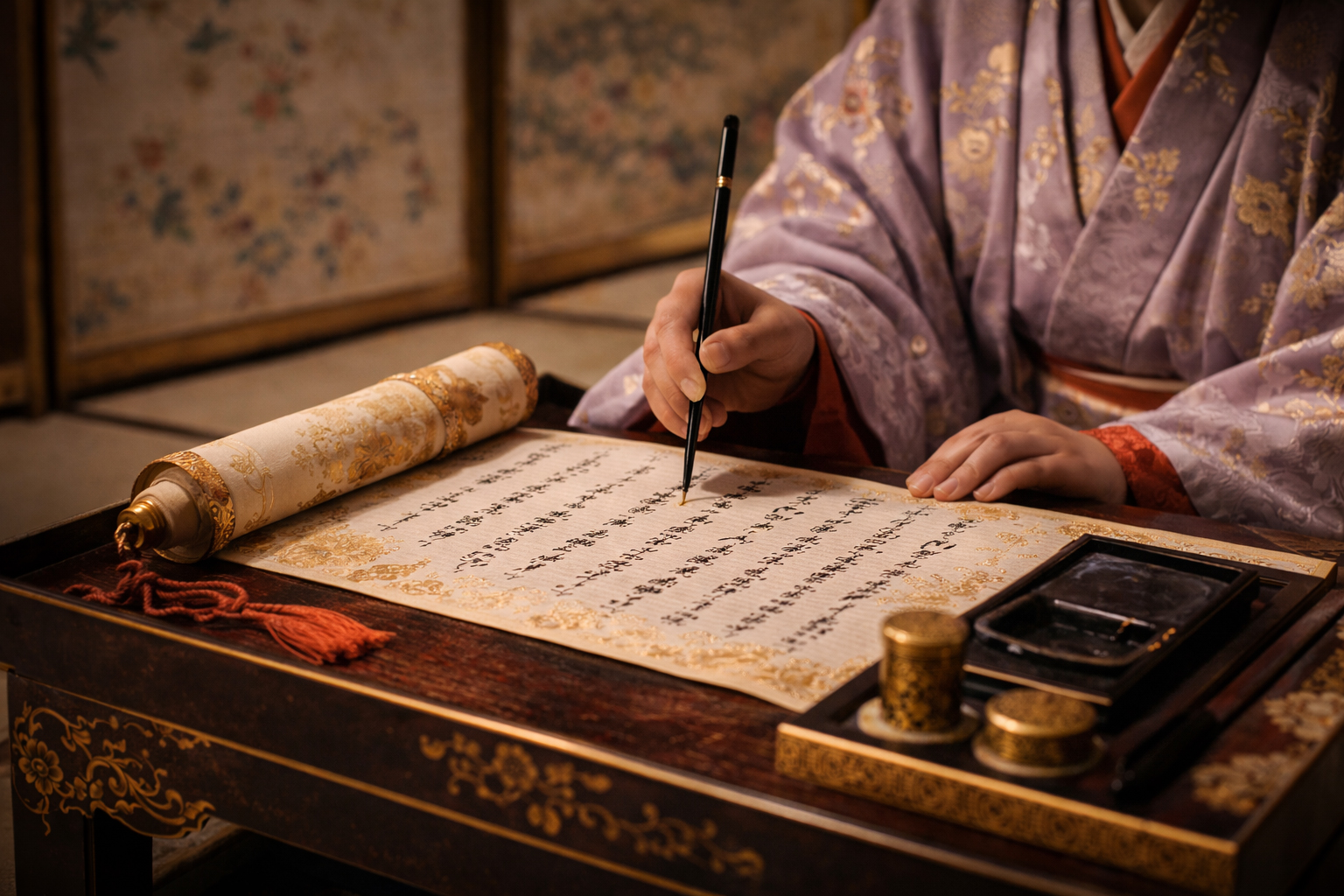
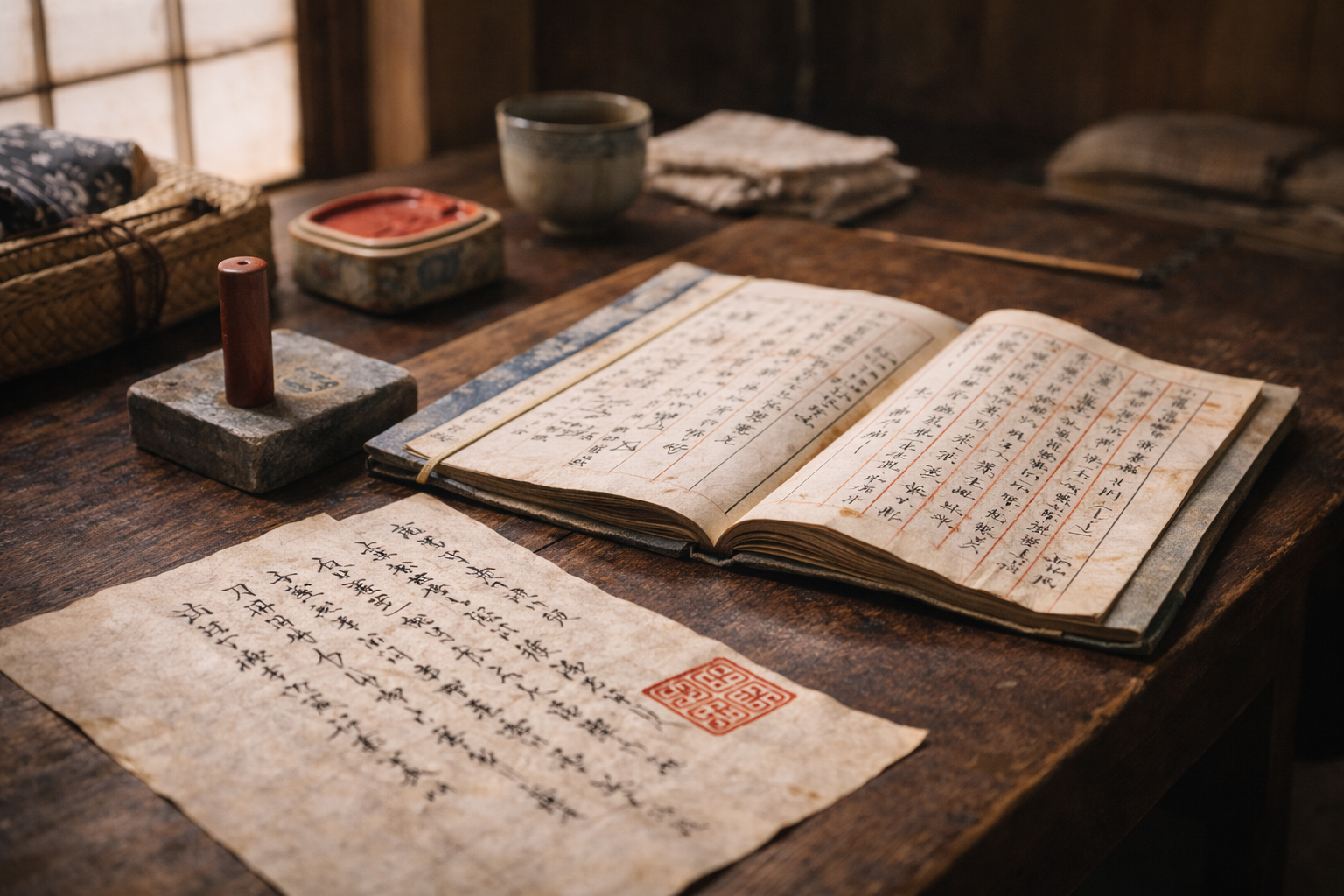
Heian court scroll

Heian: formal beauty and courtly order

In Heian Japan, the seal belongs to court culture, correct documentary form, and refined writing. It helps complete documents properly within an ordered world of rank, ritual, and aesthetic finish.

The seal here is quiet, formal, and deeply tied to courtly document culture.

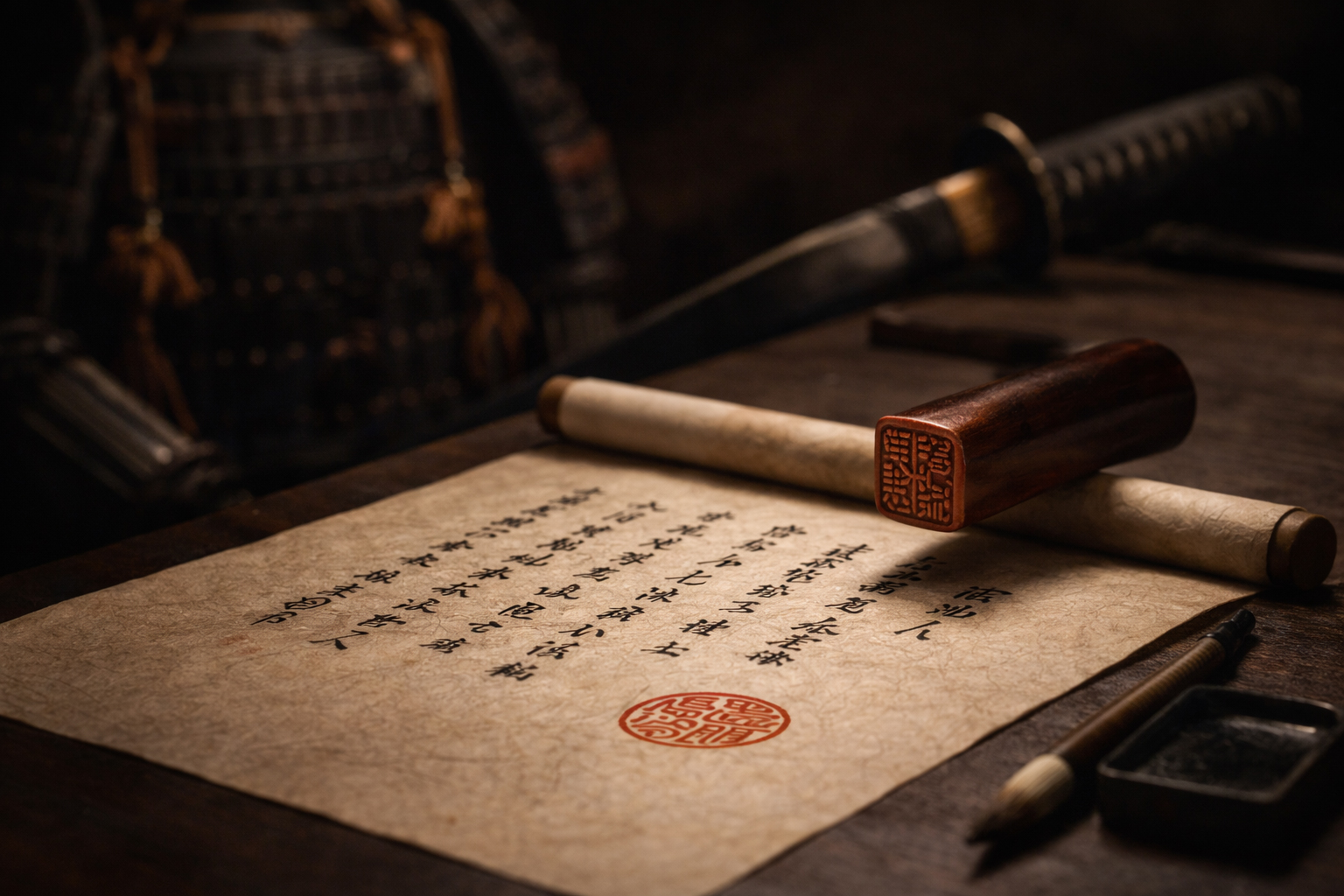
Samurai document with seal

Kamakura, Muromachi, Sengoku

In medieval Japan, the seal becomes increasingly important in warrior documents. In Kamakura it supports emerging warrior administration; in Muromachi it belongs both to documentary practice and artistic seal use; in Sengoku it becomes a sharp visible form of command, guarantee, land right, and political force.

The seal now moves from quiet form into active authority.

4. Edo: the seal spreads through society

The Edo period marks one of the great turning points, when seals move far beyond the world of rule.

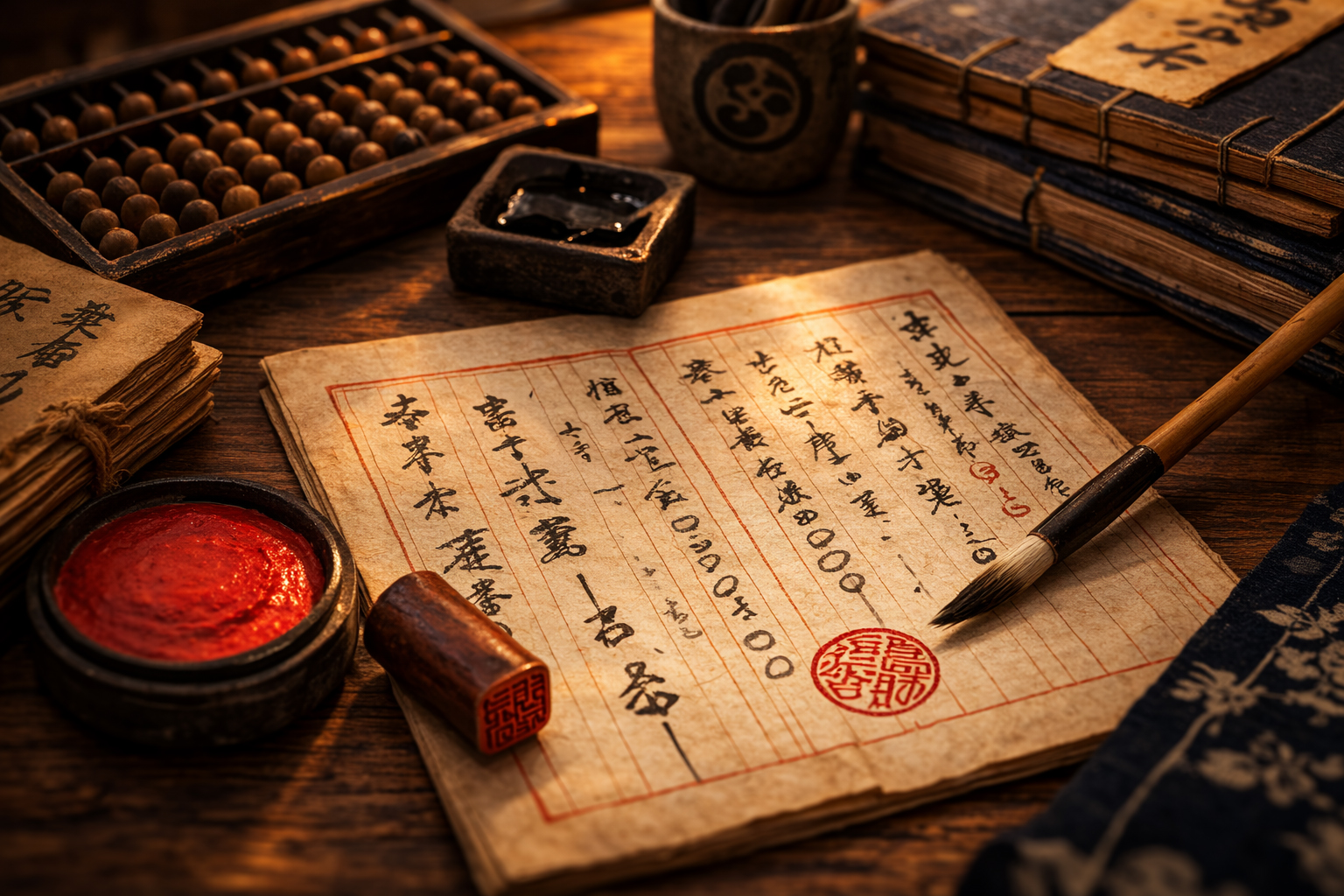
Edo merchant ledger

Merchants, ledgers, receipts, trust

In Edo commercial life, seals become part of repeated transactions, receipt, ledgers, and visible continuity of responsibility. A recurring seal mark helps make trust legible.

The seal is no longer only a mark of command. It becomes a practical social instrument.

Family desk with seal

The seal enters the household

A seal culture becomes truly broad only when it enters the home. In Edo Japan, seals begin to be kept, taken out, and used as ordinary tools of formal domestic life.

Here one of the foundations of later everyday Japanese hanko culture is formed.

The great transformation of Edo is that the seal moves from a sign of power to a sign used across society.
— hanko.co.jp historical note

5. Meiji, Taisho, Showa: the seal becomes personal formality

In modern Japan, seals are reorganized around personal identity, institutional responsibility, and mass paperwork.

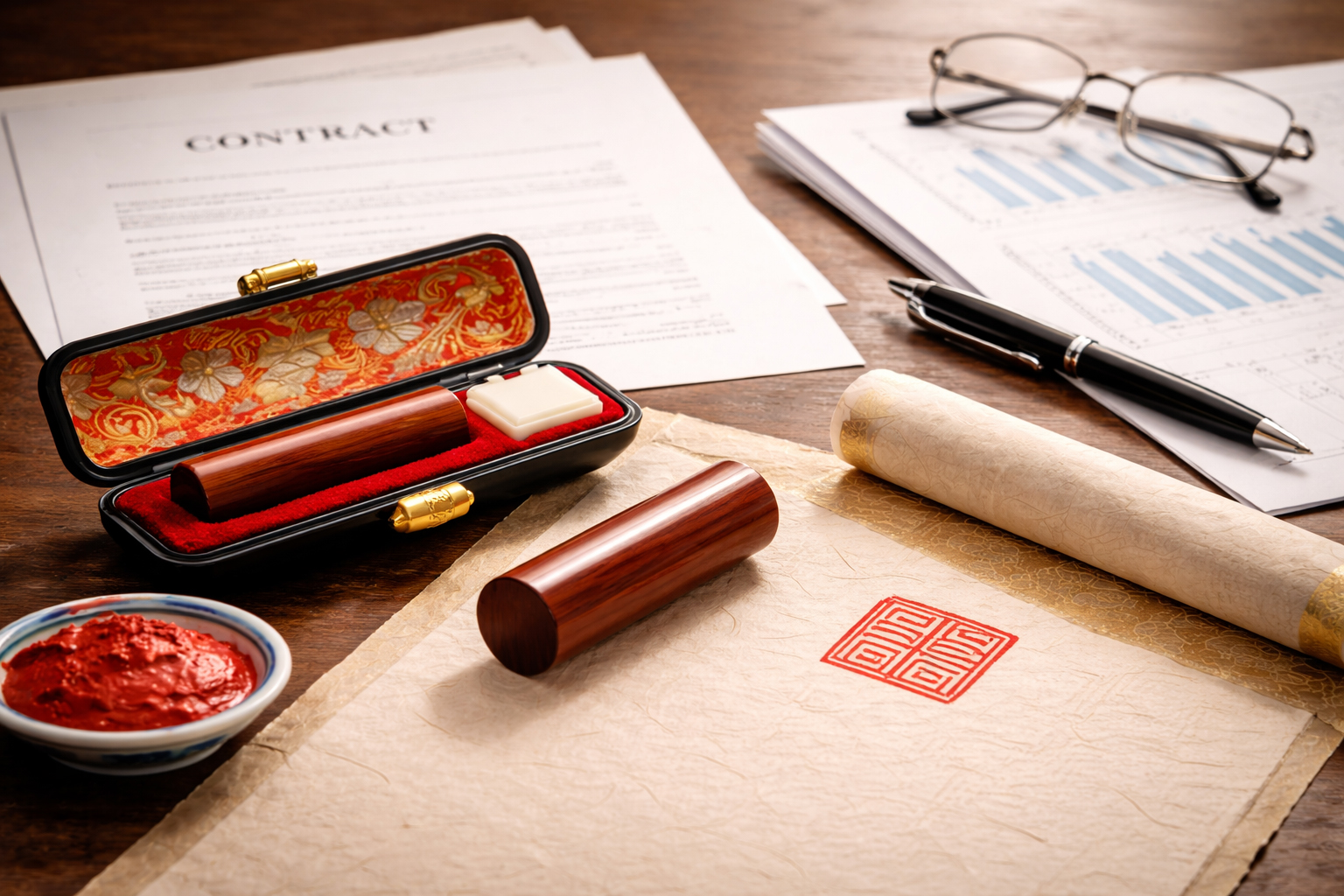
Formal contract desk with hanko

Meiji: the modern personal seal

With registries, contracts, companies, property systems, and banking, the seal becomes a major instrument of personal formal validity. The hanko now helps connect the individual to modern institutions.

At this stage, the seal becomes one of the standard forms of modern Japanese personhood.

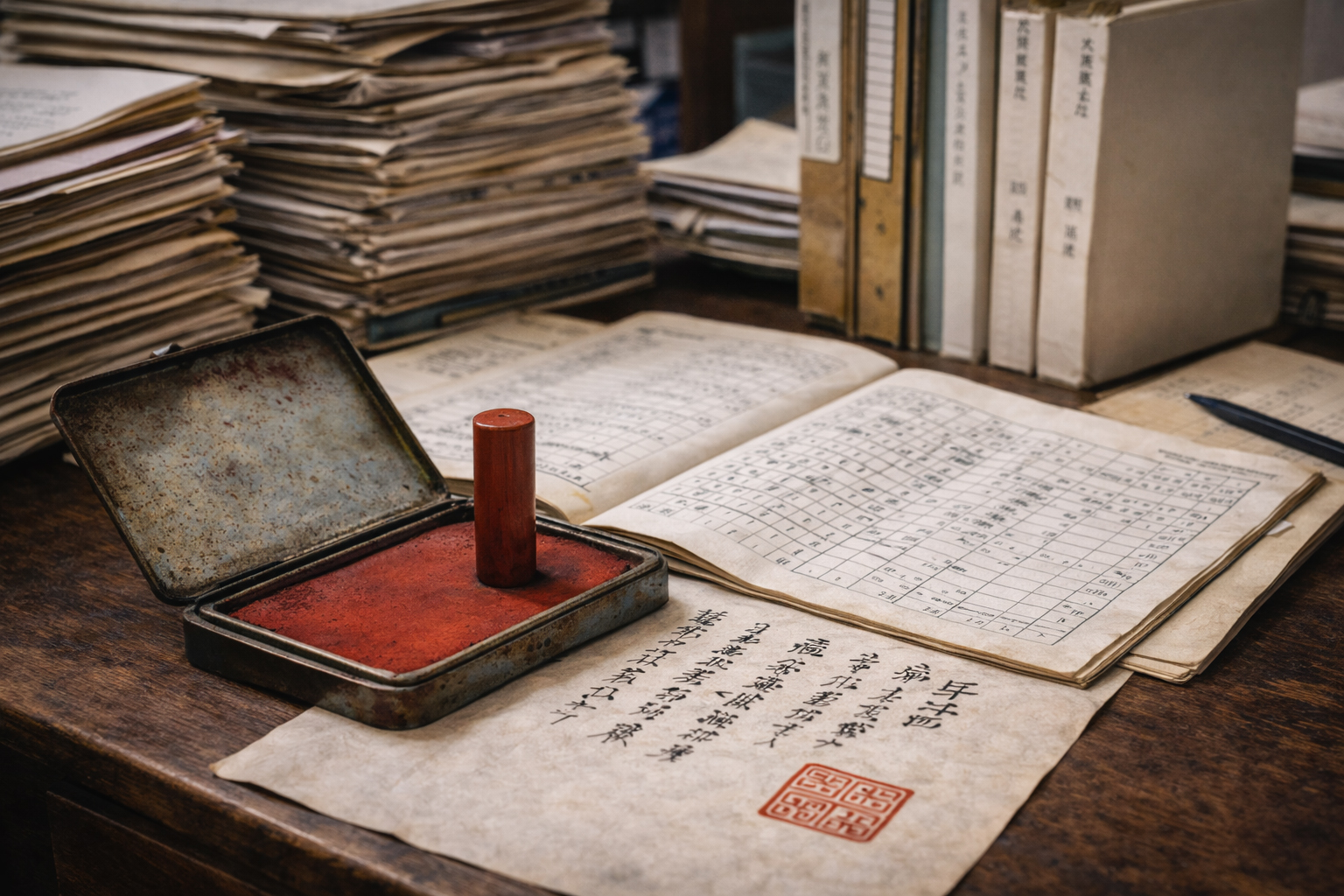
Showa paperwork with hanko

Taisho and Showa: office, bank, home

In Taisho and Showa Japan, the seal becomes deeply familiar in office circulation, approval chains, banking, registered seals, ordinary seals, and household paperwork. In postwar Japan especially, the hanko becomes central to the feeling of something being properly done.

It is now one of the most ordinary symbols of formal Japanese life.

Modern Japan completes the movement from state seal to personal seal

Yet behind that ordinary familiarity lies a very long institutional and cultural history.

6. Today: does the hanko end in the age of electronic signatures?

The history of the hanko is not over. It is being challenged and translated into new forms.

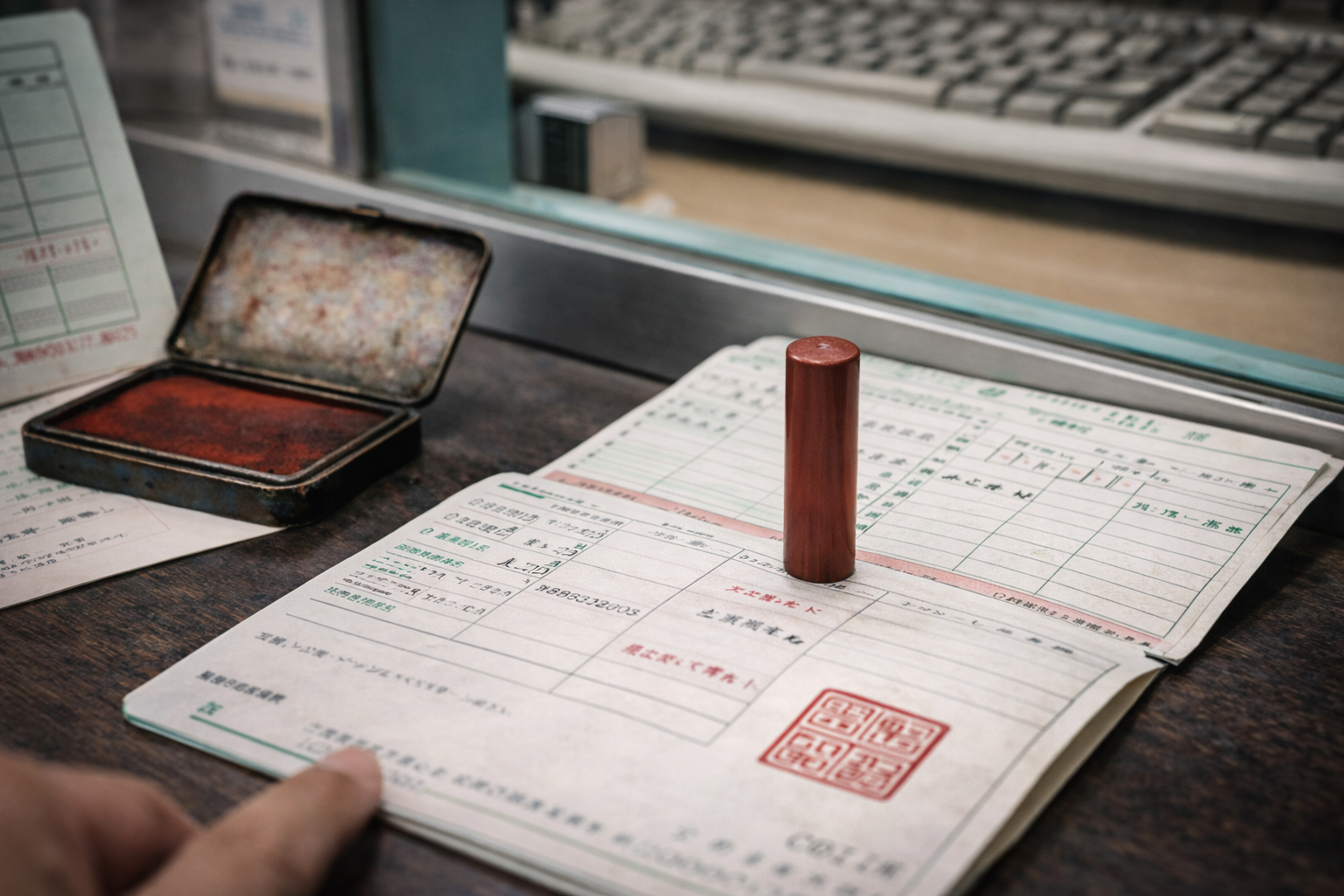
Bank seal scene

What still remains

Registered seals, bank seals, property transactions, and institutional paperwork still preserve spaces where the hanko carries formal weight. It also continues to carry a feeling: that a person has acknowledged, accepted, and taken responsibility.

Its force is therefore not only legal or administrative, but cultural and psychological.

Bridge between traditional and modern paperwork

Electronic signatures: continuity and break

Electronic signatures do not simply erase the hanko. In another sense, they inherit the older problem the hanko long addressed: how to formalize trust.

The medium changes, but society’s need for visible, recognized forms of responsibility remains.

The true history of the hanko in one sentence

The hanko is one of Japan’s long cultural forms for condensing authority, trust, record, and responsibility into something small.

The major arc

  • It begins in the East Asian world of state and document
  • It enters Japan through ancient state formation
  • It is refined in court culture
  • It intensifies in medieval warrior documents
  • It spreads socially in Edo
  • It becomes personal formality in modern Japan
  • It is now being reworked through digital trust

Why it became so strong in Japan

  • It was visually clear
  • It gave documents a sense of completion
  • It showed authority and responsibility at once
  • It adapted to state, company, and household alike
  • It was supported by both institution and aesthetic form

Conclusion

The true history of the hanko is not the history of a quaint old habit.

It is the history of a cultural form born in the state civilizations of East Asia, received into Japanese state formation, deepened through warrior rule, widened through commerce and household life, completed in modern personal institutions, and now tested again in the digital age.

The hanko is small. But its history touches the history of Japanese order, trust, responsibility, and aesthetic form itself. To follow the history of the hanko is therefore to see another face of Japanese history.

Related pages

This is the master entry point. From here, readers can branch into the major periods and themes.