History Feature

Seals in the Sengoku Period

In the Sengoku period, seals were less the quiet marks of routine confirmation and more the visible signs of moving power. Castles fell, alliances shifted, land rights were reassigned, and bonds of service had to be restated. In such a world, a seal helped show at once whose will, whose authority, and what degree of formal force stood behind a document.

hanko.co.jp History / Feature Reading time 10–13 minutes

The Sengoku age was not an age of stable order. Local power shifted, lords rose and fell, castles changed hands, and networks of retainers were constantly reorganized. In such a society, documents mattered intensely.

And because documents mattered, visible signs of authority mattered as well. The seal was not decoration. It was a compact device for making command, guarantee, acknowledgment, and political reality legible on paper.

Sengoku documents had to be believed quickly

In a time of war and shifting loyalties, documents had to be read, obeyed, feared, and trusted without delay.

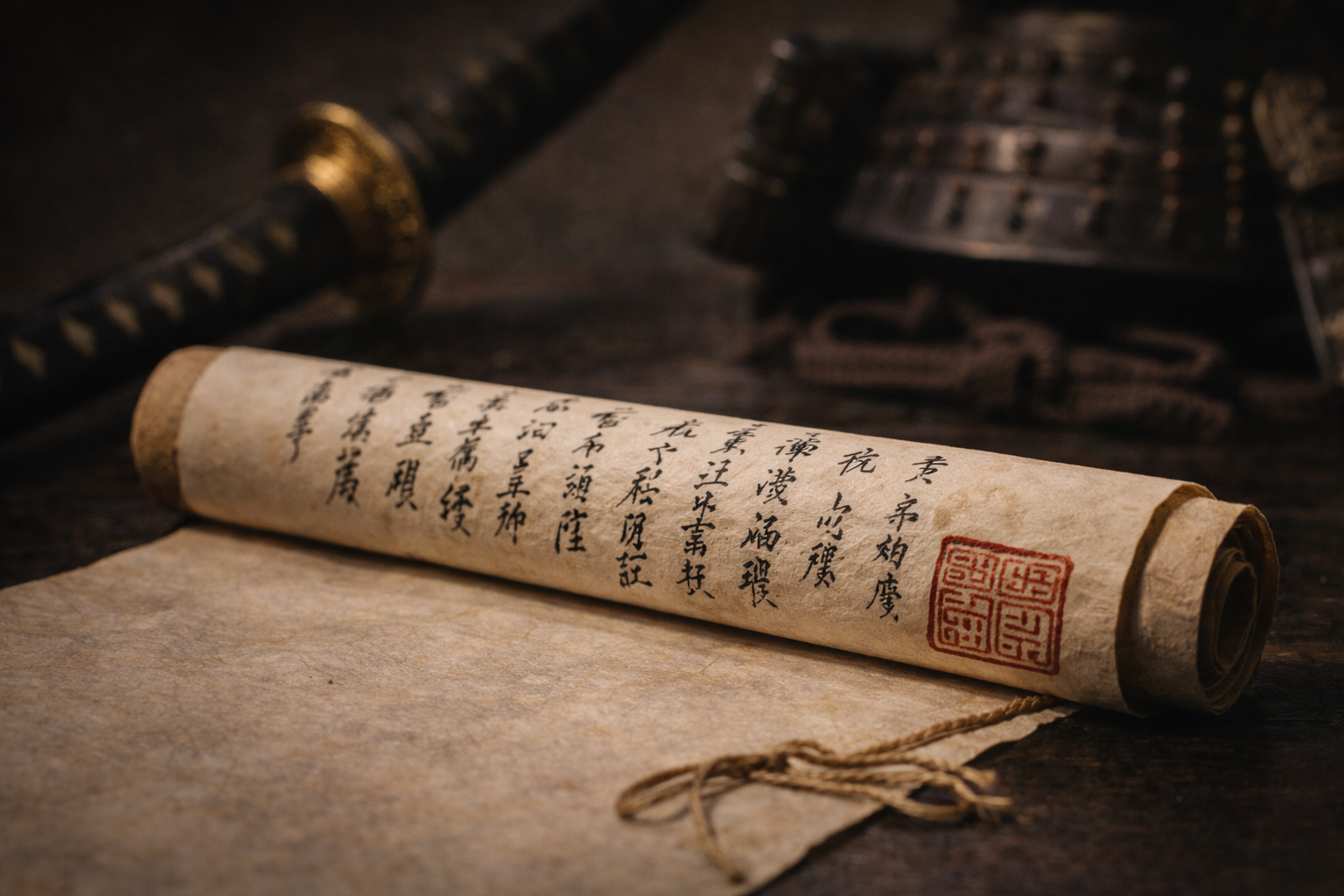
Military order scroll with seal

The visual force of command

In Sengoku orders and directives, the seal mattered alongside the written content. Before every line was read, the document had to show who stood behind it.

The seal served as a powerful visual signal. A small impression could convey the weight of military and political authority at once.
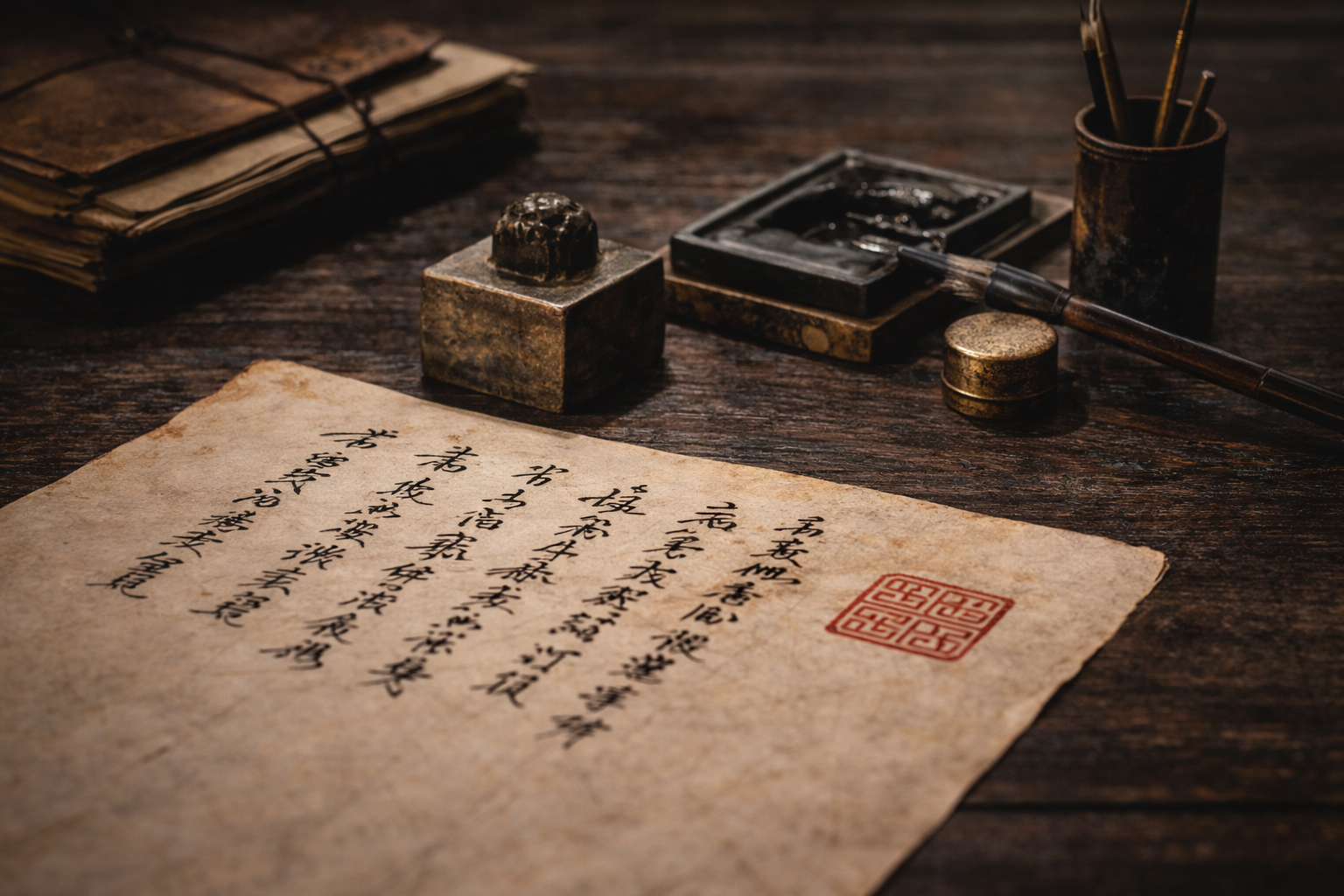
Samurai-era document with seal

Showing whose order it was

What mattered in a warlord document was not only whether its words were clear, but whether it came from the right source of power. The seal made that source visible in compact form.

In that sense, the seal did not merely authenticate the document. It helped sustain the force of command itself.

The seal in the Sengoku age was not primarily a gentle mark of routine. It was a way of making moving power visible on paper.
— hanko.co.jp historical note

The world of grants, guarantees, and vassalage

Sengoku documents were not only about commands. They were also about giving, recognizing, and binding.

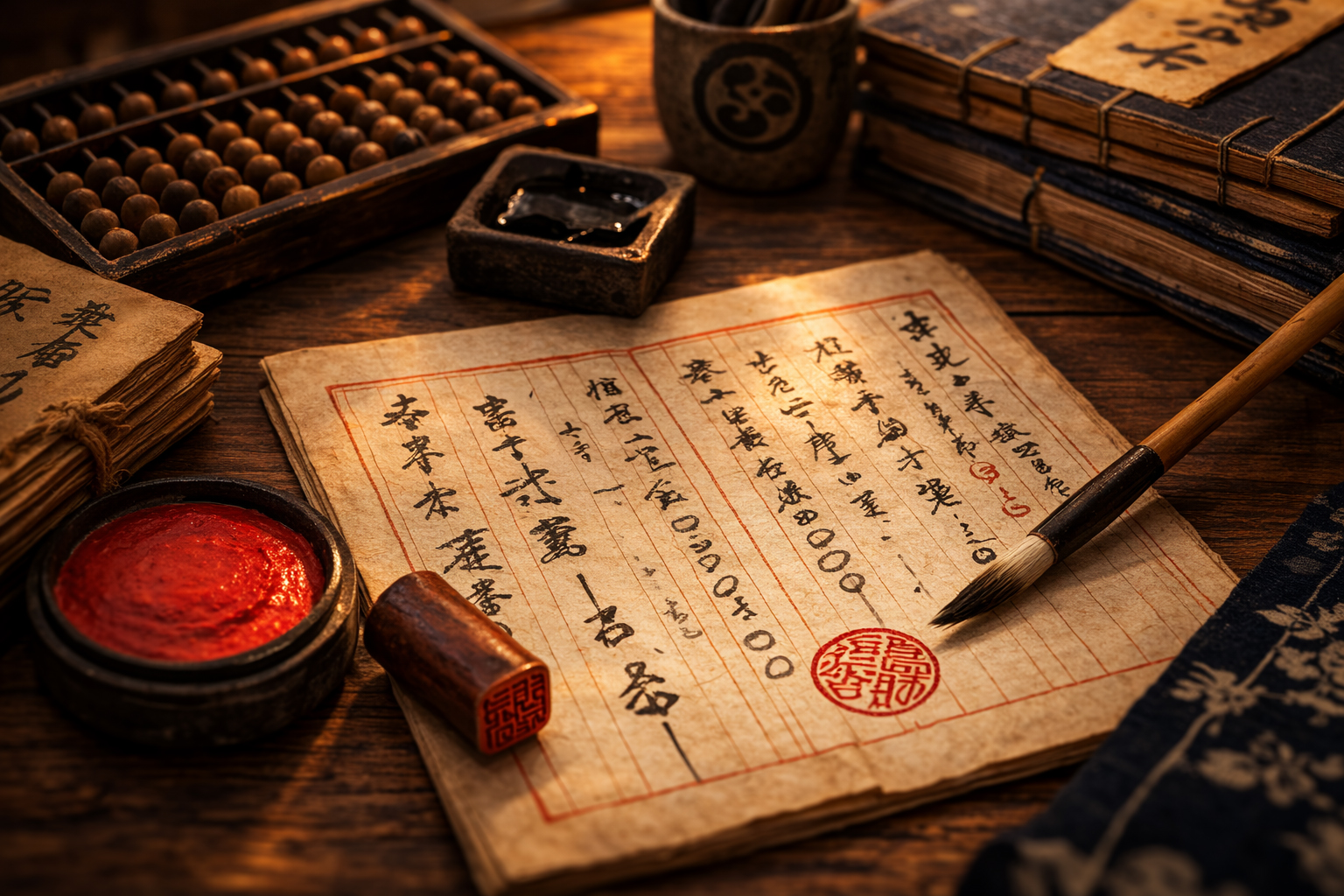
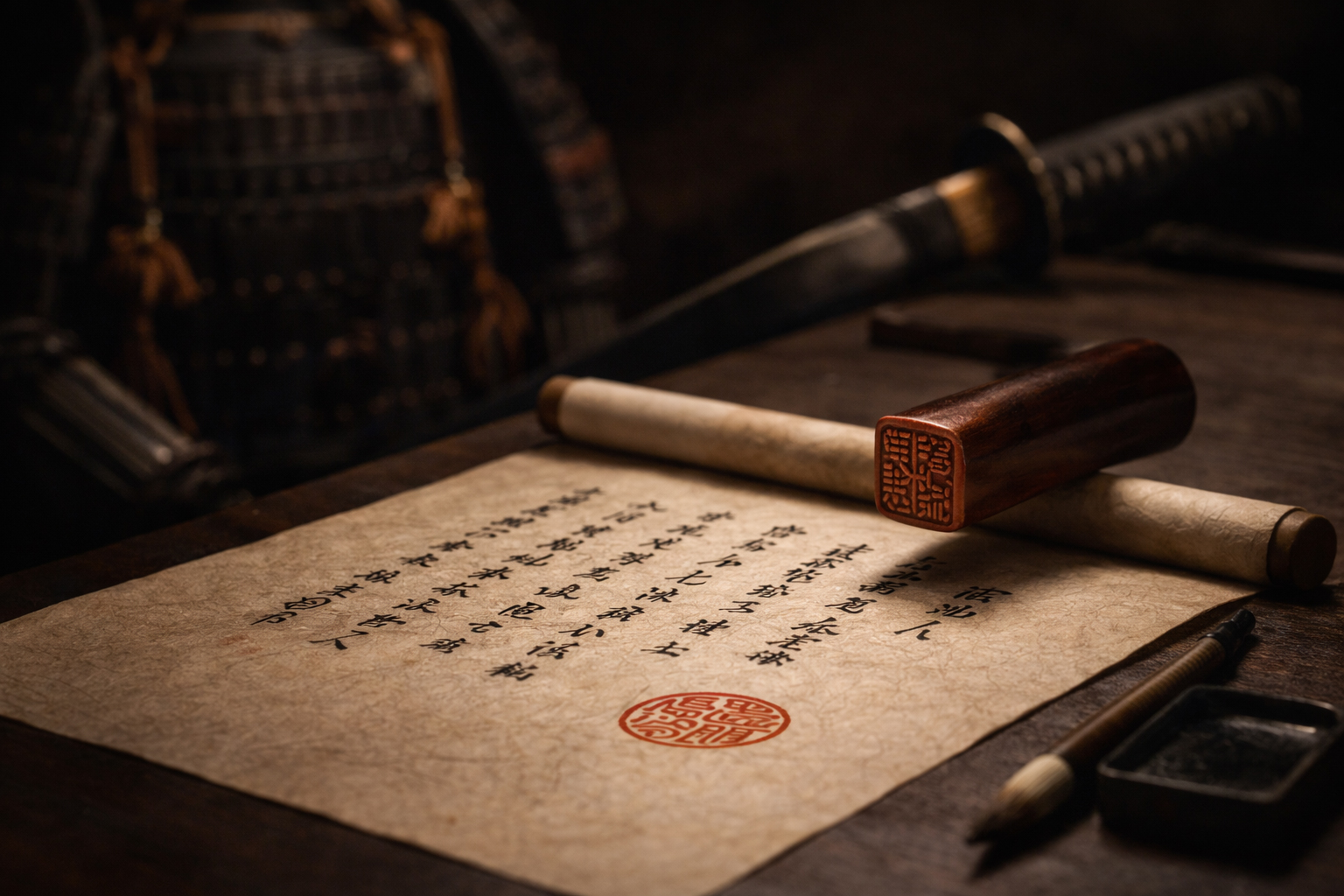
Medieval document table with seal and writing tools

Land rights and guarantees

In Sengoku society, guarantees of land, stipends, and rights were political acts, not mere records. To grant or confirm such rights was to make power visible in practical form.

The seal showed that such guarantees were backed by more than words. It made the force behind them legible.

Seal impression on a document

Clarifying bonds of allegiance

Bonds of service in the Sengoku age were not always stable. Battle, strategy, and shifting authority could alter who served whom and under what conditions.

A seal helped make such relations more explicit. With it, a document carried political reality more forcefully.

The seal was not only a mark of ownership, but of reach

It said not merely “this belongs to someone,” but “this person’s authority extends here.”

The world of red-seal documents

In the late Sengoku and early Azuchi-Momoyama context, red-seal documents carried especially strong visual authority.

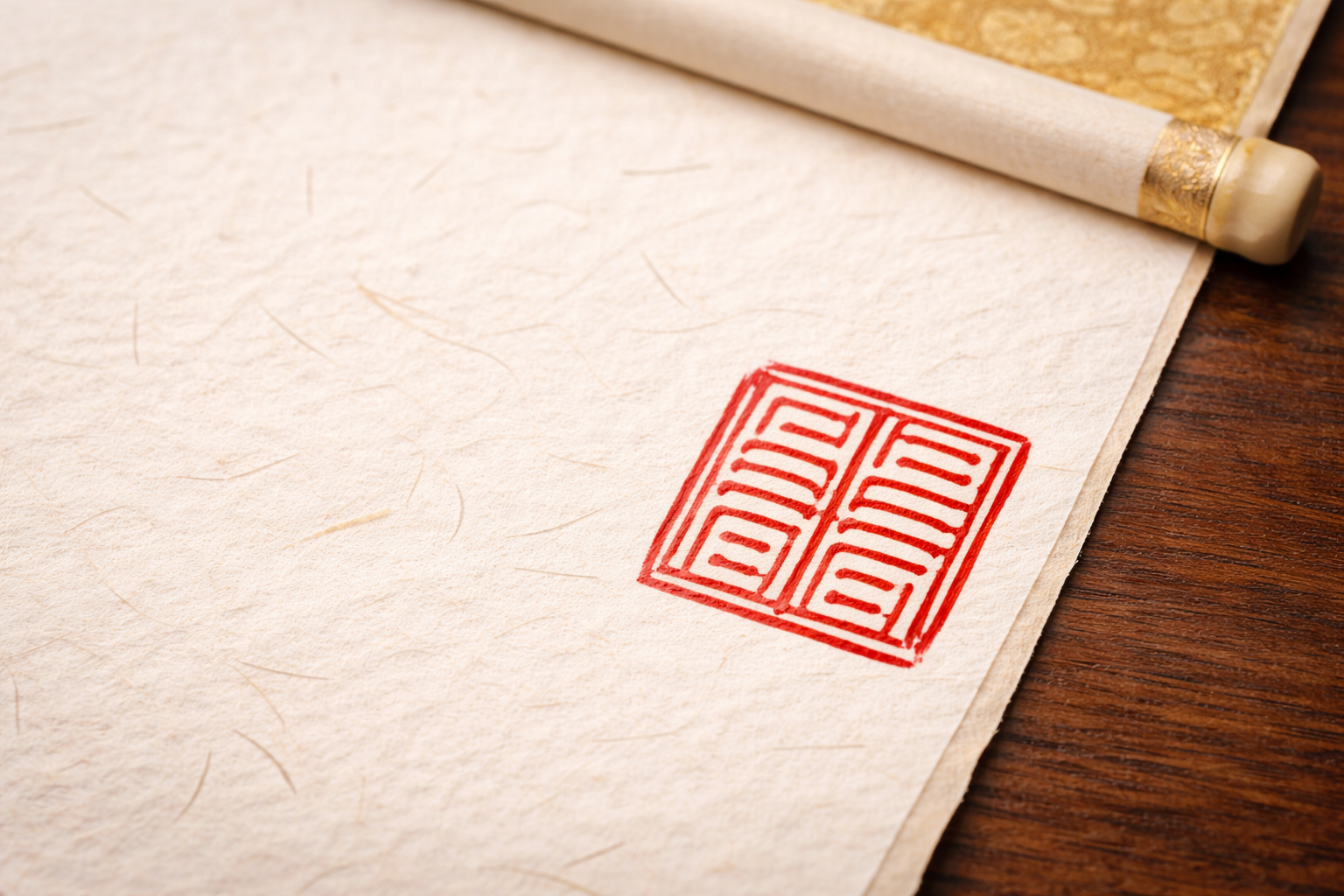
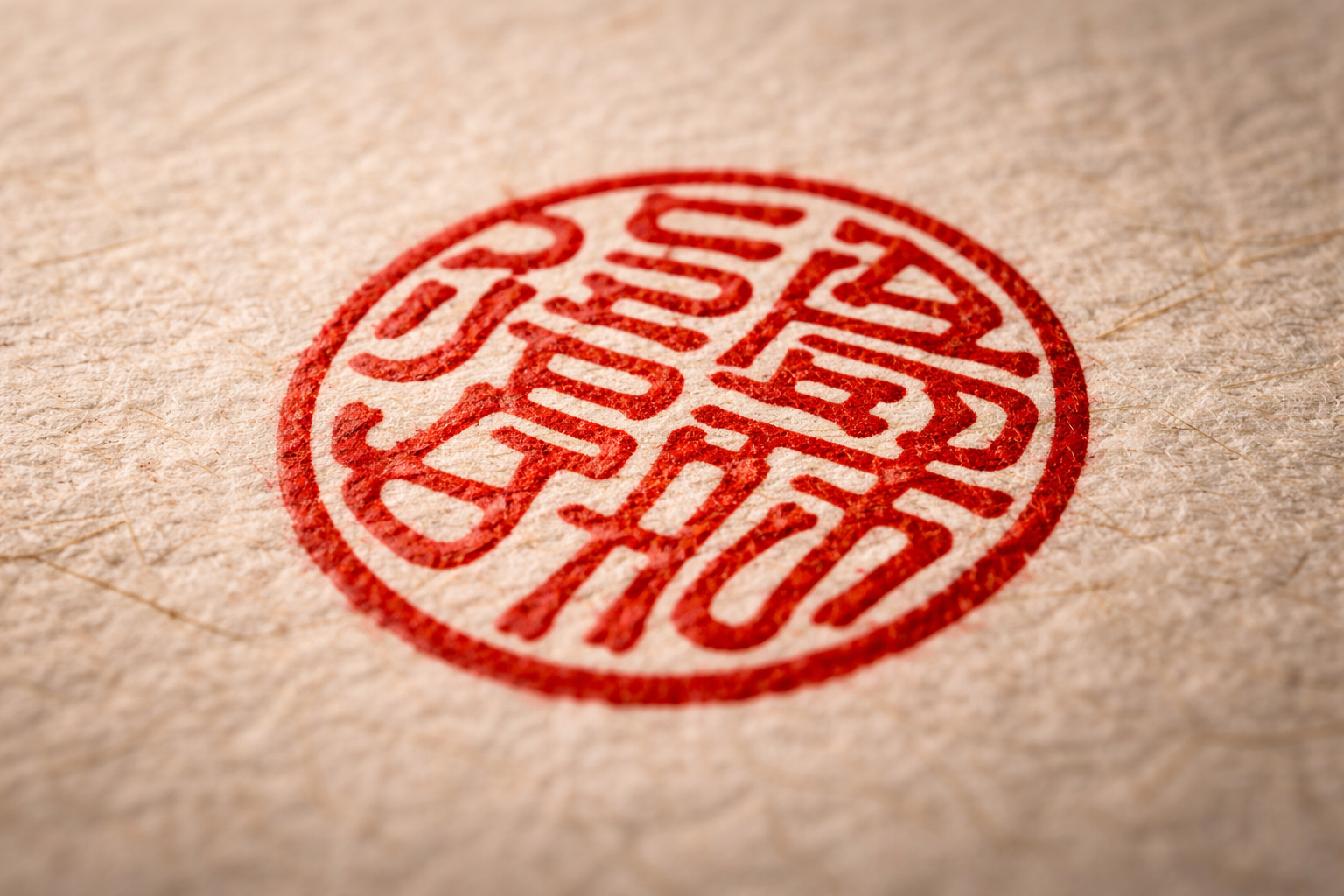
Close-up of vermilion ink paste

The force of vermilion

A red seal does more than accompany text. It draws the eye and marks the document’s center of force at once.

One reason red-seal letters remain visually striking is that color and form work together to present authority with unusual clarity.

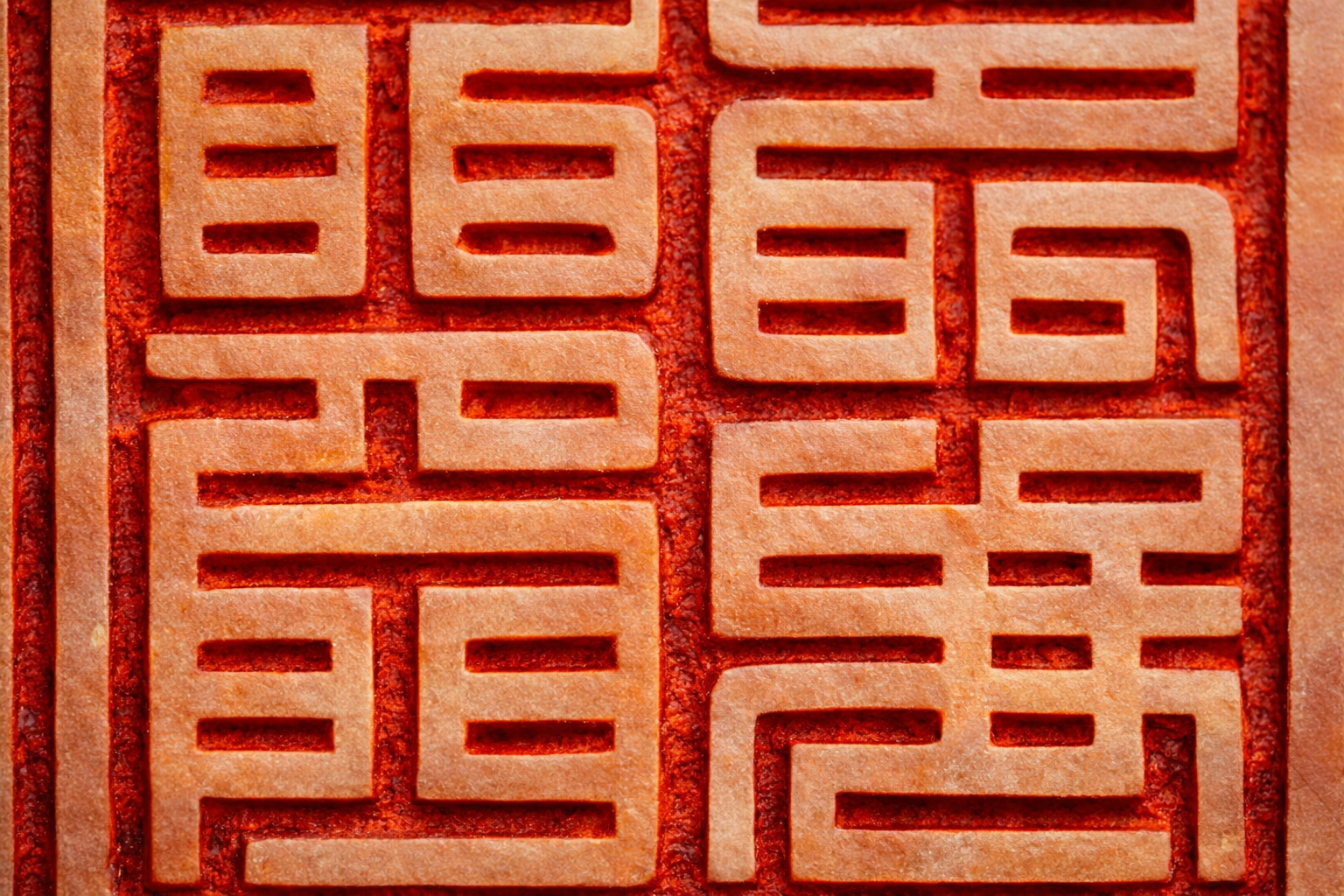
Close-up of carved seal script

More than a name

A seal can stand in for a name, but in Sengoku documents it often did more than that. It presented not only the will of an individual, but the formal stance of a ruler or lord.

In this sense, the seal was not simply a substitute for a signature.

Why seals worked so powerfully in the Sengoku age

The more unstable an age becomes, the more visible forms of authority tend to matter.

Strengths of seals in the Sengoku period

  • They showed at a glance whose order a document carried
  • They gave documents immediate visible authority
  • They reinforced grants and guarantees of rights
  • They clarified allegiance, alliance, and relations of rule
  • They matched the urgency of a tense political world

Later influence

  • They remained central to warrior-document form
  • They fed into Edo red-seal and official-document culture
  • They strengthened the idea that a stamped mark embodied authority
  • They left a formal legacy for later administrative and commercial writing

How should we read Sengoku seals?

Sengoku seals should be read less through convenience than through urgency, rule, and the hard realities of political force.

In later periods, seals became more familiar in commerce, households, and routine paperwork. But in the Sengoku age, they remained closely tied to active rule, command, grant, and the political shape of power.

They helped issue orders, confirm land rights, test loyalty, and inscribe the boundaries of authority onto paper. That is why Sengoku seal culture carries a distinct tension and weight compared with later forms of hanko use.

Related pages

This page connects medieval warrior-document culture to Edo social expansion and the broader history of trust.