History Feature

How Seals Moved from State Power to Daily Life

Seals in Japan did not begin as familiar household objects. At first, they were closely tied to office, authority, command, and formal procedure. Over time, however, they spread into warrior documents, merchant ledgers, household paperwork, banking, and contracts, eventually becoming part of ordinary daily life. This page traces that long movement.

hanko.co.jp History / Feature Reading time 10–13 minutes

Many tools in society have layered histories. What begins as the possession of rulers or institutions gradually spreads outward into regions, organizations, markets, and homes. Seals followed exactly this kind of path.

In Japan, the seal first carried weight as a sign of authority. But because it was useful, legible, repeatable, and well suited to formal procedure, it moved steadily into broader social life. Over time, a mark once associated with state power became a mark of everyday reliability.

It began as a sign of the state

The earliest force of the seal lay less in personal convenience than in making institutional legitimacy visible.

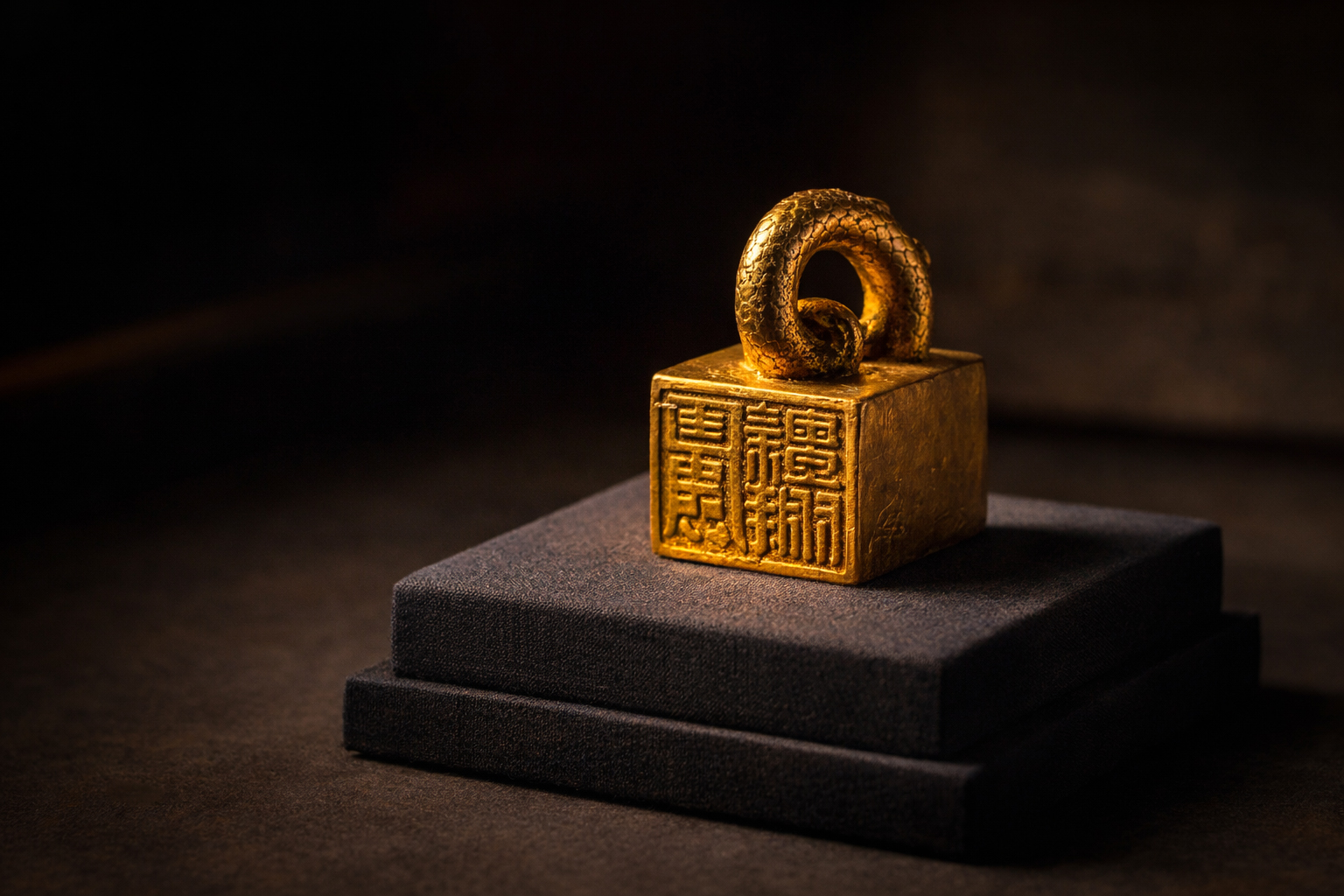
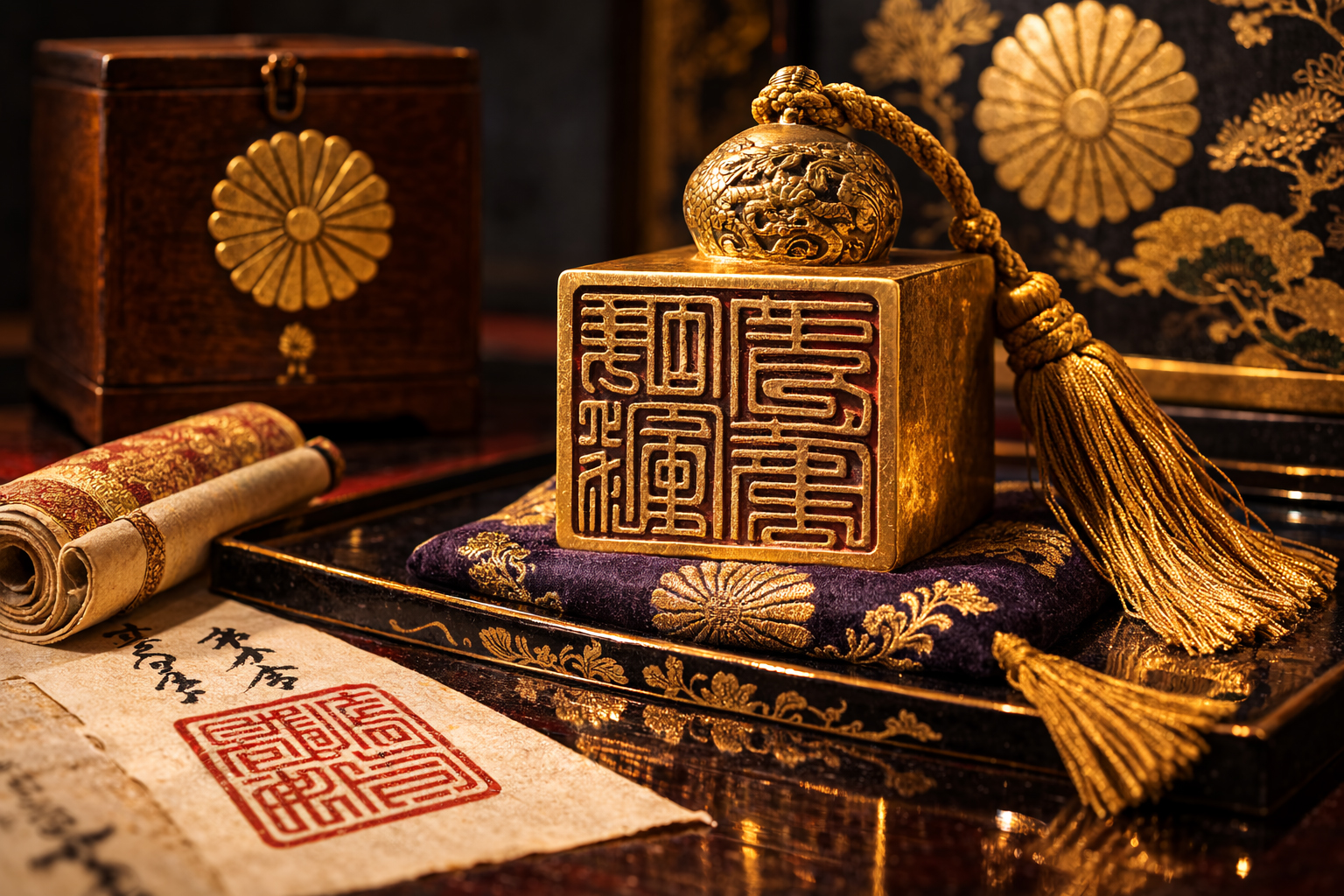
Formal display of an official seal

The seal represented authority

In early court and state documents, what mattered was not only what was written, but by whose authority it had been issued. A seal gave visible force to that chain of legitimacy.

At this stage, the seal was not yet an everyday possession. It belonged more to rule, order, and government than to private daily life.
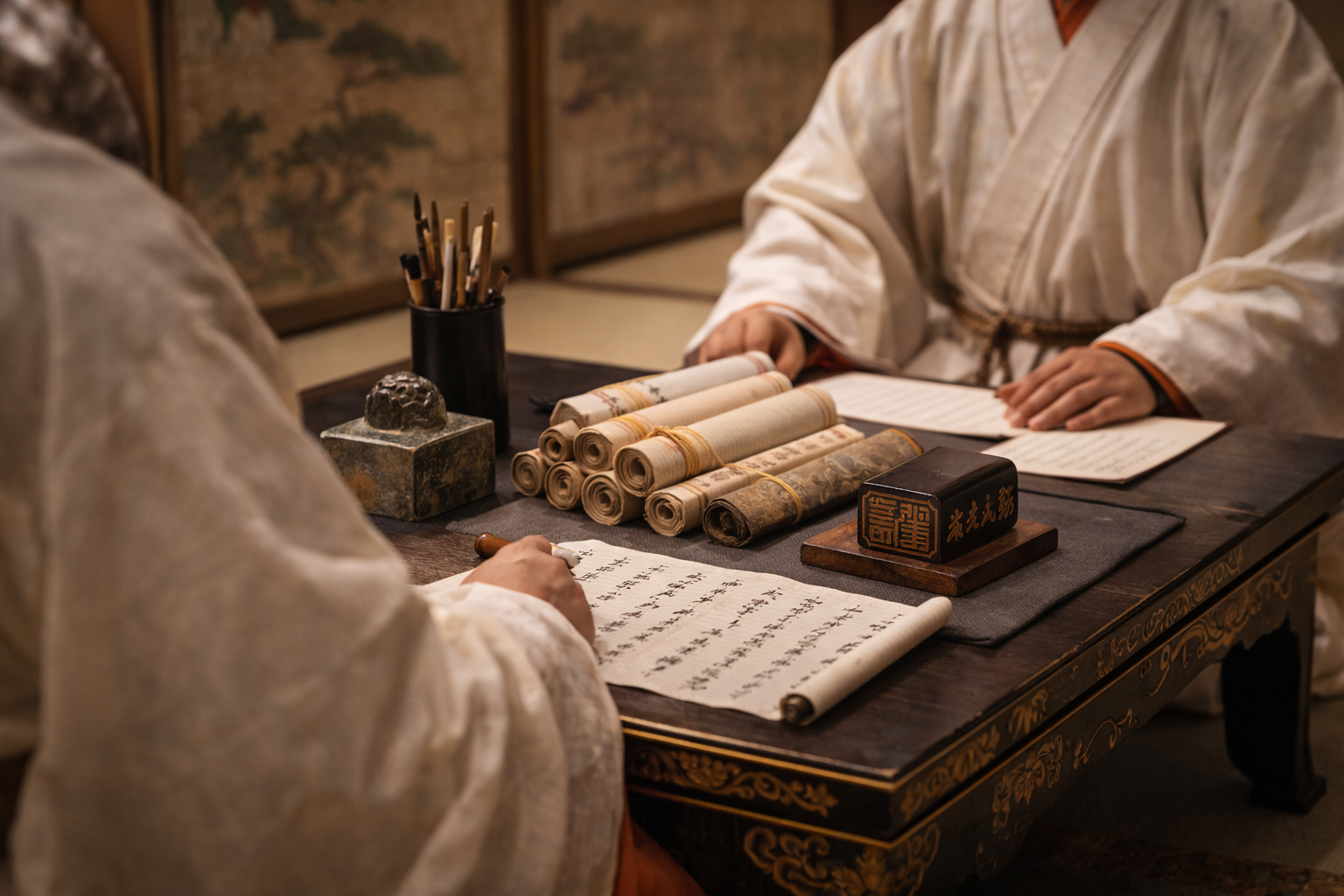
Administrative scene inspired by early Japan

A form that could travel

As the state expanded, documents had to be accepted beyond face-to-face familiarity. Something written in one place had to remain credible in another.

The seal helped make that possible. It turned a written paper into an authorized document, one that carried visible institutional weight.

The seal first became powerful not because it served private life, but because it helped institutions make themselves visible.
— hanko.co.jp historical note

Warrior rule made the seal a mark of command

Seals did not remain confined to court. They also entered the world of warrior authority and military order.

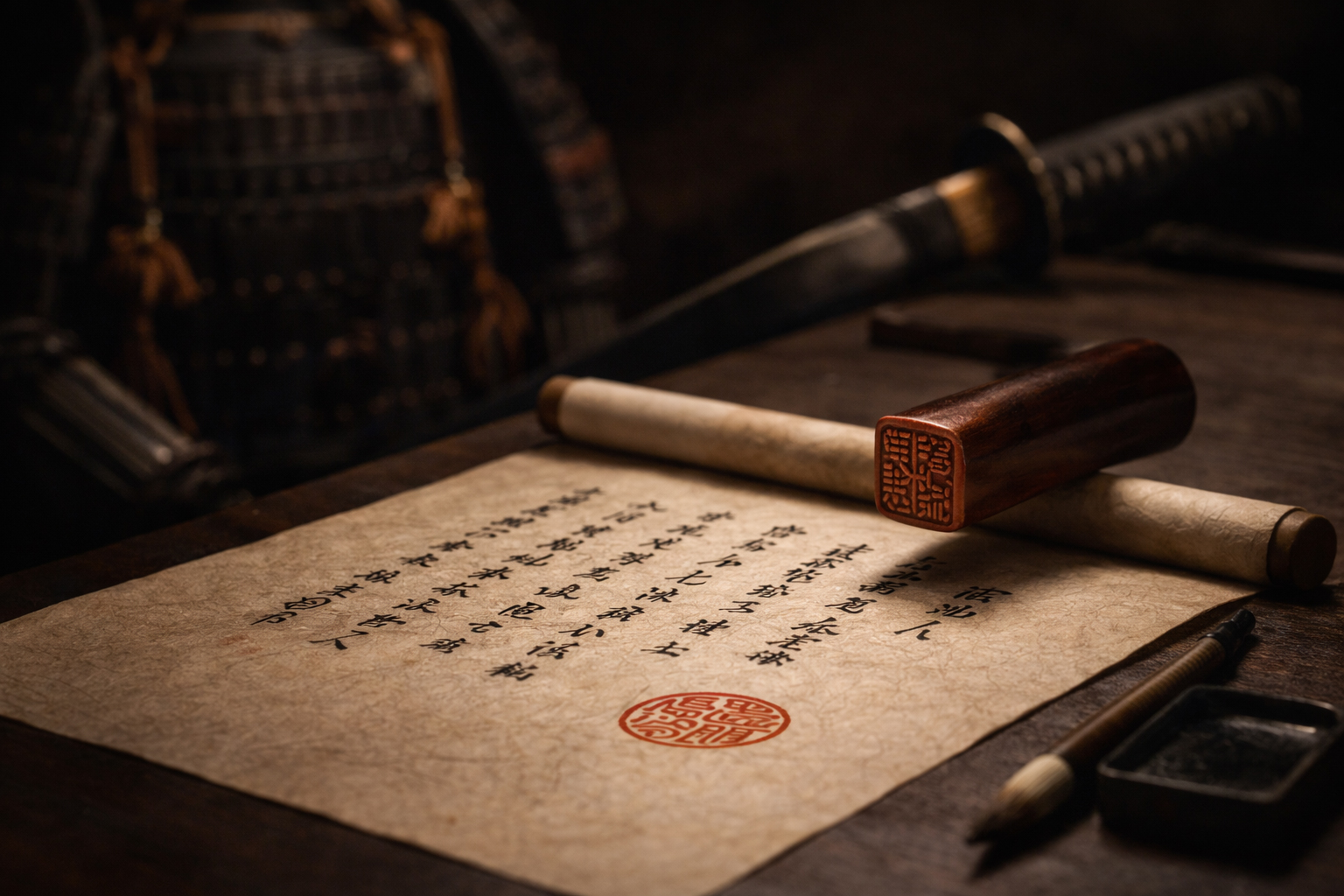
Samurai-era document with seal

The weight of warrior documents

In warrior society, instructions and notices needed to show that they came from the proper source of power. The seal provided an immediate sign of that legitimacy.

Here again, the seal was not a personal flourish. It was part of the formal machinery of rule.

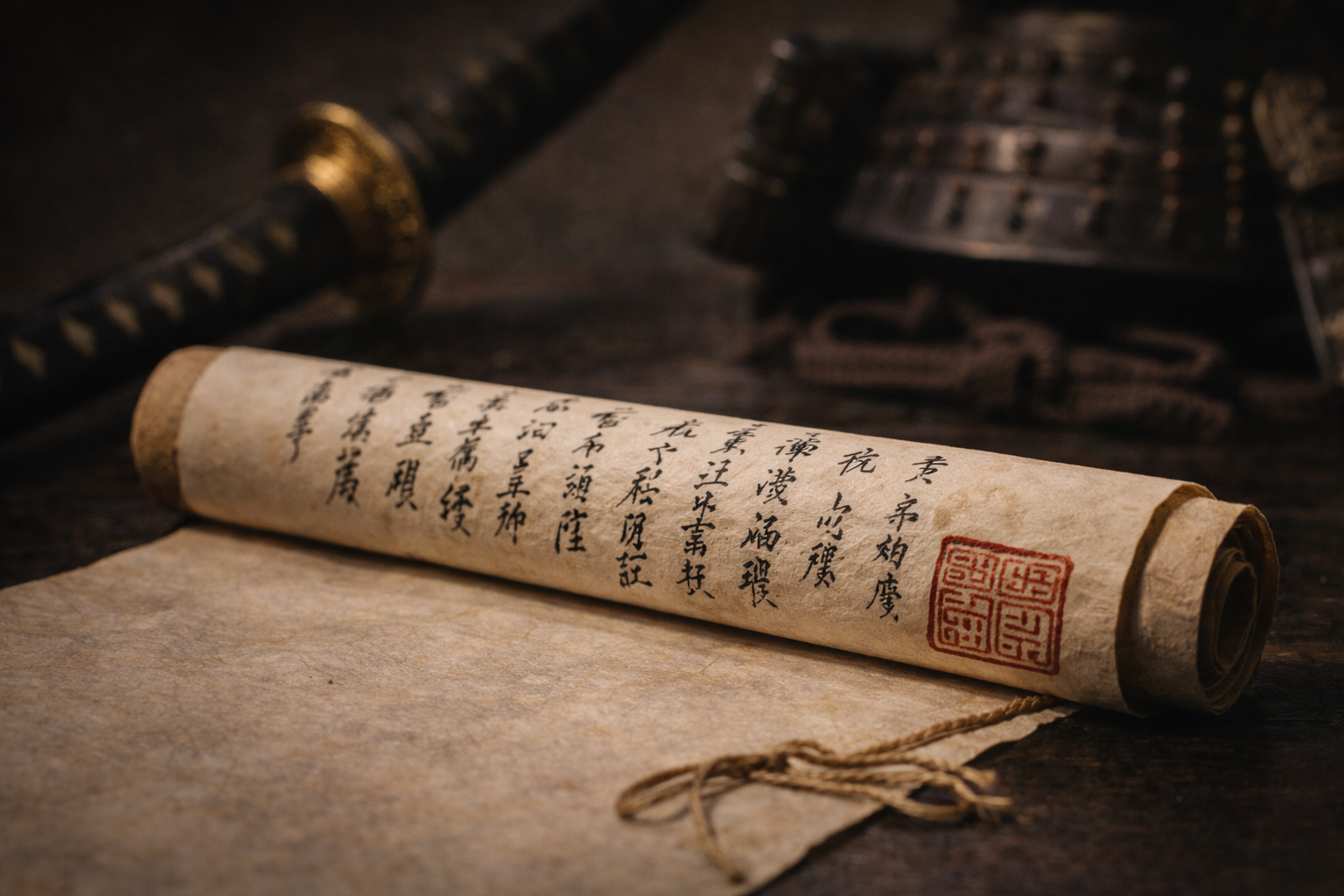
Military order scroll with seal

Visible and immediate authority

In times of conflict and mobilization, documents had to be recognized quickly. The seal functioned as a strong visual signal of seriousness and command.

Even before the text was fully read, the seal could communicate formal power. That visibility would remain one of its lasting strengths.

The seal was a tool of power, but also a tool of form

That is why it survived beyond the center of rule. Its force proved useful not only in command, but also in acknowledgement, receipt, continuity, and routine procedure.

Commerce carried the seal into society

One of the great turning points came with the growth of trade and record-keeping.

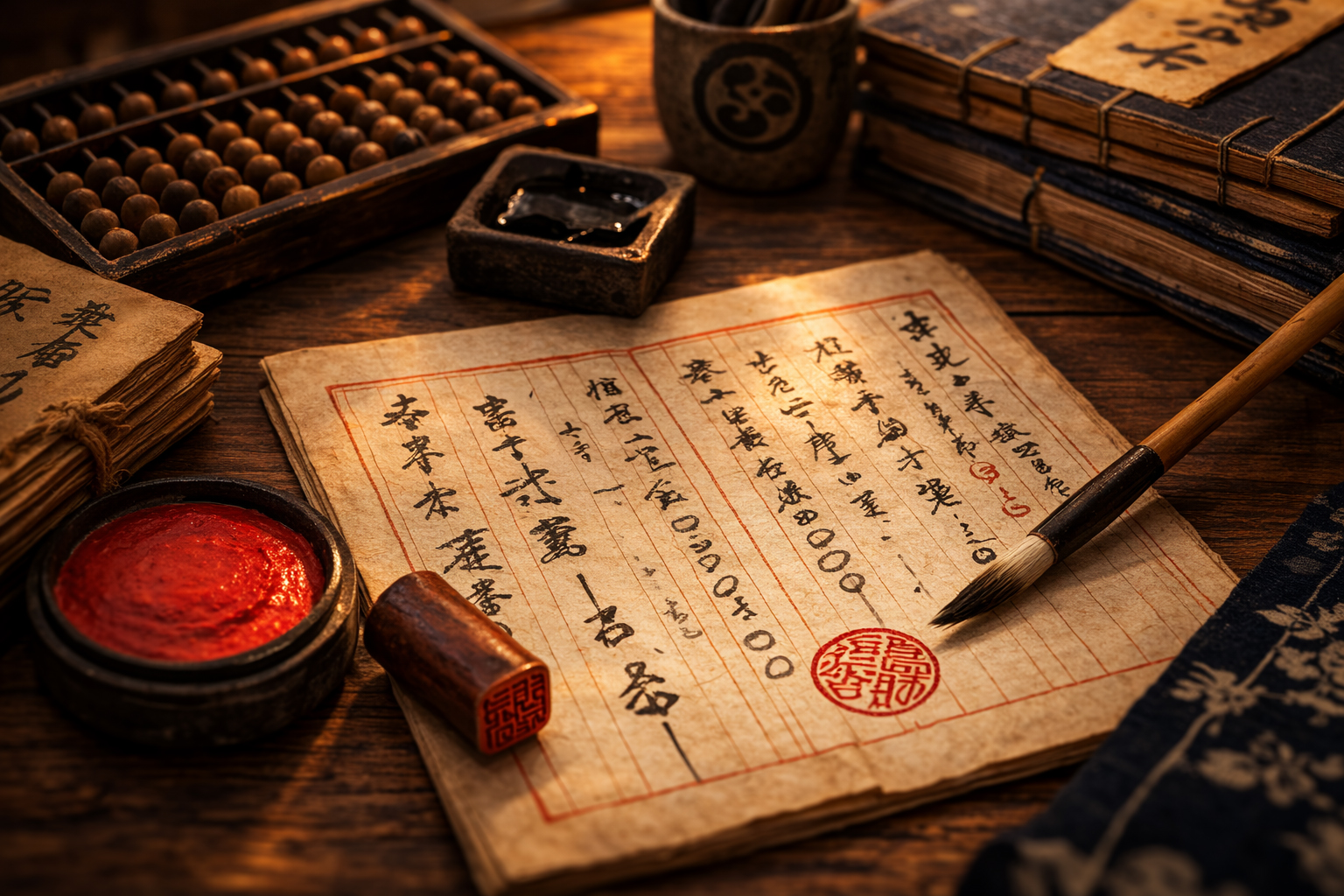
Edo merchant ledger

Merchants needed repeatable trust

Commerce depends on repeated transactions. Deliveries, balances, promises, and entries in ledgers all require continuity: the sense that the same person, shop, or responsibility stands behind them again and again.

The seal was well suited to this world. A recurring mark could make reliability visible.

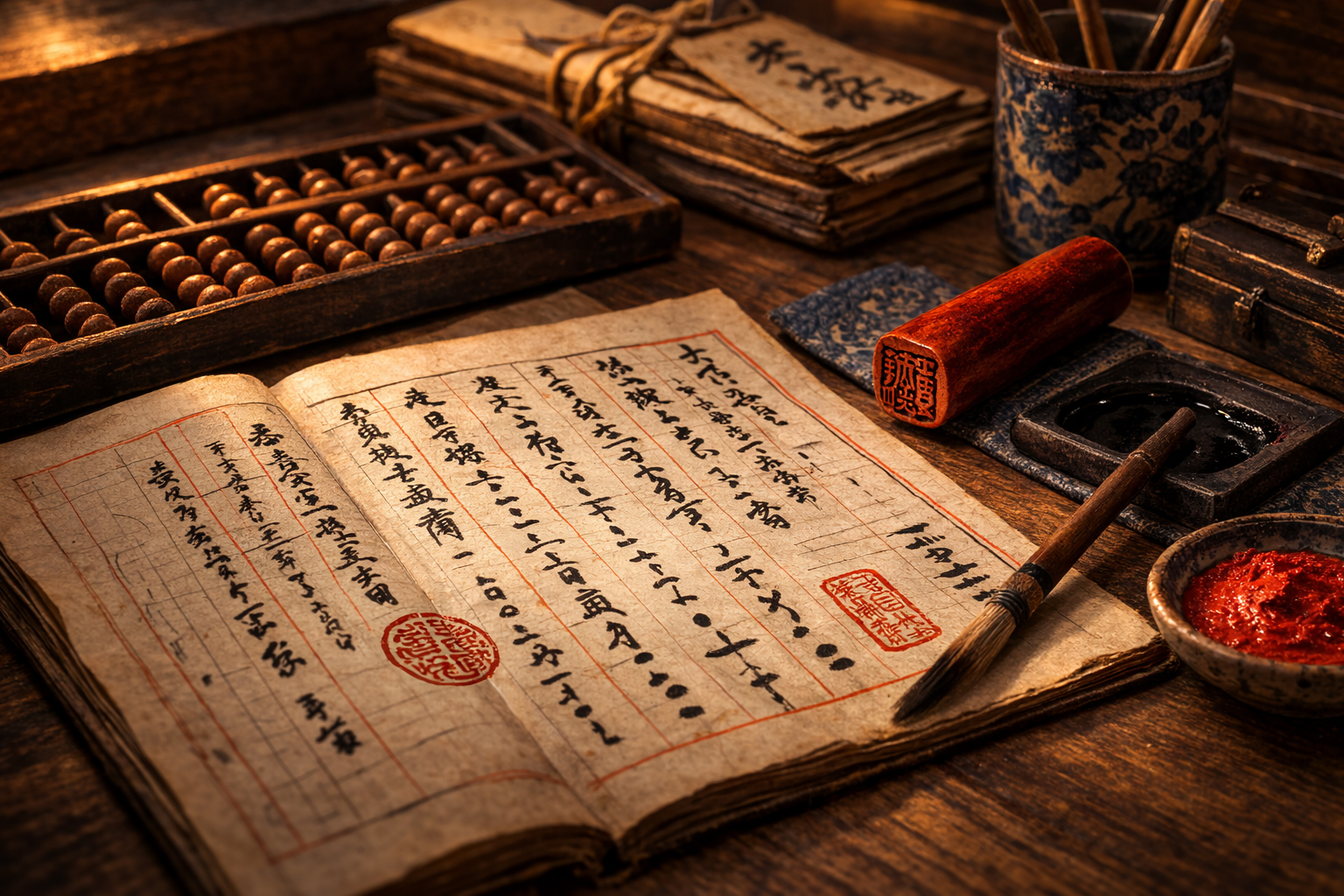
Merchant desk with seal and ledger

Ledgers and seals worked well together

In merchant life, writing and sealing formed a practical pair. The written content recorded the act; the seal gave it a sense of completion, acceptance, and accountability.

This helped move the seal from a symbol of power to a practical instrument of routine business.

When the seal entered the household, it became truly everyday

Commerce mattered, but the deeper rooting of hanko culture came when seals entered family and household practice.

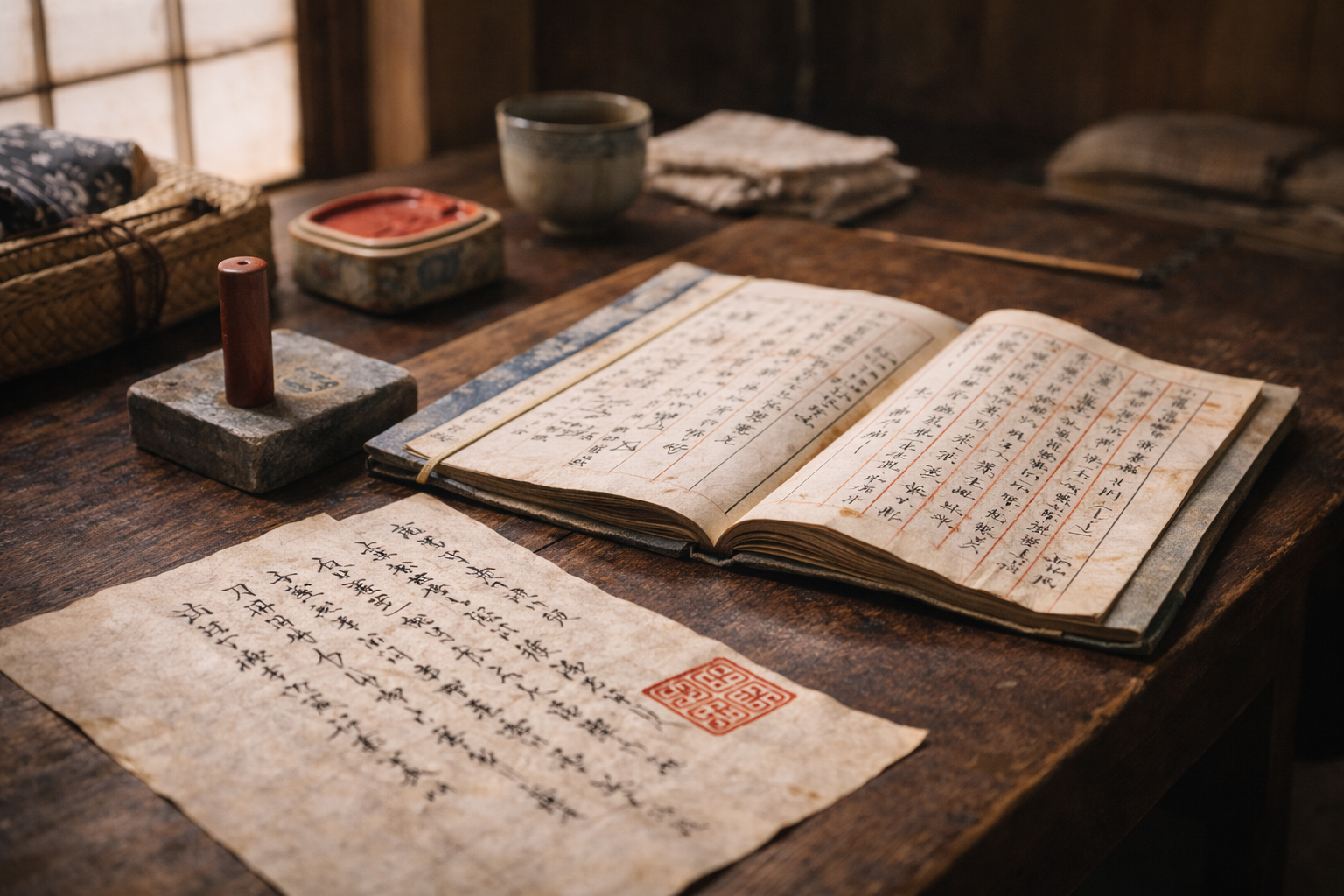
Family desk with household papers and seal

The household’s formal mark

A seal kept in the home became a tool of household confirmation. Smaller than the seals of the state, it nevertheless supported a kind of domestic formality and responsibility.

At this stage, the seal was no longer only a distant sign of official power. It had become a realistic tool of everyday life.

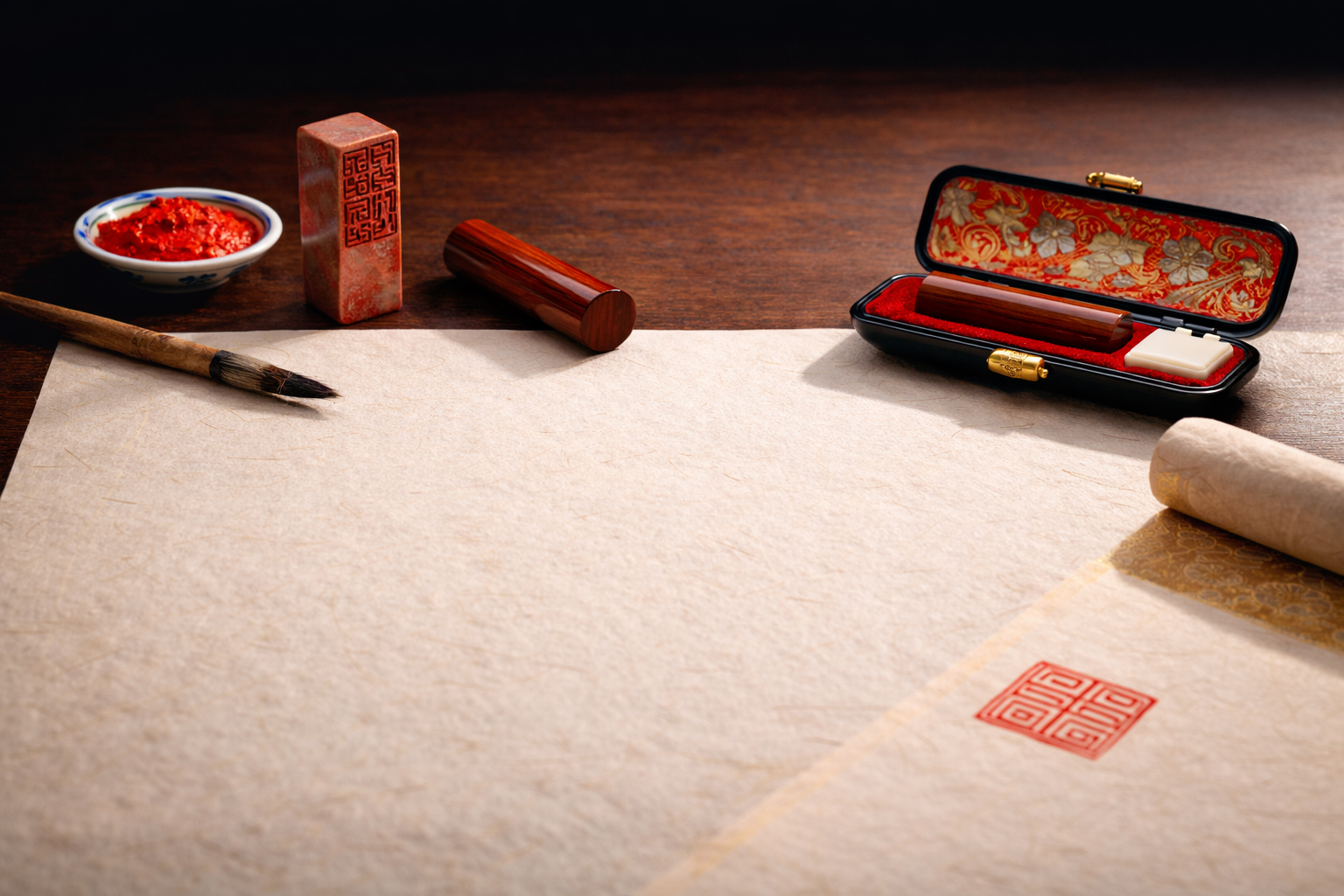
Modern desk with hanko and papers

Toward personal formality

Over time, the seal came to support not only the state or the household, but the individual acting in a formally recognized way.

This is one of the most important transitions in Japanese seal history: the seal was reinterpreted as a practical device of personal procedure.

Banking, contracts, administration: the modern spread

In modern Japan, the seal became deeply settled as a tool of formal personal verification.

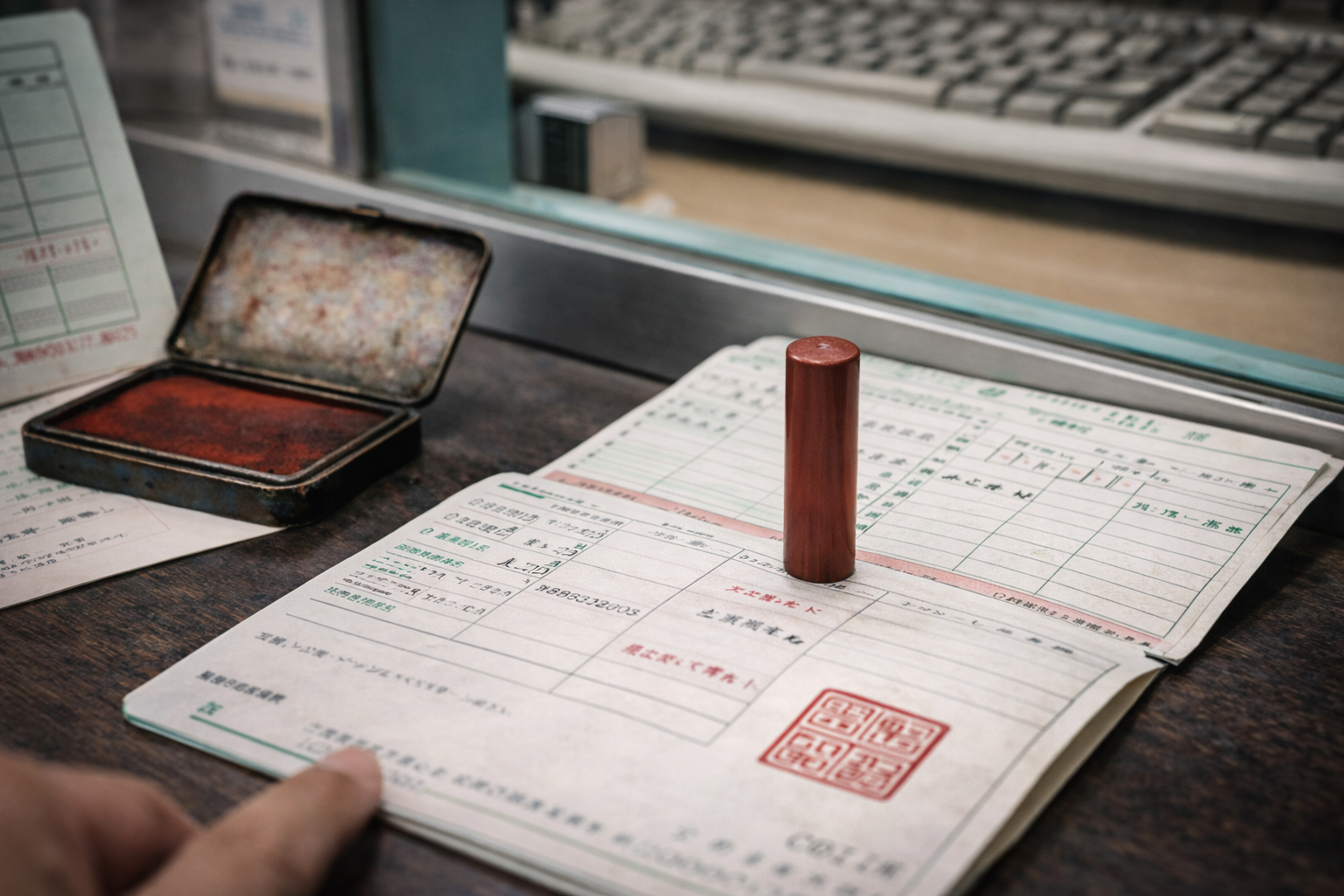
Bank-related seal scene

The bank seal as everyday institution

In places like banks, the seal stood at the meeting point of ordinary life and formal system. It belonged to the individual, but functioned within recognized procedure.

By this stage, the seal had become less a ceremonial object than a routine switch of formal validity.

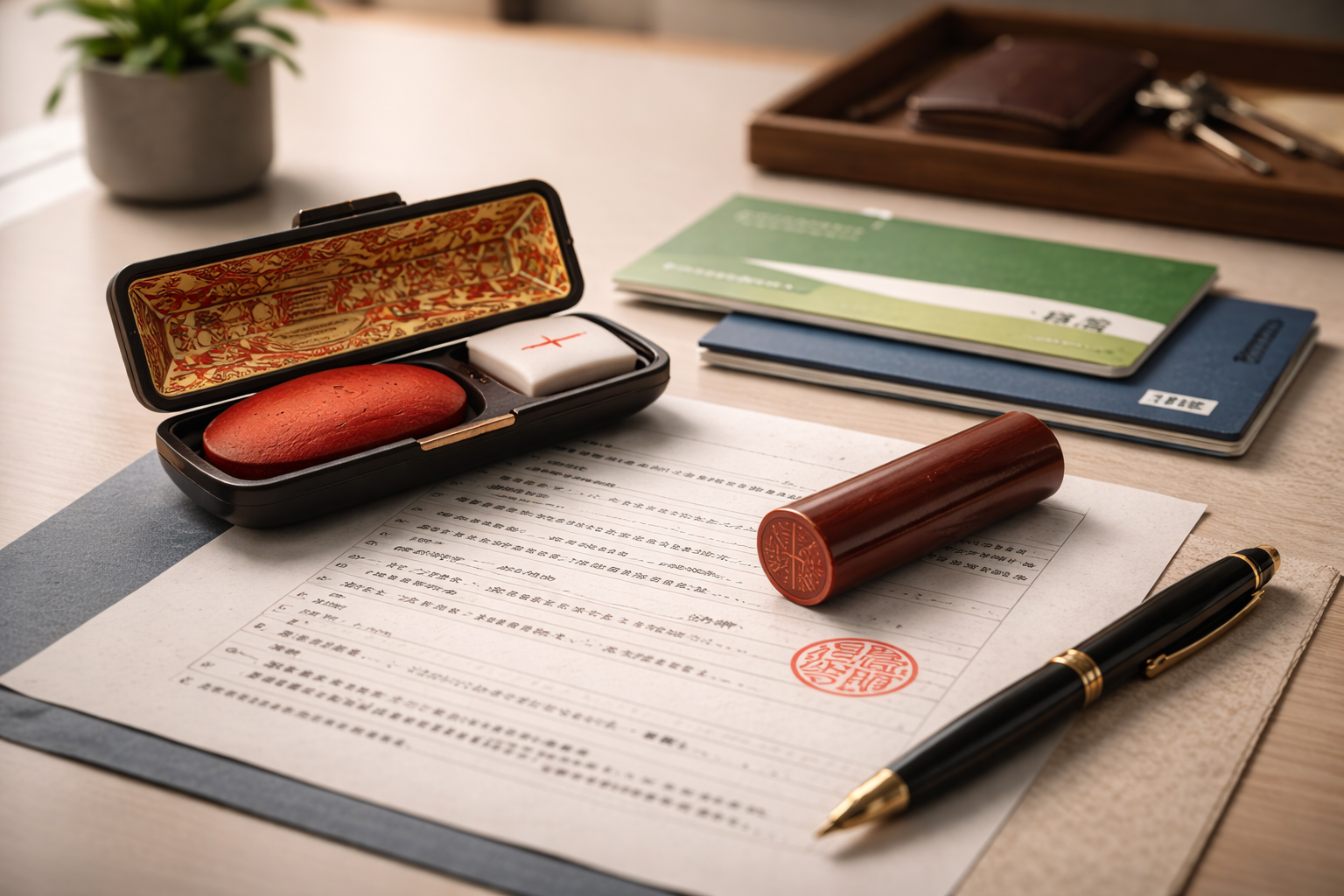
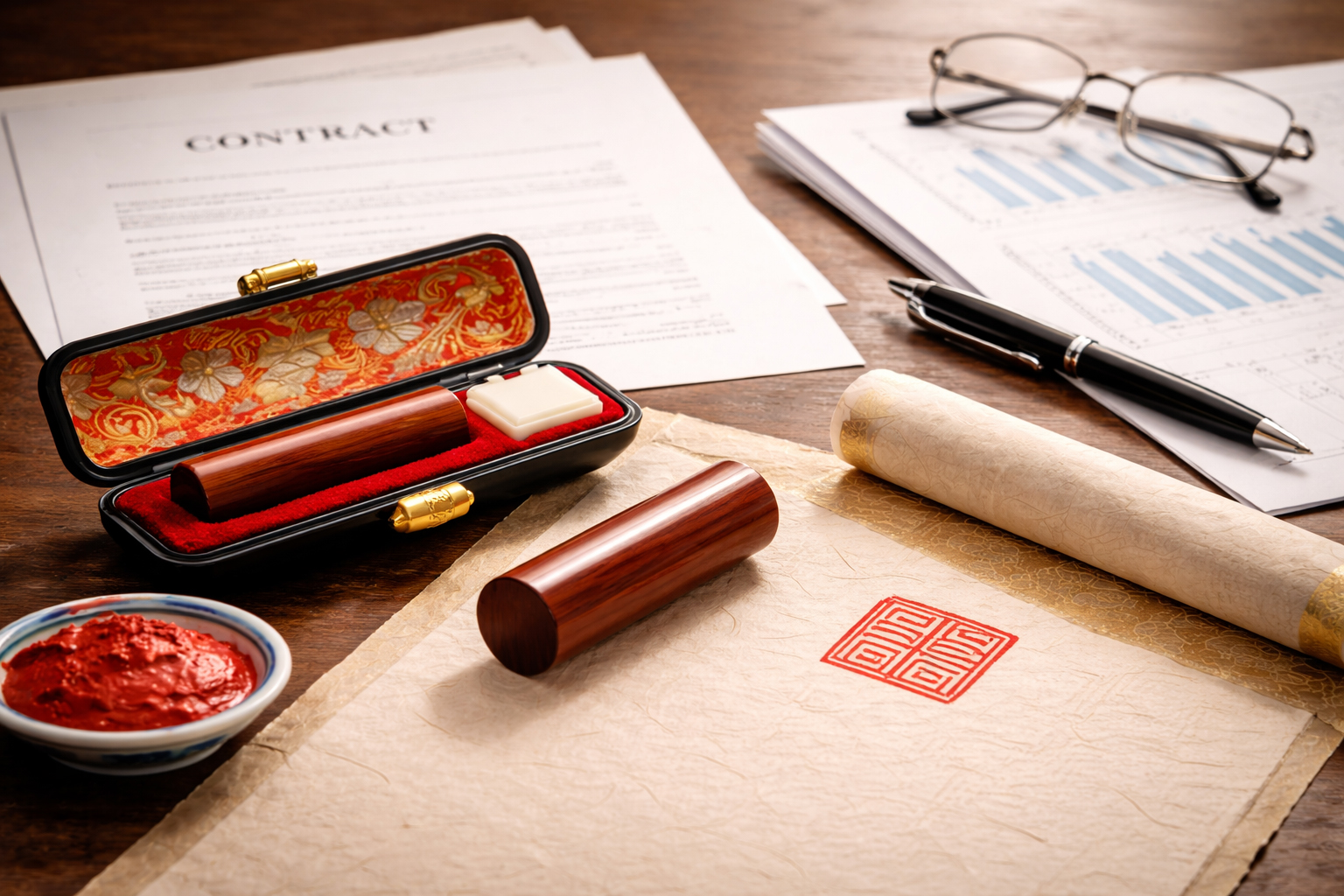
Modern desk for legal signing

Making responsibility visible

In contracts and applications, the seal helped make responsibility visible. It showed that a person stood behind a given act in a way that felt formal, legible, and complete.

A tool that began with the state had now reached the daily paperwork of ordinary citizens.

One of the largest arcs in Japanese seal history is the movement by which a mark of power became a mark of ordinary life.
— hanko.co.jp historical note

Why did the seal spread so far?

The seal survived not just because it was traditional, but because it adapted to many levels of society.

Reasons it spread

  • It was visually clear
  • It was suited to repeated use
  • It could express authority and formality at once
  • It fit well with ledgers and business records
  • It was easy to incorporate into household practice
  • It worked well in modern systems of personal verification

What happened as a result

  • The seal ceased to belong only to the state
  • It came to support merchants, households, and individuals
  • It marked routine thresholds of daily life
  • It became embedded in banking, contracts, and registration
  • It endured as part of ordinary Japanese culture

Related pages

This page connects naturally to the broader history of the hanko, the history of trust, and the comparison with signatures.