Craft Guide

Seal Script and Design Traditions

The lettering in a hanko is not there only to let a name be read. In the world of seal script and seal-face design, a character is also a shape, a structure, and a relationship with blank space. That is why seal design often feels less like ordinary writing and more like composing a small field of order and beauty.

hanko.co.jp Craft / Lettering and Design Reading time 8–11 minutes

For people unfamiliar with seals, one common question is: why use lettering that looks so difficult to read? Part of the answer lies in the nature of seal script itself.

Seal script is especially suited to the seal face because it lets lines be arranged beautifully, lets characters behave almost like geometric forms, and helps create a sense of age, dignity, and balance. That is why it has long been valued not merely as readable writing, but as lettering that allows the seal face to exist as a complete design.

Why is seal script so common on seals?

Seal script is unusually well suited to seal design.

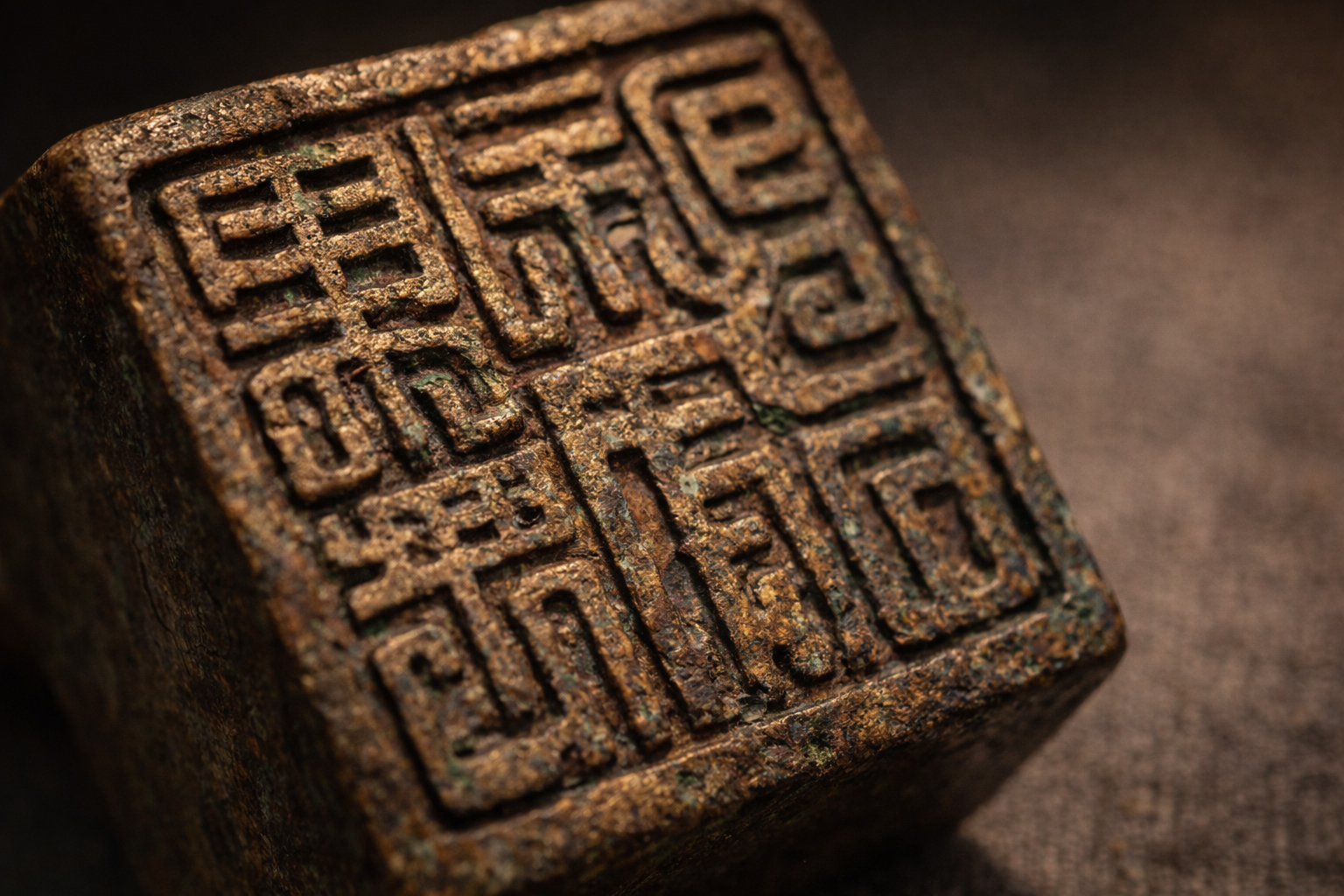
Close-up of geometric seal script

Its lines are structurally stable

Seal script has a distinctive calmness in its line directions and proportions, which makes it easier to organize inside a very small area. Because it relies less on dramatic modern-style movement, it often stays balanced more naturally in a seal face.

This helps the lettering avoid feeling cramped when carved small.
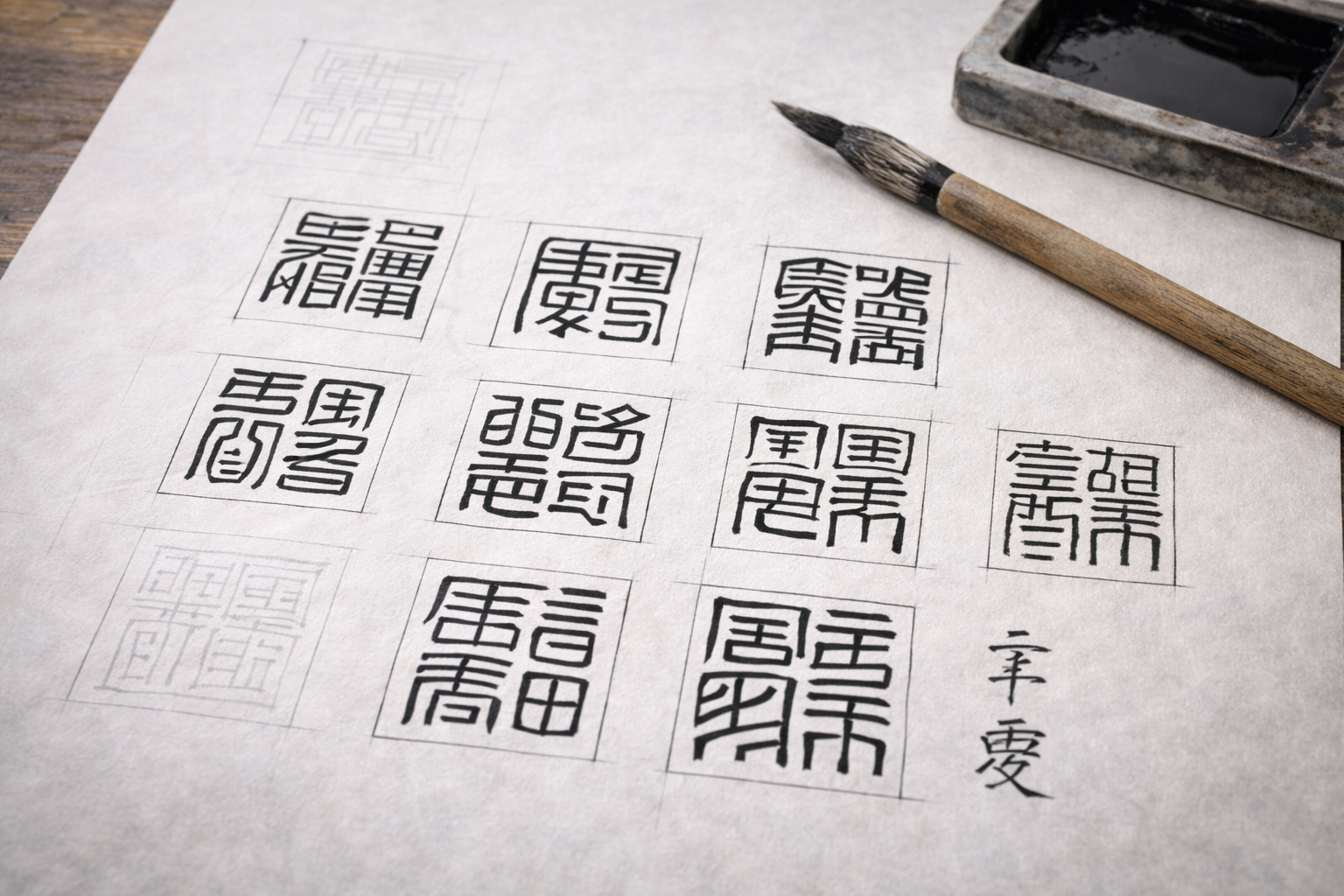
Seal design planning sheet

It carries age and dignity easily

Seal script carries a depth of time that ordinary modern lettering does not. That means even a simple name can begin to feel like proper seal lettering rather than just ordinary text.

It fits especially well with the quiet dignity of official or artistic seal use.

Seal script is lettering whose lines are especially suited to being composed as order inside a seal face.
— hanko.co.jp lettering note

A seal face is something to see, not only something to read

Seal lettering carries information, but it is also received visually as structure.

Ordinary text is usually expected to be read first. Seal lettering is different. It is read, but it is also seen as composition.

Where the lines sit, where blank space remains, how the weight falls, and where the eye lands first: these things shape the impression of the seal face.

Seal lettering is not only information. It is also composition.

That is why seal-face design stands somewhere between calligraphy and geometric arrangement.

White-character and red-character seals

This is one of the most basic distinctions in seal design tradition.

White-character seals

  • The characters appear as white negative space
  • The surrounding red field feels stronger
  • They often feel sharper, quieter, and more tense
  • They can tighten the whole visual field

Red-character seals

  • The characters themselves appear red
  • The blank field around them feels more open
  • They often feel softer, lighter, or more expansive
  • They can create a more open visual breathing pattern
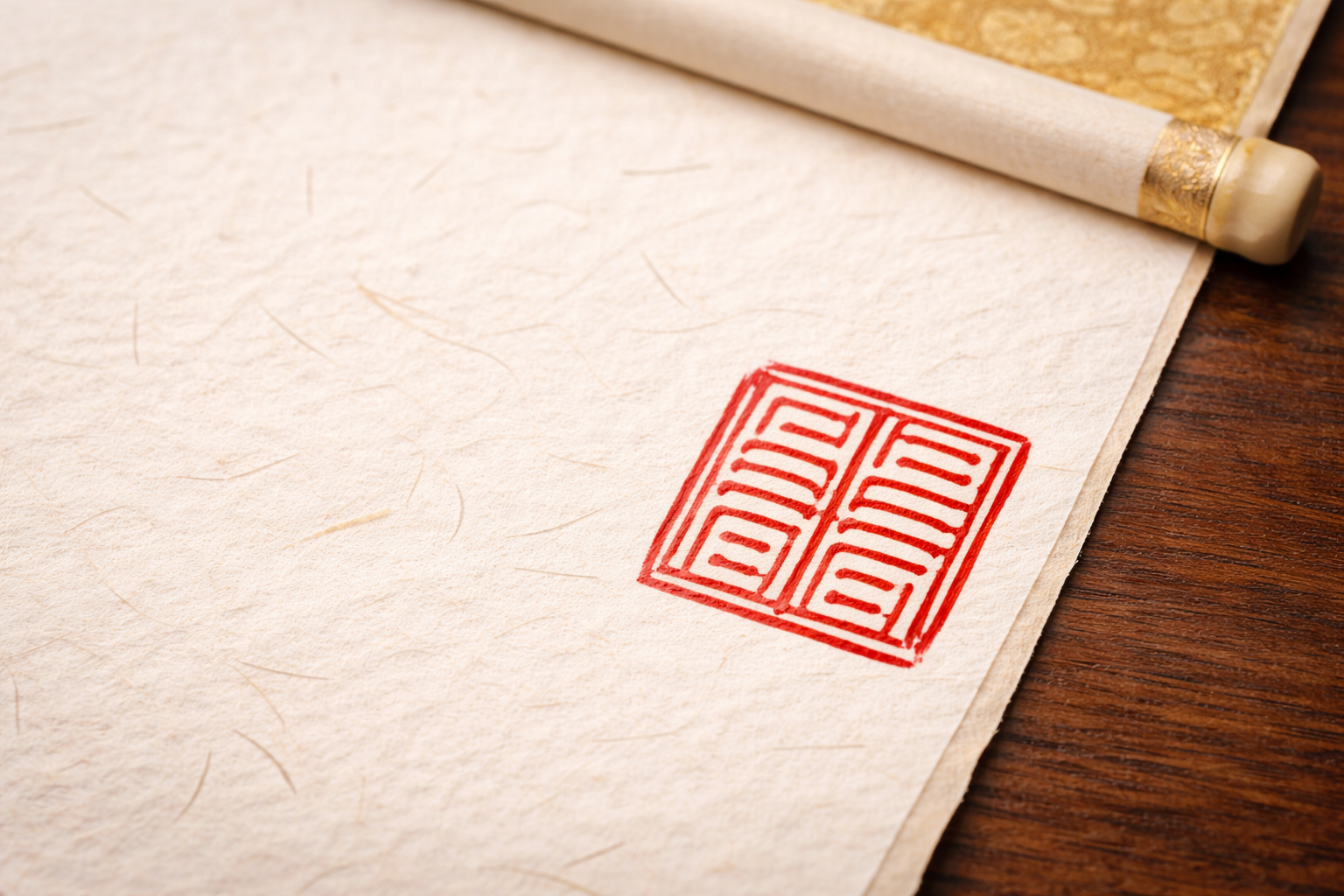
Seal impression suggesting white-character and red-character contrast

The same name can feel very different

Even with the same name and the same number of characters, the feeling of the seal face changes greatly depending on whether it is designed as white-character or red-character. This is not only a technical choice. It is also a choice of visual personality.

The visual force of red

The ratio of red to blank space changes

The difference between white-character and red-character seals is not only about where the letters appear. It changes the entire ratio of red area to blank area across the seal face. That is part of what makes seal design so interesting.

The difference between white-character and red-character seals is not merely a difference of lettering color, but a difference in how the whole seal face breathes.
— hanko.co.jp seal-face note

Designing line and blank space

In seal design, the relationship between line and empty space matters even more than character count.

Seal impression with beautiful blank space

Blank space is not leftover space

Blank space in a seal face is not simply what remains after the lettering is placed. It is part of what lets the lines live. Because blank space exists, the lines do not suffocate, and the whole seal face can breathe.

Good seal faces are designed all the way into their blank areas.

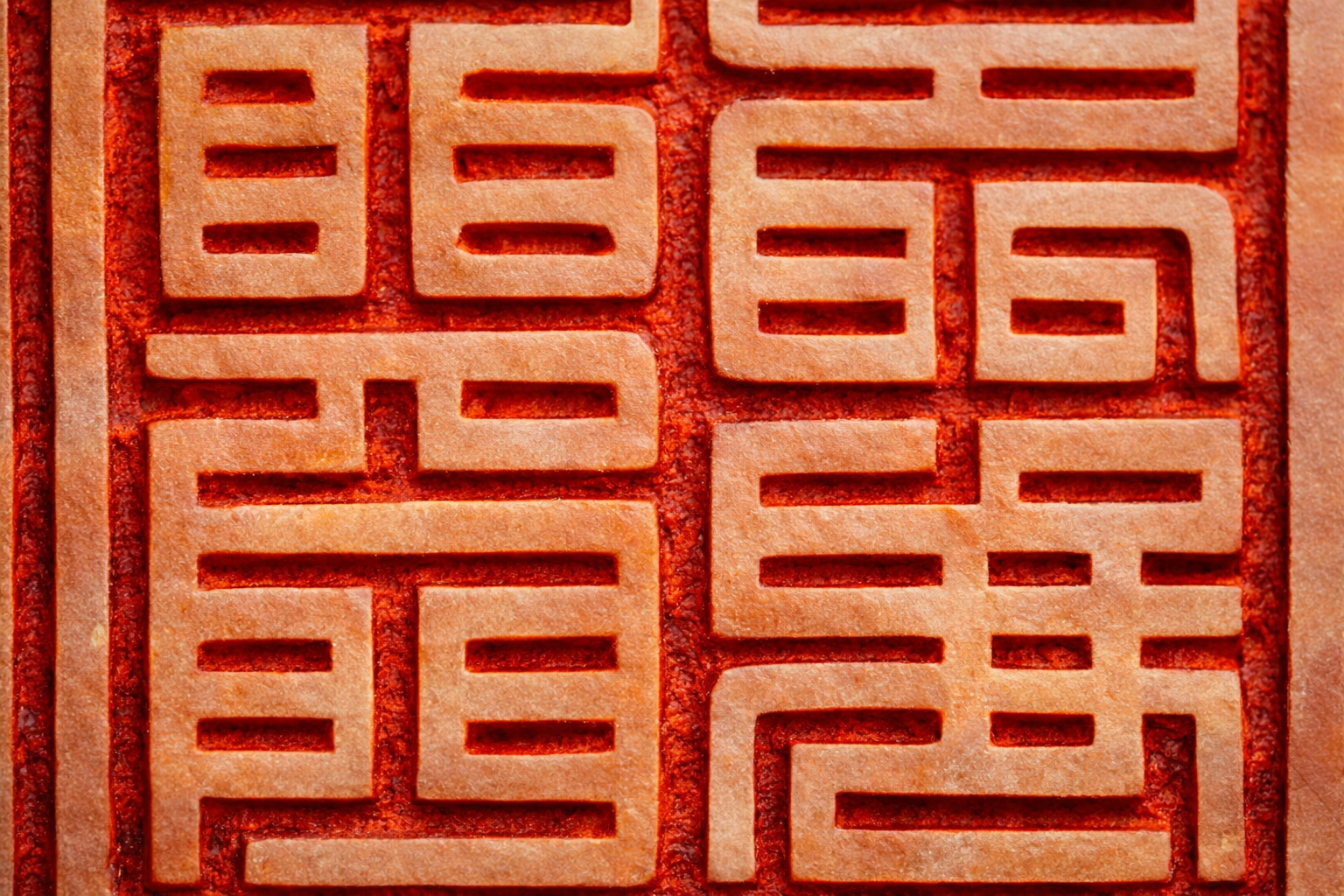
Close-up of line structure in seal script

Not every line has to feel identical

Seal design does not always ask for total mechanical uniformity. Slight differences in thickness, opening, and compression can create life and energy.

What matters is that the variation feels natural rather than forced.

Between symmetry and liveliness

If a seal face is too rigid, it can feel dead. If it is too broken, it can feel unstable.

The strengths of a more ordered seal face

  • It feels calm
  • It creates dignity easily
  • It gives a sense of stability
  • It often suits official or formal seals

The strengths of a slightly freer seal face

  • It can feel more alive
  • It can carry greater individuality
  • It softens excessive stiffness
  • It often suits artistic or rakkan use

In practical and corporate seals, too much looseness can look unstable. In artistic seals, however, a slight controlled looseness may feel more natural and expressive.

Seal design tradition is therefore not only about order. It is also about judgment: how far can the design move before it loses the right kind of balance?

A good seal face is one that is neither too rigid nor too unstable, but balanced in a way that suits its purpose.
— hanko.co.jp balance note

Seal-face design is like very small architecture

Even a tiny seal face has weight, structure, and balance.

Planning sheet for seal design

Where does the visual weight fall?

Where the eye lands first, which side feels heavier, and where the balance settles are all shaped by line placement and blank space. When this succeeds, even a very small seal face can feel stable and complete.

Tools and materials suggesting design work

More characters require more design judgment

A one-character seal and a three-character seal do not ask for the same kind of arrangement. As the number of characters increases, the relationships inside the seal face become more difficult to manage.

Tradition lies partly in knowing how to distribute, compress, simplify, and emphasize without breaking the whole.

The tradition still lives in modern seals

Even modern practical seals still carry traces of older design thinking.

Not every modern seal directly preserves the full depth of classical seal carving tradition. Even so, the use of seal script, the distinction between white-character and red-character seals, and the concern for line and blank-space balance all continue older ways of seeing.

Whether the seal is practical or artistic, it still belongs to a world in which a very small space can become a designed visual field.

Conclusion

Seal script and seal-face design tradition form a culture of arranging lettering as visual order.

Seal script is a form of lettering refined over time for seal use. It allows lines to settle, blank space to breathe, white-character and red-character systems to create different kinds of presence, and different uses to call for different balances of dignity and life.

That is why seal-face design tradition is not only about preserving an old form. It is about continuing to ask how lettering, line, balance, and blank space can live together inside the smallest possible field.

Related pages

These pages deepen the meaning of seal lettering and seal-face composition.