Craft Guide

Hand-Carved vs Machine-Made Hanko

When choosing a hanko, many people wonder whether hand-carved or machine-made is better. In practice, however, this is not a question that can be reduced to a simple hierarchy. Hand carving brings human adjustment, subtle line character, and individual shaping. Machine-made carving brings uniformity, repeatability, and practical stability. What matters most is understanding what kind of seal face each method creates and what kind of seal each method suits best.

hanko.co.jp Craft / Carving Comparison Reading time 8–11 minutes

The phrase “hand-carved” often suggests tradition, refinement, and craft. The phrase “machine-made” may suggest mass production and neutrality. But real seal use is more complicated than that.

A registered seal intended to be kept for many years, a practical daily seal, and an artistic seal such as a rakkan do not all ask for exactly the same kind of carving. Sometimes the strengths of hand carving matter more. Sometimes the strengths of machine-made carving matter more.

What is hand carving?

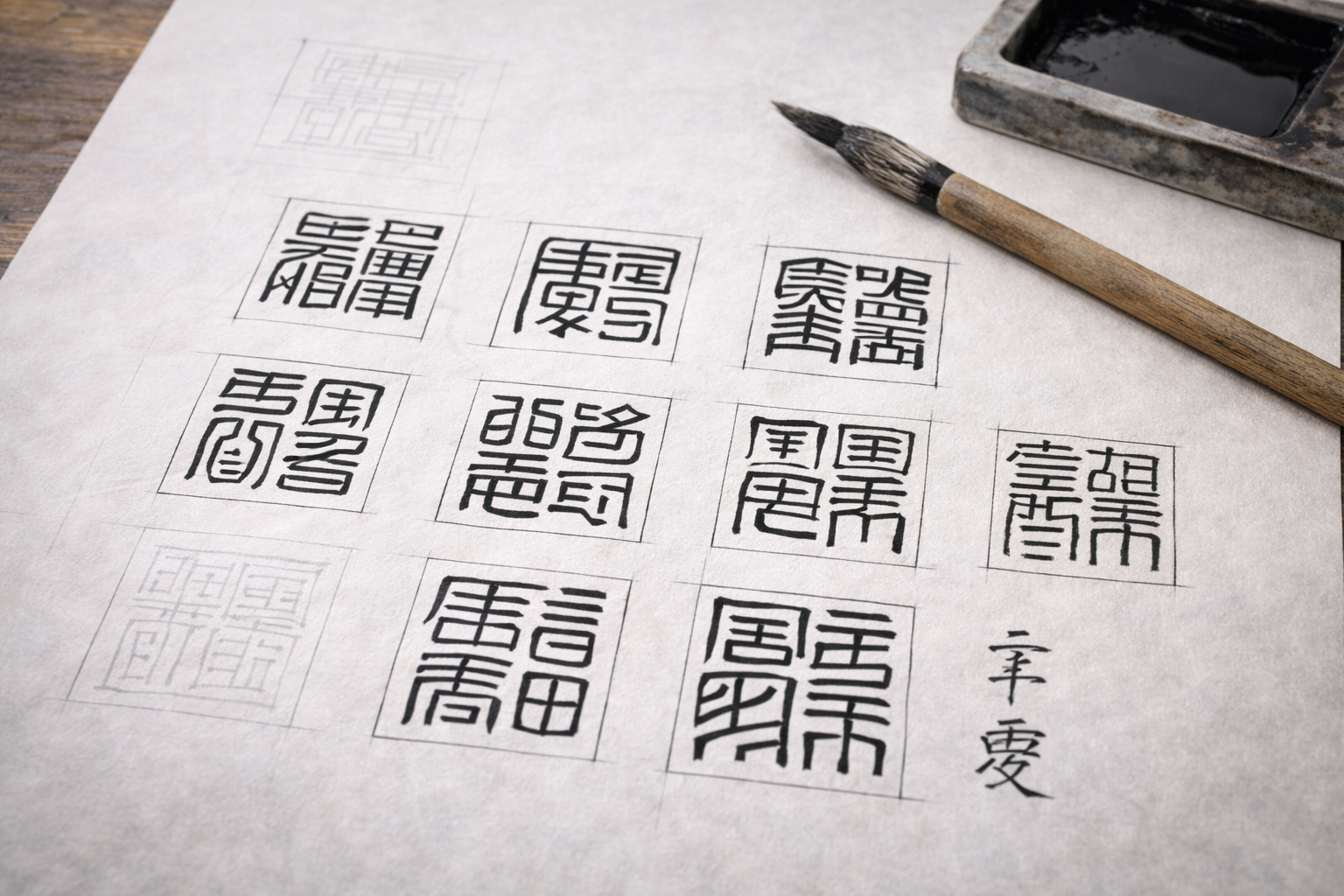
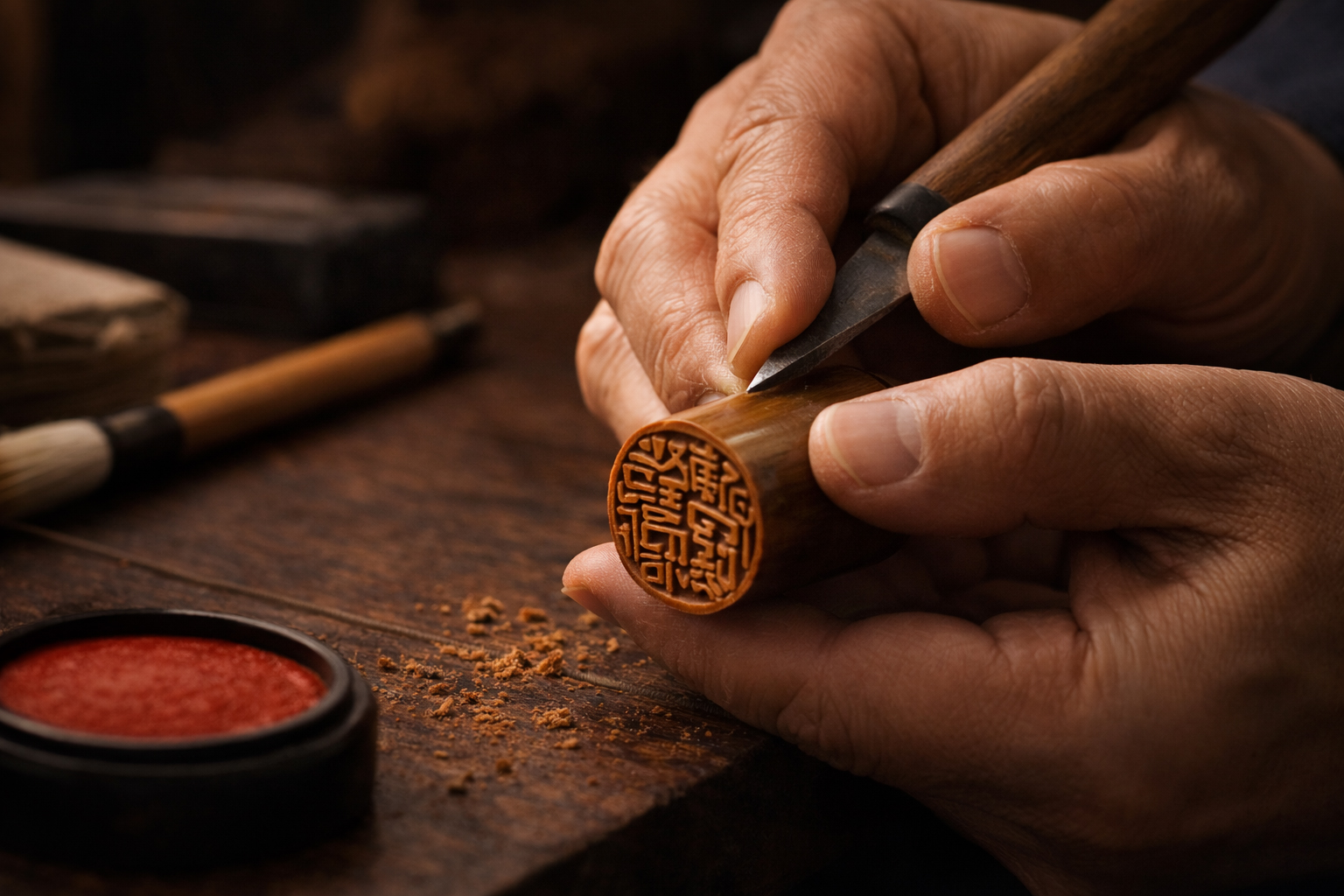
Hand carving is a method in which the eye and judgment of the craftsperson strongly shape the final seal face.

Craftsperson carving a hanko by hand

It allows character-by-character adjustment

In hand carving, the craftsperson can look at the number of characters, the shape of each kanji, the weight of the overall field, and the balance of blank space while adjusting the seal face. That means the carving is not merely traced mechanically, but composed with attention to the whole.
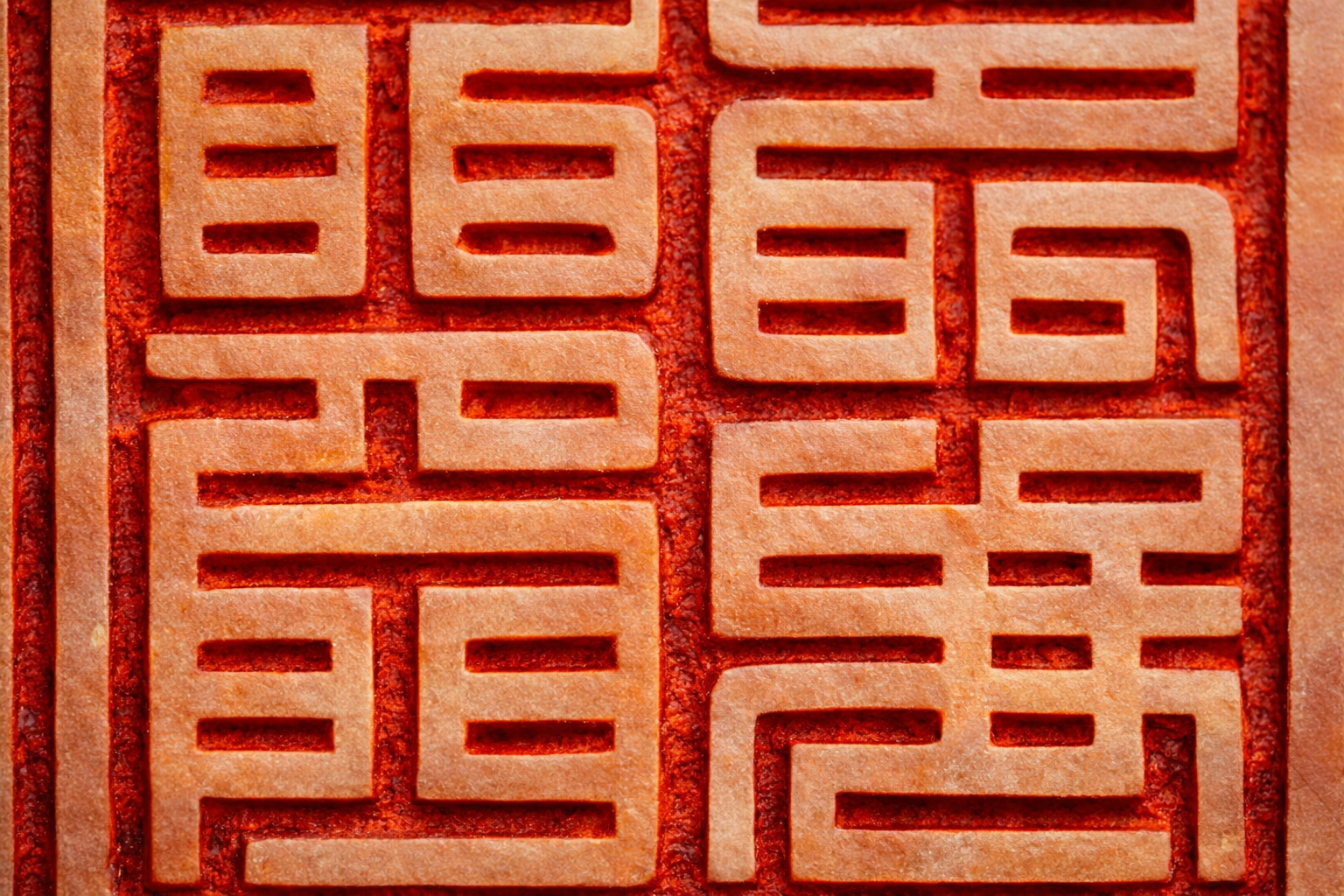
Close-up of an expressive seal face

It can carry slight human expression

Hand-carved seals may show very small variations in line energy, density, or breathing space. In practical seals, this may appear as calmness. In artistic seals, it may appear as character or depth.

The appeal of hand carving lies in the fact that the seal face is shaped by human judgment rather than by mechanical repetition alone.
— hanko.co.jp hand-carving note

What is machine-made carving?

Machine-made carving is especially strong in uniformity and repeatability.

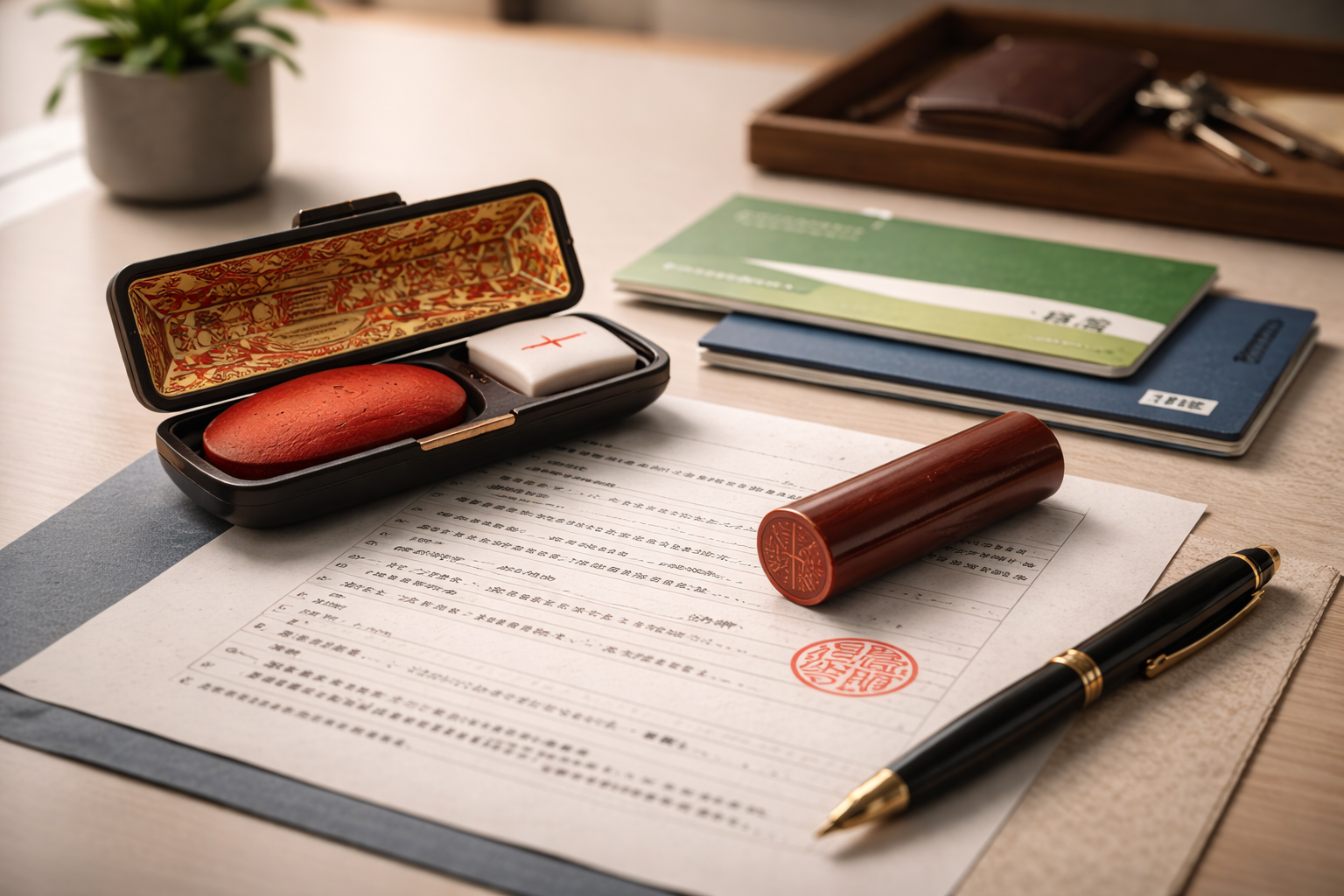
Modern hanko on desk

It produces a more even structure

Machine-made carving tends to keep line thickness and arrangement more even. That often gives the seal face a clear, organized, and stable appearance. In many everyday seals, this uniformity is a genuine advantage.

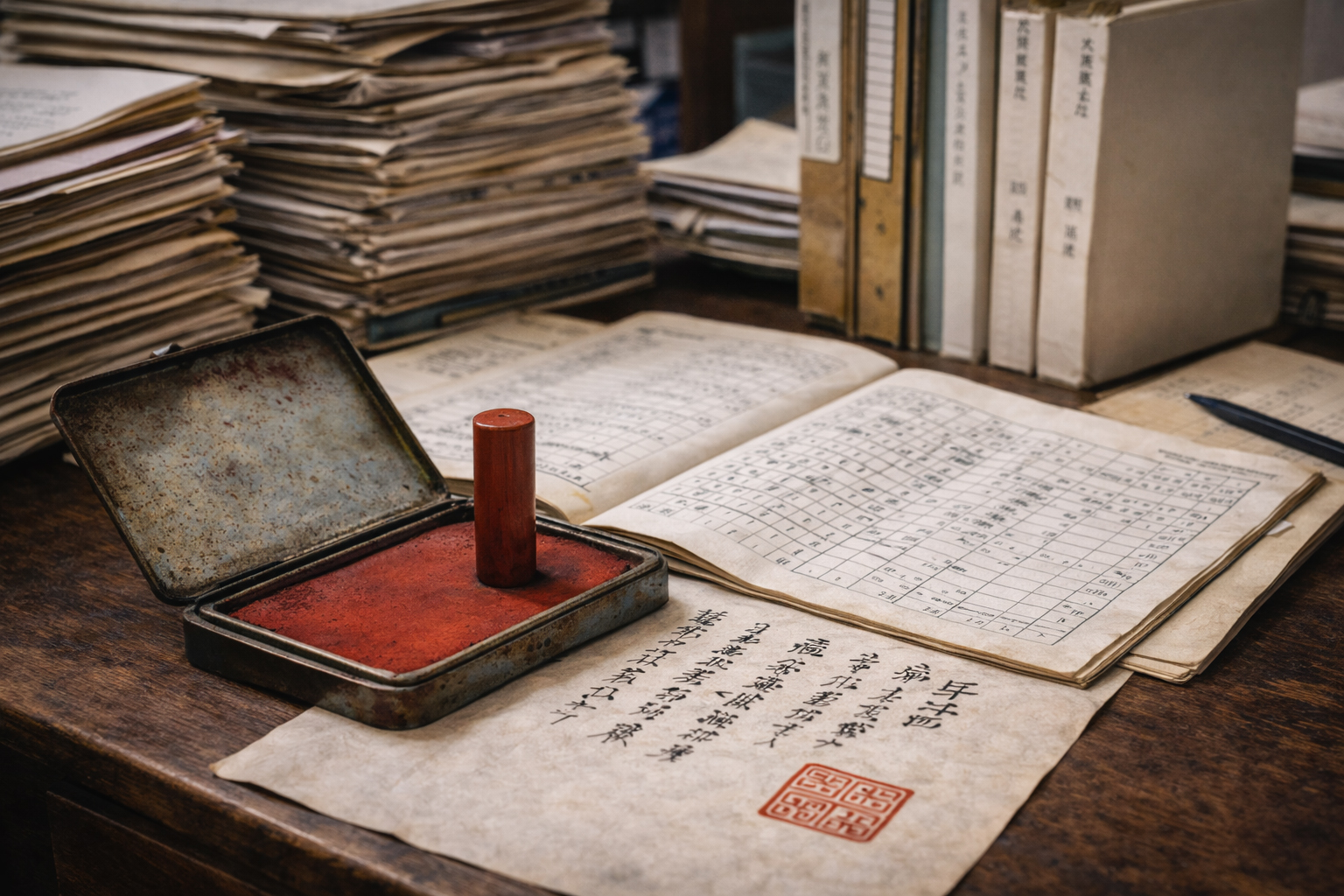
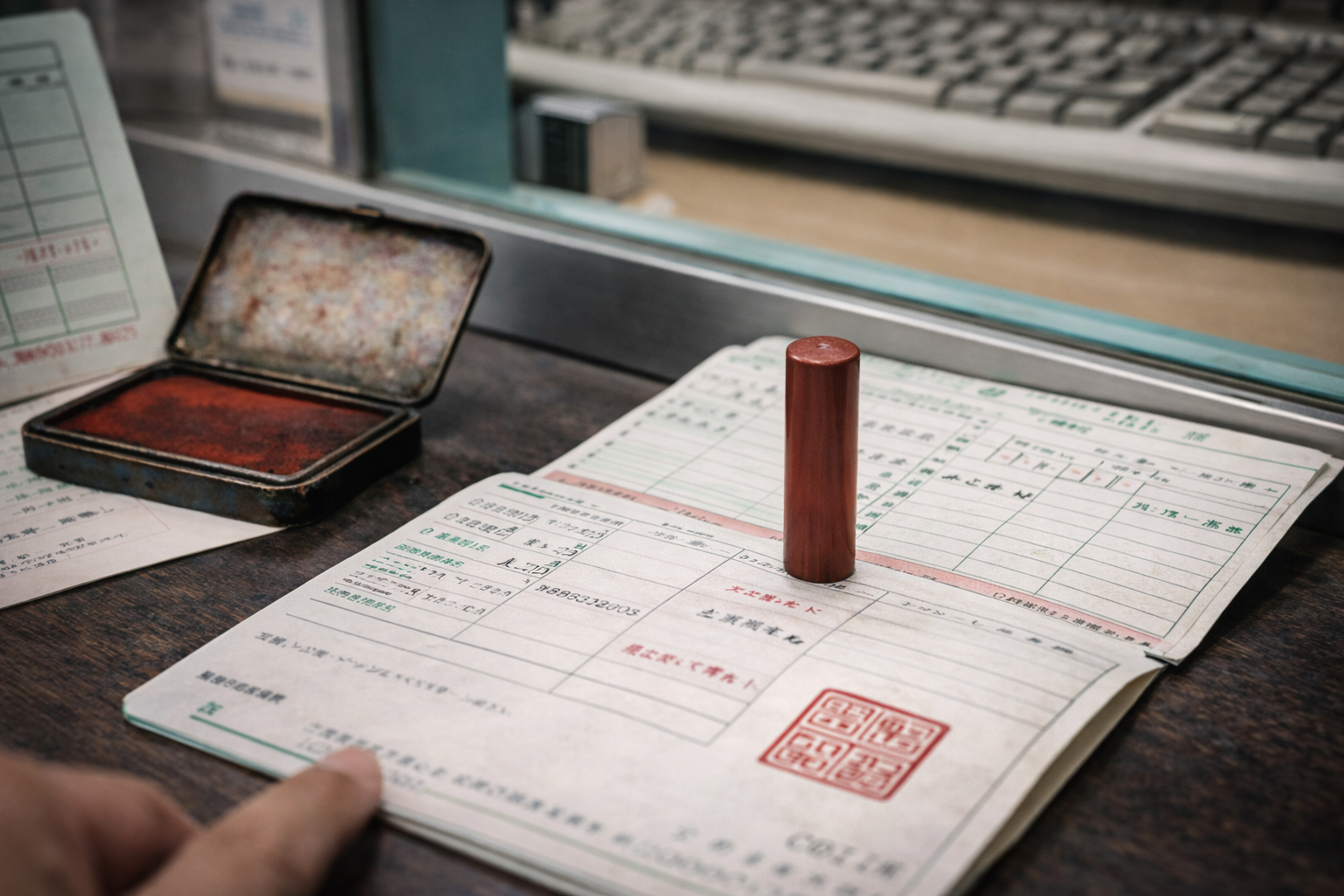
Documents suggesting practical office use

It fits practical use well

For seals used in ordinary office or daily-life settings, machine-made carving often provides exactly what is needed: clear organization, dependable regularity, and practical ease.

The strength of machine-made carving is consistency

In ordinary repeated use, that consistency can be a major virtue.

How do the seal faces actually differ?

The difference between hand-carved and machine-made carving appears in the character of the seal face itself.

Hand-carved seal faces

  • May show slight line character
  • Can respond more flexibly to differences between characters
  • May feel less mechanically even and more settled
  • Often valued for expression in artistic seals

Machine-made seal faces

  • Often show more regular line structure
  • Feel visually organized and clean
  • Offer strong predictable stability
  • Emphasize order more than subtle expression

A hand-carved seal face may reveal very small human decisions when examined closely. A machine-made seal face usually presents a more even and standardized order.

Which is preferable depends not on abstract prestige alone, but on what kind of seal face the user actually wants.

The difference between hand-carved and machine-made hanko is also the difference between visible human presence and uniform visual order.
— hanko.co.jp seal-face comparison note

Which is better for practical use?

Suitability changes according to purpose.

Machine-made carving often suits

  • Mitomein and daily-use seals
  • Routine office seals
  • Backup or secondary seals
  • More standardized practical purposes
  • Situations where ease matters most

Hand carving often suits

  • Registered seals
  • Seals meant to be kept long-term
  • Artistic seals and rakkan
  • Situations where seal-face atmosphere matters
  • Users who value individual adjustment
Formal contract and seal

Hand carving can suit an important lifelong seal

In a seal such as a registered seal, where the user may wish to keep a single seal for many years, the atmosphere of individual finishing may feel especially meaningful. Here the tone of the seal face itself can matter.

Everyday practical seal use

Machine-made carving is strong in daily practicality

In seals used inside ordinary routine, ease, neatness, and predictable use may matter more than subtle depth of expression. In those cases, machine-made carving can be highly rational and effective.

Price and value are not the same thing

The difference between hand-carved and machine-made hanko becomes shallow if reduced to price alone.

The value of hand carving is not only that it takes more time. It lies in the possibility of adjusting the seal face according to the character shapes, the center of weight, and the breathing of the whole design.

The value of machine-made carving is not only lower cost. It lies in dependable practical regularity. These are therefore not simply two price levels. They are two different kinds of value.

The difference between hand-carved and machine-made hanko is less a difference in price than a difference in where value is located.
— hanko.co.jp value comparison note

Practical seals and artistic seals change the answer

The more artistic the purpose, the more the meaning of carving method may shift.

Practical seals

  • Stability matters greatly
  • Readability and order matter
  • Machine-made carving may offer strong advantages
  • Hand carving may add calmness and depth

Artistic seals and rakkan

  • Expression matters more
  • Slight irregularity can become beauty
  • Hand carving may feel especially alive
  • Machine-made carving may emphasize order over character

In practical seals, machine-made regularity can be extremely useful. In rakkan or artist seals, however, the slight breathing of hand-shaped lines may become part of the attraction.

The right method therefore depends less on a universal ranking and more on the role of the seal itself.

Conclusion

Hand-carved and machine-made hanko should be understood not only as higher and lower, but as different kinds of seal character.

Hand carving allows a seal face to be shaped through human judgment, often giving it subtle expression, balance, and individuality. Machine-made carving offers uniformity, repeatability, and strong everyday practicality.

That is why it is too simple to say that hand-carved is always superior and machine-made is always lesser. The real question is whether the seal is meant to be a lifelong formal seal, a daily working tool, or an artistic object. Once that is clear, the right carving method becomes much easier to understand.

Related pages

These pages help place carving method inside the larger world of materials, design, and seal use.