Craft Guide

Calligraphy and Seal Design

A hanko is not only a small carved object carrying a name. In the world of seal-face design, calligraphic feeling, line quality, blank space, and the dignity of lettering all matter deeply. A seal face is carved, but beneath that carving there is often a way of seeing that belongs to writing. Calligraphy and seal design are not the same art, yet they are more naturally understood as neighboring worlds than as separate ones.

hanko.co.jp Craft / Calligraphy and Seal Face Reading time 8–11 minutes

Calligraphy and hanko are not created by the same tools or techniques. Calligraphy is written with a brush. A seal face is carved with tools. Yet both belong to traditions that do not treat characters as mere information. They treat them as line, structure, space, and atmosphere.

That is why the eye that understands a good seal face often has something in common with the eye that understands good calligraphy. Without some sense of calligraphic feeling, part of the depth of seal design can remain invisible.

What calligraphy and seal design share

Both traditions treat characters as visual form rather than information alone.

Paper suggesting both calligraphy and seal design

Line is central

In calligraphy, the brush line is central. In seal design, the carved line — or the white line created by carving away — becomes central. The methods differ, but in both cases the whole impression depends on the quality, calmness, and movement of line.

Meaning matters, but line often speaks first.
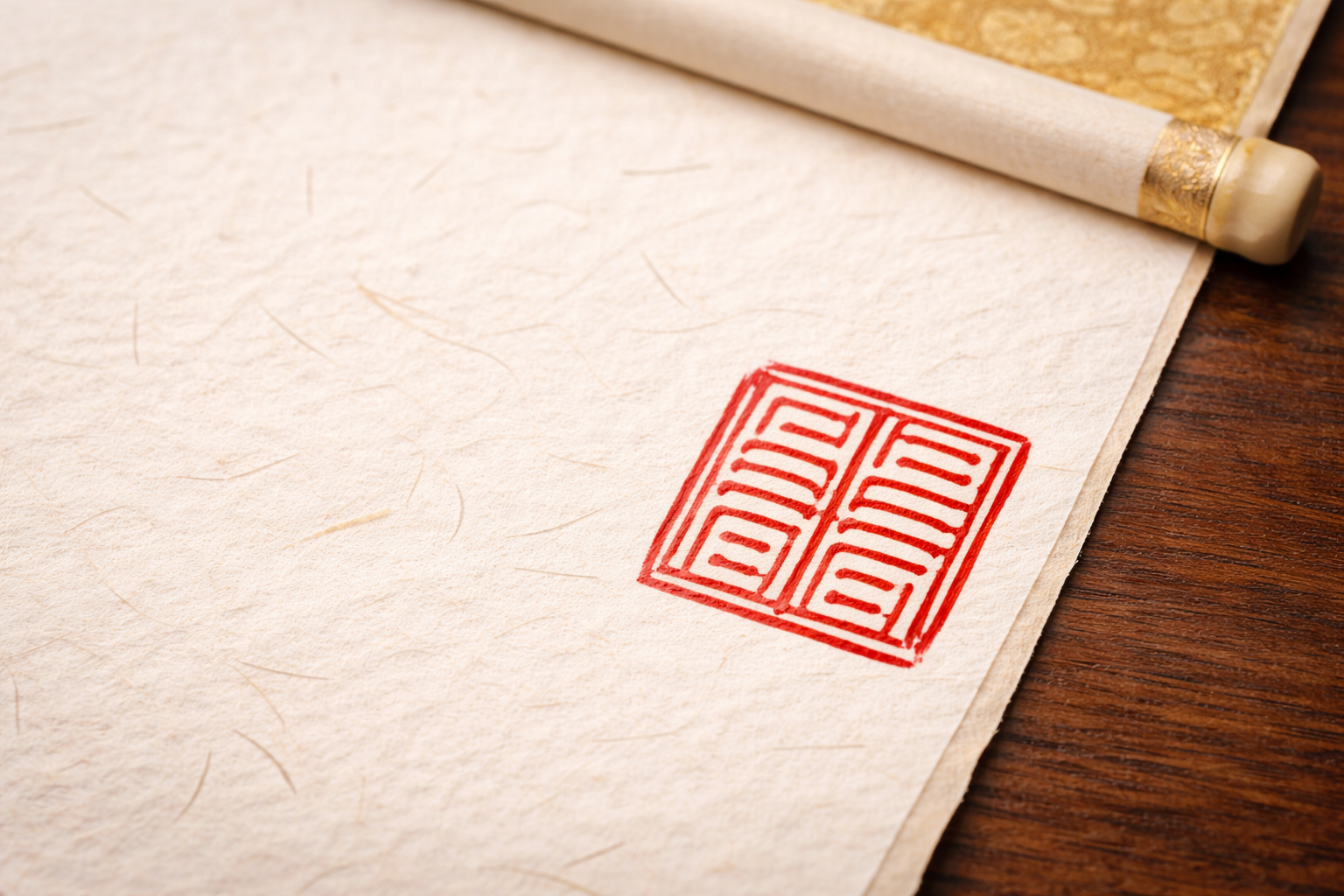
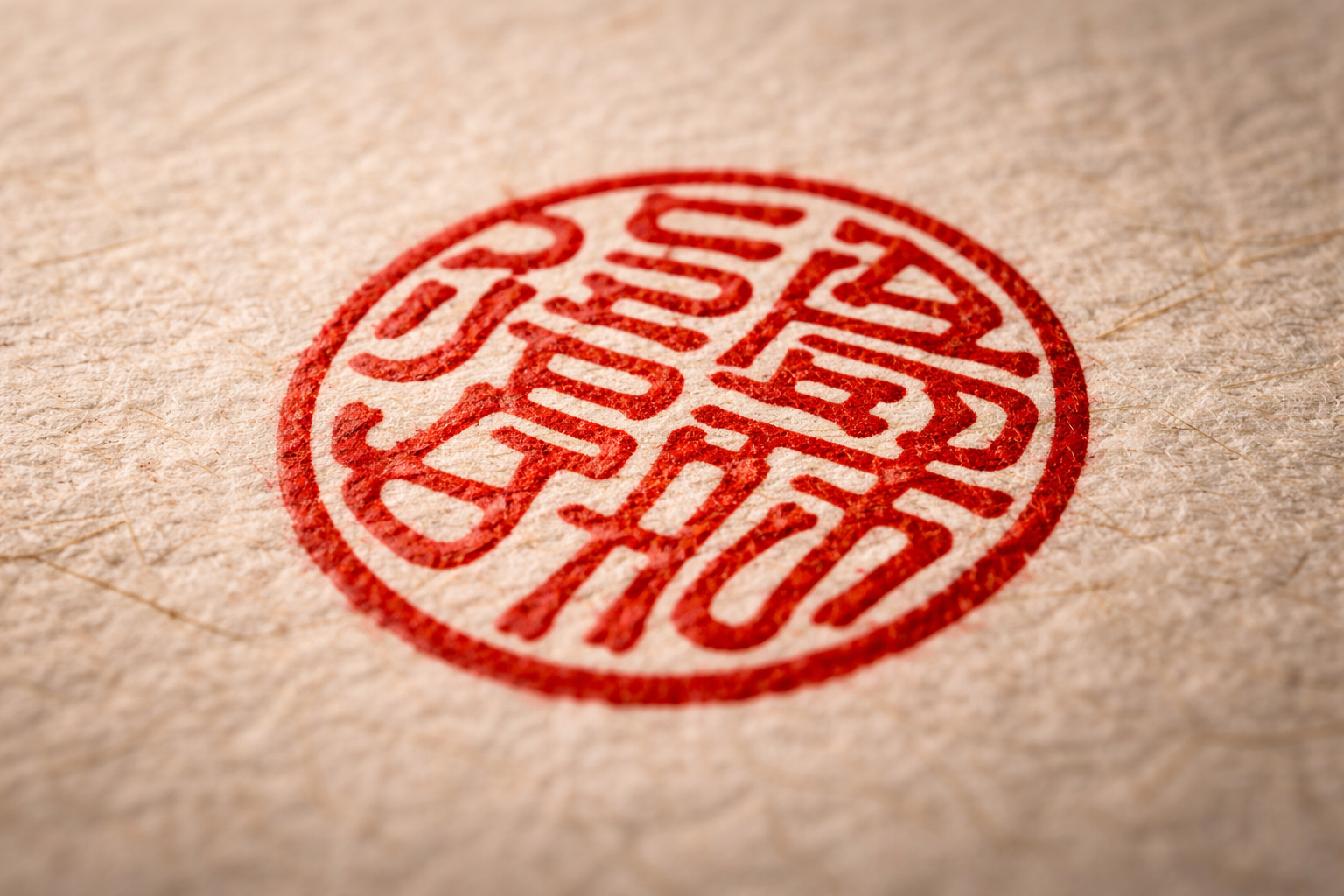
Paper with seal impression and breathing space

Blank space matters

In both calligraphy and seal design, blank space is not a leftover. It allows the lines to live, gives the work breathing room, and helps the whole composition settle.

A good work of calligraphy and a good seal face are both complete through their empty space as well as their lines.

What calligraphy and seal design share is a way of treating characters not merely as meaning, but as line and space.
— hanko.co.jp calligraphy note

Writing with a brush and carving with a tool

The expressive direction is related, but the bodily act is different.

Calligraphy

  • The movement of the brush becomes the line directly
  • Speed, pressure, and flow appear easily
  • The work often carries a strong sense of immediacy
  • Line unfolds through time

Seal-face design

  • The line is established through carving
  • Removing, preserving, and cutting are essential
  • It often has a stronger design-structural character
  • It creates order inside a very small field

Calligraphy shows movement directly. Seal design often shows the composed result of judgment more than the movement that produced it.

Even so, when a seal face feels good, what we often sense inside it is a kind of calligraphic dignity. In that sense, a seal face can carry the spirit of writing even when nothing was literally written by brush.

A seal face is not calligraphy, yet a good seal face often carries calligraphic feeling

Even when carved with tools, the dignity of line can still make us feel the presence of writing.

Seal script and the world of writing

Seal script belongs to calligraphy, but it also holds a special place inside seal tradition.

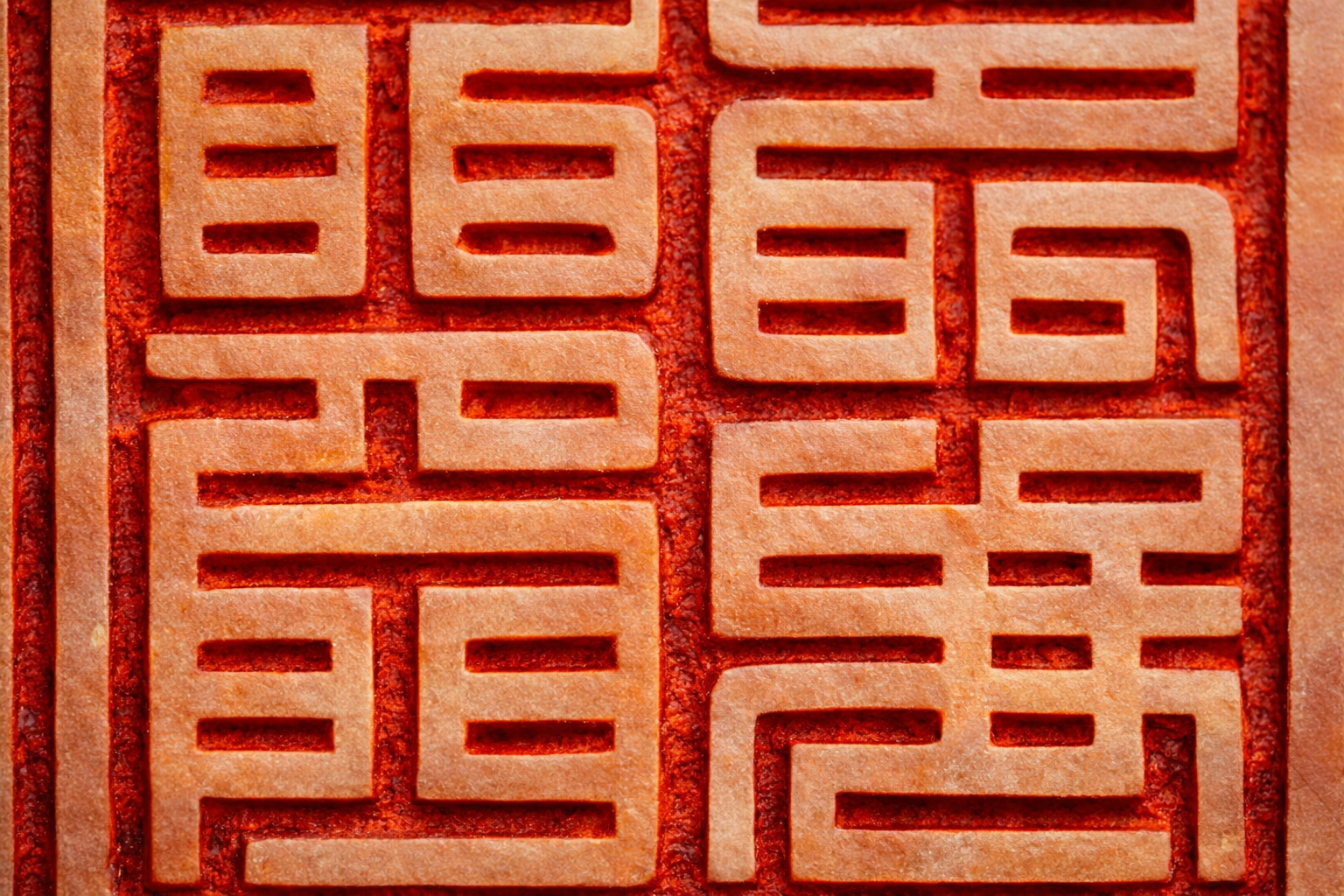
Geometric close-up of seal script

Seal script settles line well

Compared with more modern writing styles, seal script usually resists abrupt movement and is easier to organize inside a very small field. That makes it especially suitable for seal faces, where dignity of line and structural balance must live together.

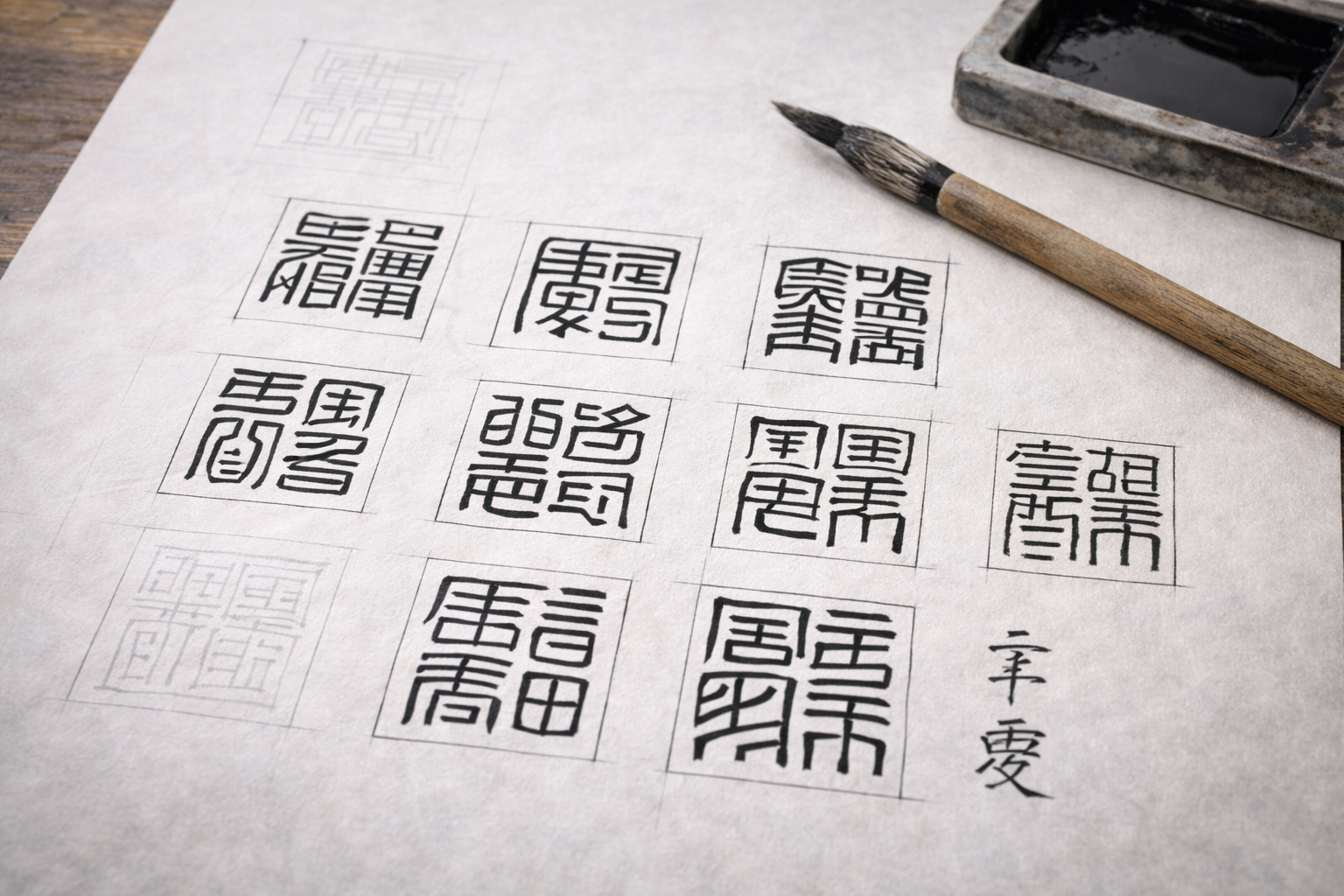
Planning sheet with script ideas

From readable text to visible form

Seal script often pushes us beyond simple readability. It asks us to see characters as forms, as patterns of line, and as visual presences. That is one reason it works so well in both calligraphy and seal design.

Seal script is a script of writing that also works with special beauty inside the seal face.
— hanko.co.jp seal-script note

The meaning of rakkan in calligraphy

The relationship between writing and seal becomes especially visible in the world of rakkan.

Red seal paste suggesting rakkan red

The seal completes the work

In calligraphic works, a rakkan seal is not only a substitute for a signature. It also tightens the blank space, places a point of red into the black-and-white field, and helps settle the structure of the whole composition.

Rakkann is not outside the writing. It is part of the writing’s finished form.

Quiet red impression

Red answers black and white

In a calligraphic field, black ink, white paper, and red seal impression speak to one another. The seal is not successful merely because it is beautiful alone. It must answer the writing and the blank space around it.

That is why rakkan should be understood as part of overall composition.

What calligraphic awareness gives to seal design

An eye formed by calligraphy can be very helpful in understanding good seal faces.

What calligraphic awareness helps with

  • Seeing strength and quietness in line
  • Recognizing differences in character skeletons
  • Understanding the role of blank space
  • Judging dignity and atmosphere
  • Feeling the balance between order and looseness

What does not transfer directly

  • Brush energy cannot simply be copied into carving
  • Tiny seal faces require more compression and control
  • Practical seals must still preserve trust and clarity
  • Too much expressive looseness may not suit daily-use seals
  • The line must work as carved form, not only as written gesture
The eye that understands calligraphy can become an eye that understands dignity of line and the meaning of blank space in seals.
— hanko.co.jp viewing note

The relationship changes between practical seals and artistic seals

Sometimes calligraphic feeling stands back. Sometimes it comes forward.

Practical seals

  • Stability is often the priority
  • Readability and trust still matter
  • Calligraphic expression is often more restrained
  • Balanced order is emphasized

Artistic seals and rakkan

  • Calligraphic response becomes more important
  • Some looseness or individuality may be welcome
  • The relationship of red, black, and white becomes central
  • The seal face itself can become visibly artistic

In registered seals or bank seals, pushing calligraphic energy too far to the surface can disturb calmness. In rakkan, however, it may be essential that the seal respond to the motion and breathing of the writing.

So the relationship between calligraphy and seal design is not always equally visible. Its depth and expression shift with purpose.

Conclusion

Calligraphy and seal design are deeply linked by their shared treatment of characters as line, space, and structure.

Calligraphy is written with a brush, and seal faces are carved with tools. Yet both are joined by concern for the dignity of line, the role of blank space, and the act of seeing characters as form rather than information alone. In the worlds of seal script and rakkan especially, writing and seal design may be seen as different expressions of one larger aesthetic logic.

That is why understanding seal design becomes easier with an eye trained by calligraphy. And understanding good calligraphy can also be sharpened by seeing how severe, compressed, and exact visual order becomes inside a small seal.

Related pages

These pages deepen the link between writing, seal script, and seal-face composition.