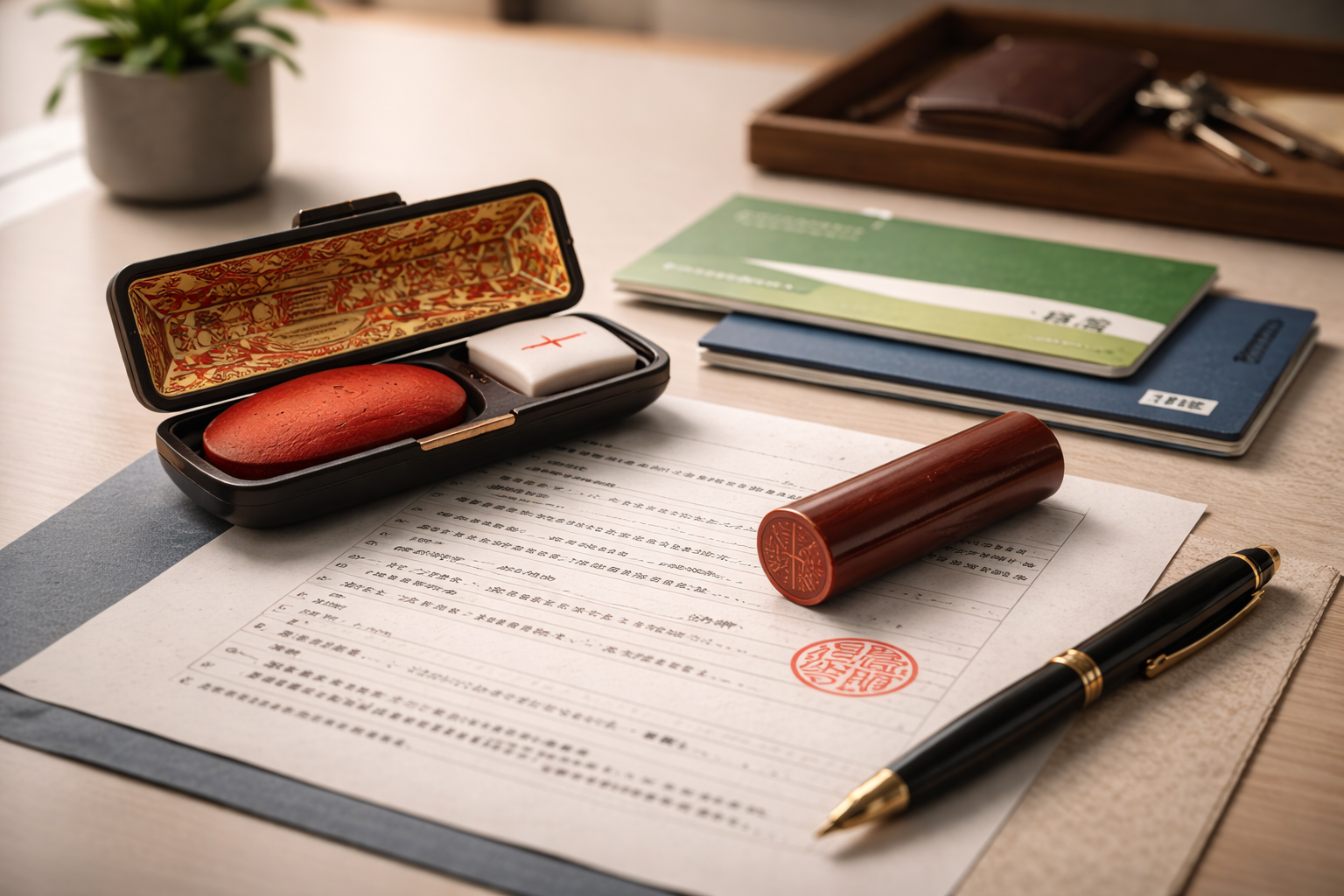
Signatures Already Appear in Many Ordinary Situations
Even inside Japan, signatures have long been used in everyday life. Credit card slips, hotel registration cards, courier receipts, international paperwork, consent forms, English-language documents, and many service interactions may ask for a signature rather than a seal.
More recently, digital contracting and online identity verification have expanded that space even further. So the choice between seal and signature is often not a cultural argument. It is a practical question about the type of document, the people involved, and the workflow around it.
Why Signatures Fit Certain Situations Better
Signatures are widely understood across borders. In international business, hospitality, travel, and multilingual environments, a signature often requires less explanation than a seal.
A signature is also convenient. A person can write it immediately without carrying a physical tool. That makes it useful when the document is handled on the spot, away from home or office, or in a setting where people are expected to act quickly.
When Signatures Are More Common
International contexts
Cross-border contracts, English-language documents, and foreign-facing services often prefer signatures.
Immediate confirmation
Deliveries, check-ins, simple receipts, and short-form acknowledgments are often easier with a signature.
Digital workflows
Electronic approval and online signing systems naturally align more with signature-based thinking than with physical stamping.

Internationalization Helped Expand Signature Use
In Japan, signatures became especially familiar through contact with foreign institutions and foreign-style documents. Hotels, airlines, shipping companies, international schools, global companies, and overseas-facing contracts all helped normalize signature-based practice.
This did not happen because seals became meaningless. It happened because signatures were often the most mutually understandable format for the people involved.
As Japan became more internationally connected, signatures became less exceptional and more routine.
Electronic Signatures Broadened the Signature Mindset
Japan’s Act on Electronic Signatures and Certification Business provides a legal framework for electronic signatures and gives qualifying electronic records a presumption of authentic establishment. That makes it easier to rely on digital consent without returning to paper and ink. :contentReference[oaicite:1]{index=1}
The Digital Agency also explains that Japanese Public Key Infrastructure, using the electronic certificate installed in My Number Card IC chips, can officially authenticate users online and confirm that contracts and other documents have not been tampered with. :contentReference[oaicite:2]{index=2}
In other words, even when there is no handwritten signature on paper, Japan is increasingly operating in a world where personal intent can be expressed and verified electronically. :contentReference[oaicite:3]{index=3}

Why Seals Still Remain in Other Settings
The growth of signatures does not mean seals disappeared. Banking, real estate, government paperwork, company documents, artistic use, and gift culture still preserve strong seal traditions.
Modern Japan therefore contains both systems at once: some situations feel more natural with a signature, while others still feel more formal or more reassuring with a seal.
Common Examples of Signature-First Situations
- Credit card slips and simple service confirmations
- Hotels, travel services, and international logistics
- Foreign company paperwork and English-language agreements
- Medical, educational, or institutional consent forms
- Electronic contracts and online procedures with digital authentication
In these cases, the signature is not a lesser substitute for a seal. It is often simply the format that best fits the document and the context.
The Future Is Not Seal or Signature, but Selection
In Japan, signature use will likely continue to grow wherever international clarity, digital speed, mobility, and electronic identity verification matter most. :contentReference[oaicite:4]{index=4}
But seal culture will remain in places where visible formality, institutional habit, or cultural meaning still carry weight.
The future is therefore not a simple winner-take-all model. It is a system where signatures and seals are chosen according to purpose.
Signatures are no longer unusual in Japan
Japan still values seals, but modern life increasingly gives signatures their own clear place. Wherever speed, portability, international understanding, or digital procedure matter, signatures often make better sense.
That does not erase hanko culture. It shows how Japanese document culture is becoming more flexible.