
Does a Business Contract Still Need a Physical Seal?
In modern Japan, not every business contract requires a physical hanko. Japan’s legal framework recognizes electronic signatures and provides a presumption of authentic establishment for qualifying electronic records under the Act on Electronic Signatures and Certification Business. :contentReference[oaicite:5]{index=5}
That means contract validity does not depend only on whether a paper document bears a seal. What matters more is agreement, identity, integrity of the record, and the ability to show that the document truly reflects the parties’ intent.
Yet many companies still use seals in practice. That is because the role of hanko in contracts has always been partly legal, but also deeply procedural and cultural.
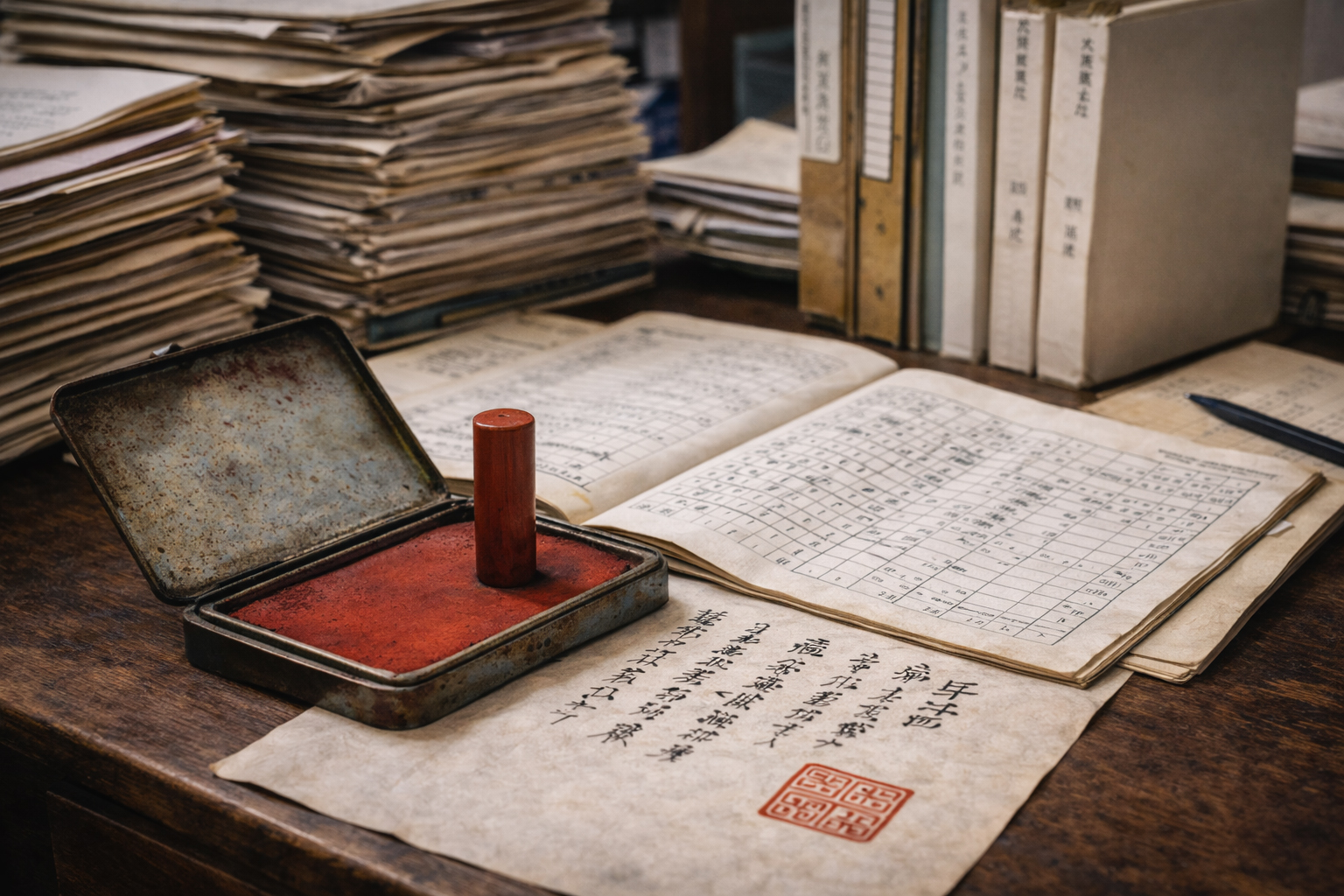
Why Seals Were So Strong in Contract Practice
A seal on a contract could signal several things at once. It showed that the document was not merely an informal draft. It suggested that the company had formally approved the document. It gave the other side a visible sign of seriousness and completion.
In that sense, company seals were not only marks on paper. They were part of how organizations presented responsibility, authority, and order to each other.
How Contract Practice Changed After COVID
The COVID era pushed many Japanese companies to adopt electronic contracts much faster. Remote work made it obvious that requiring office visits simply to stamp paper was inefficient.
Once that weakness became visible, many businesses reconsidered the full paper cycle: printing, stamping, mailing, waiting, countersigning, and filing originals. Electronic contracts offered speed, easier storage, searchability, and better compatibility with remote approval systems.
Even so, the shift has not been uniform. Some important contracts, conservative counterparties, finance-related transactions, or companies with older internal policies still prefer paper and physical seals.
Why paper still appeals
It feels familiar, visible, ceremonial, and sometimes easier to coordinate with long-established partners.
Why electronic contracts grow
They are faster, easier to store, easier to search, and far more convenient for distributed teams.
What most companies do now
They often choose between paper and digital depending on the counterparty, the contract type, and internal policy.
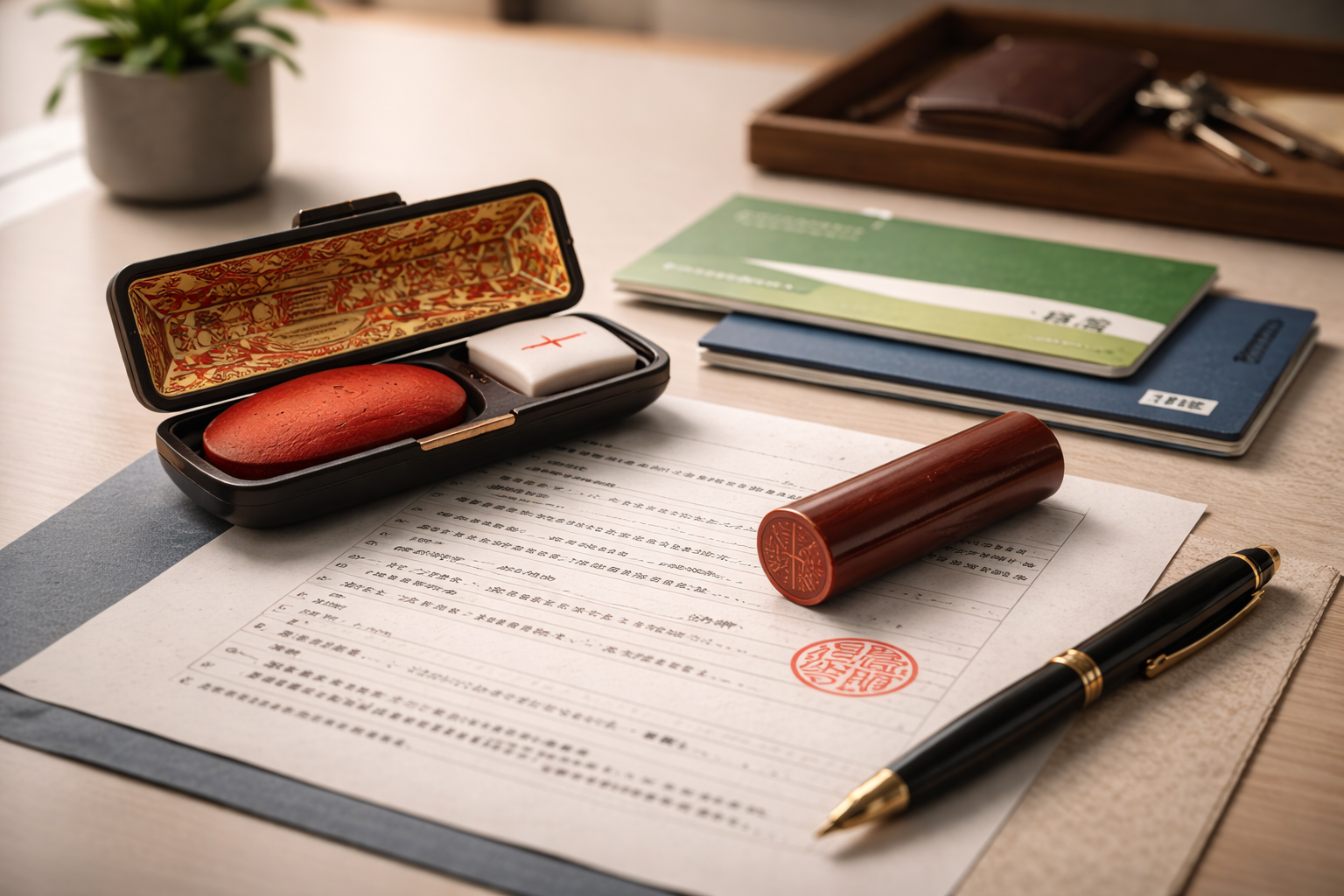
Company Seal Culture and Digital Identity
Japan also has digital infrastructure that parallels some of the old trust functions associated with company seals. The Digital Agency explains that the commercial registration electronic certificate is used for online administrative procedures and electronic contracts between companies and has the same function as a paper certificate of a company’s seal impression. :contentReference[oaicite:6]{index=6}
The Digital Agency also announced that from July 2026 it plans to introduce remote signing for commercial registration electronic certificates in cooperation with gBizID, allowing digital signatures to be granted online using a smartphone app and browser-based management. :contentReference[oaicite:7]{index=7}
This shows that business contract practice in Japan is not simply abandoning formality. It is rebuilding formality through digital tools.
Why Many Companies Still Keep Hanko in the Process
Seals remain in business contracts for several practical reasons.
- Internal rules may still assume paper contracts
- Some counterparties still request stamped originals
- Formal signing can feel more weighty and final
- Existing filing and audit habits may still be paper-based
- Corporate culture may still equate a seal with reassurance
Especially in long-term B2B relationships, a contract is not only a legal instrument. It can also be a ritual of mutual confirmation, and seals still play a role in that ritual.
Where Business Contracts Are Heading
Japanese business contracts will likely continue moving toward electronic execution. The legal basis for electronic signatures exists, and practical identity and signing infrastructure continues to expand. :contentReference[oaicite:8]{index=8}
At the same time, physical seals are unlikely to disappear immediately from all business contexts. Commercial habits, counterparty expectations, internal controls, and the human desire for visible formality still matter.
The most realistic near-future picture is a hybrid one: routine contracting becomes more digital, while some important or ceremonially weighty contracts still keep paper and seals in the workflow.

Hanko Is Not Leaving Contract Culture So Much as Changing Its Role
Seals are no longer automatic in every business agreement. But that does not mean they have become meaningless.
Instead, their role is becoming more selective. Where speed and convenience dominate, digital contracts win. Where ritual, visible authority, or counterparty expectation still matter, hanko remains part of the language of business.
Contracts may leave paper, but formality remains
Japanese business agreements are moving beyond total dependence on physical seals. Yet the deeper need for formal proof, visible intention, and company-level responsibility is not disappearing. It is being redistributed across both paper and digital systems.