Why Banks Relied So Strongly on Seals
Banks handle money, identity, and risk. They need to know who is acting, whether a request is genuine, and whether the person in front of them is truly authorized to move funds or change account information.
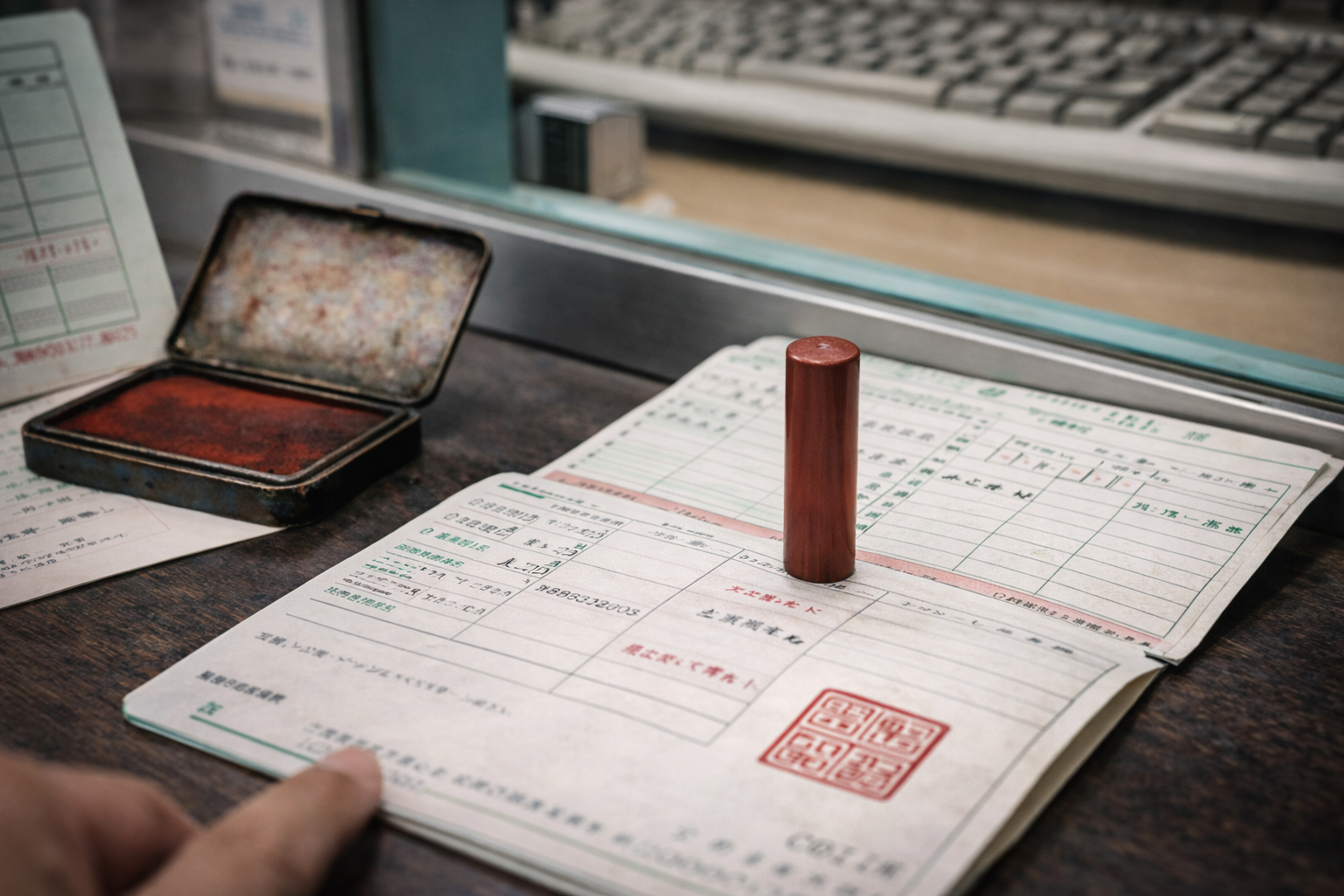
For a long time in Japan, one practical answer was the registered bank seal. The seal impression filed with the bank could be compared against the impression on a request form, making it part of the institution’s verification process.
In that sense, the bank seal was not only symbolic. It was part of how financial procedure was operationalized.

What Is a Bank Seal?
A bank seal is the seal that a customer registers with a financial institution for account-related procedures. Many people historically kept it separate from their jitsuin or other personal seals in order to reduce risk and manage security more carefully.
In older banking culture, passbook, registered seal, and in-person procedure often felt like a single package. That helped make hanko feel deeply tied to banking itself.
Do Banks in Japan Still Need Hanko?
Sometimes yes, but no longer always. Japan’s Digital Agency is actively promoting broader private-sector use of My Number Card–based identity verification, electronic signatures, and safer online transactions, including examples involving financial procedures and loan-related processing. :contentReference[oaicite:5]{index=5}
The Agency’s published case examples include financial procedure portal services and loan screening flows using My Number Card–based identity verification, showing that digital alternatives to older seal-centered workflows are already in real use. :contentReference[oaicite:6]{index=6}
So banking in Japan is gradually moving from a world of seal-impression comparison alone toward a world that also uses digital authentication, apps, and stronger electronic identity tools.
The older default
Passbook, registered seal, bank counter, paper form. This was the familiar rhythm of many banking procedures.
The newer direction
Identity documents, app-based procedures, online account opening, and digital authentication tools are becoming more common.
The practical reality
Whether a seal is needed still depends on the bank, the account type, and the exact procedure being performed.
Why Seals Still Remain in Banking
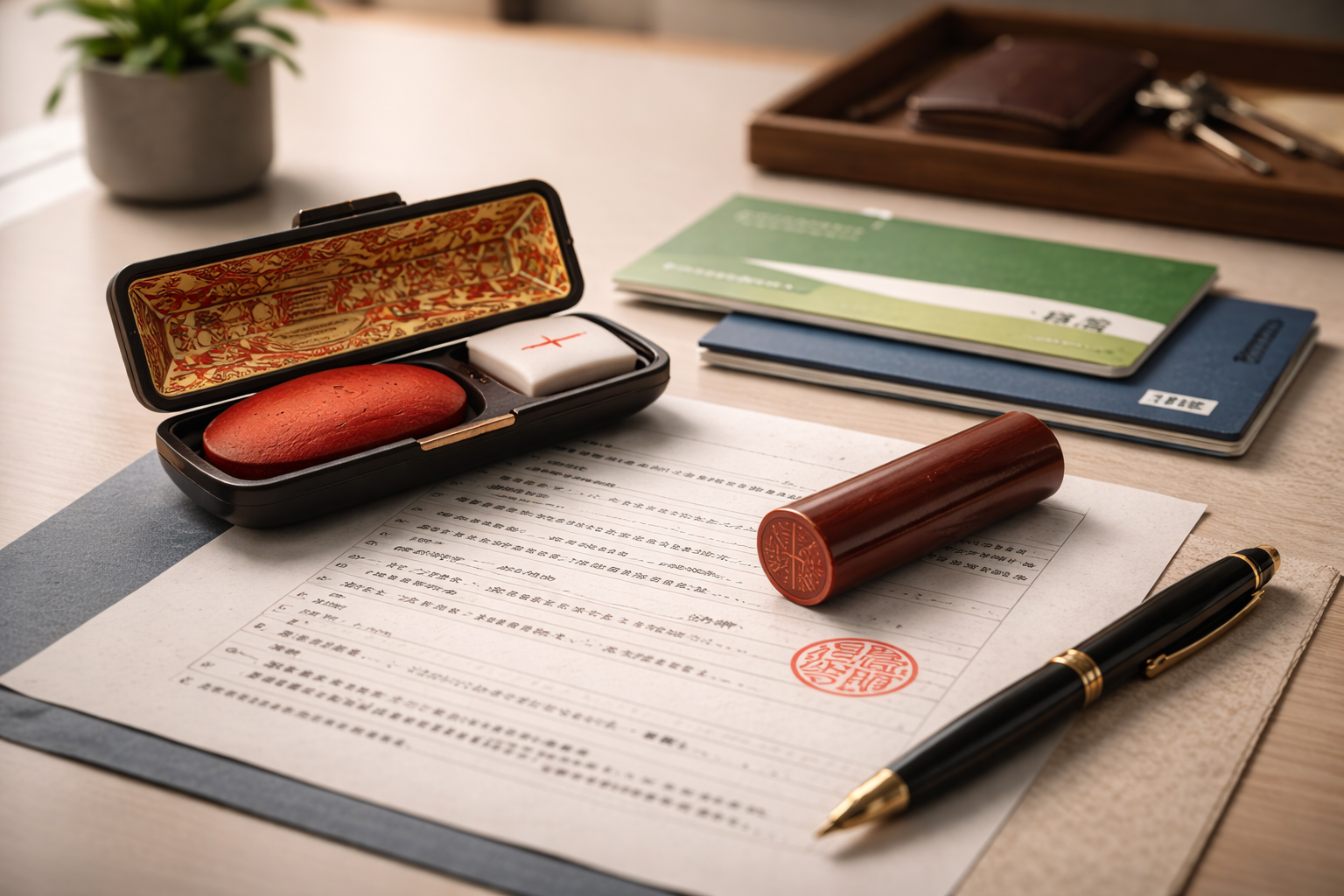
There are several reasons seals still survive in bank procedures.
- Older accounts may still be built around a registered seal
- Some counter procedures still rely on impression matching
- Some customers still feel more secure with a physical seal
- Financial institutions are cautious by design
- Banks must serve customer groups with very different comfort levels and habits
In finance, systems do not change based on convenience alone. Risk control, fraud prevention, error handling, and institutional continuity all matter.
From Seal Culture to Identity Culture
Older banking culture in Japan often felt organized around the seal itself. Today, the deeper issue is identity.
The Digital Agency is expanding the ecosystem around Japanese Public Key Infrastructure and My Number Card–based authentication for private-sector use, including services that require strong identity verification. :contentReference[oaicite:7]{index=7}
That does not mean seals are being “banned” from banking. It means the methods used to confirm a person’s authority are becoming more layered: seal impression, identity document, app authentication, and electronic certification can now coexist.

Where Banking Is Heading
In Japan, routine banking procedures are likely to keep moving toward digital channels, especially as online identity verification and private-sector digital-authentication infrastructure become more widespread. :contentReference[oaicite:8]{index=8}
But it is unlikely that every bank process will become instantly seal-free. Older accounts, inheritance issues, name changes, exception handling, and high-caution procedures may still preserve some seal-linked logic for quite some time.
The most realistic future is a hybrid one: more digital convenience for routine actions, with some seal culture remaining in exceptional or higher-trust procedures.
The bank seal is changing role, not disappearing overnight
Bank seals once stood at the center of Japanese personal finance. Now their role is shrinking as digital identity, online procedure, and stronger electronic verification spread.
Even so, in a cautious industry built on trust, hanko still survives as part memory, part procedure, and part reassurance.