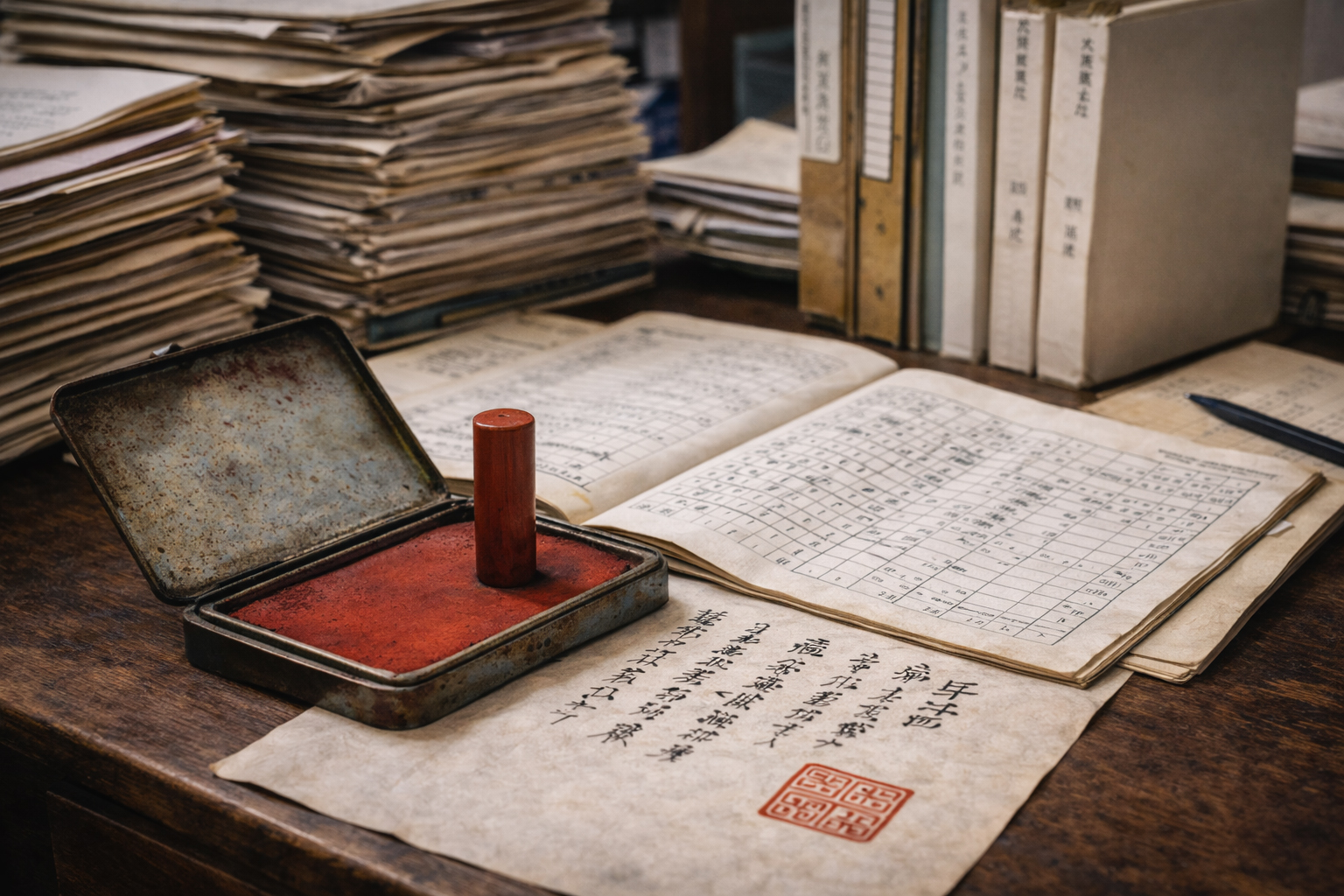
What Declined Was Routine Stamping
It is important to be precise. Hanko itself did not vanish from Japanese life. Registered seals, bank seals, company seals, artistic seals, and gift seals still exist and still matter.
What declined most sharply was the everyday use of seals for small office actions: “seen,” “received,” “checked,” “approved,” and other lightweight confirmations that once lived comfortably in paper-based workflow.
In that sense, the decline is not the end of seal culture. It is the decline of a specific office habit that belonged to an earlier administrative rhythm.
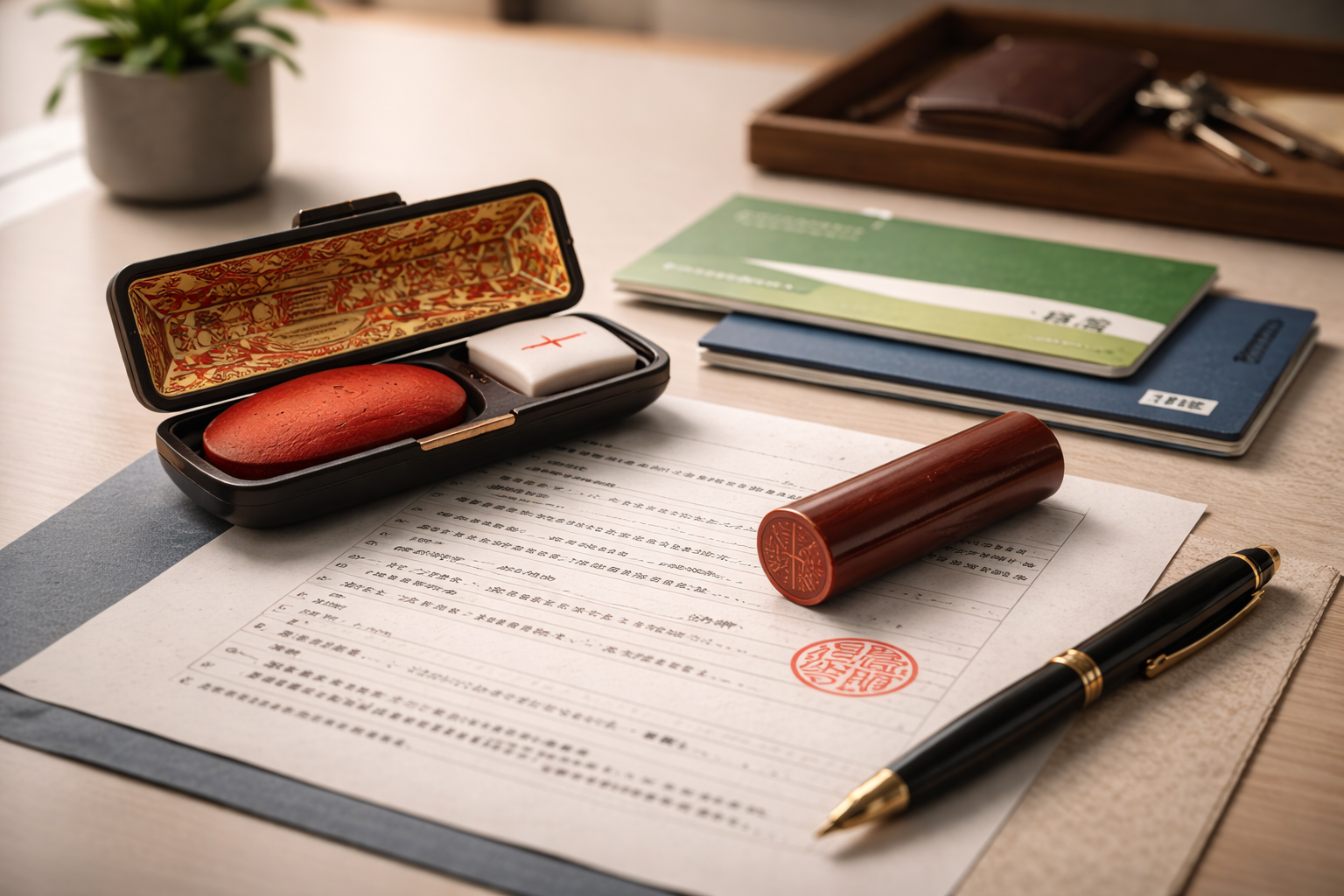
Reason 1: Work Now Moves Faster
Traditional paper approval takes time. A document must be printed, passed along, stamped, carried, reviewed, and stored. In a face-to-face office culture, that once felt normal.
But modern work moves differently. Email, chat, cloud documents, workflow systems, and remote collaboration tools allow decisions to move in seconds. When speed becomes essential, paper-based routine stamping begins to feel slow and unnecessary.
That change did not make seals meaningless. It simply reduced the need for them in repetitive, high-volume daily tasks.
Reason 2: Remote Work Exposed the Problem
During the COVID era, many people in Japan were asked to work from home. Yet some organizations still depended on physical stamps for routine approvals. In practical terms, that meant certain workers had to go to the office just to stamp paper.
This became a turning point. Companies began to ask whether all those daily seals were truly necessary, or whether they had simply continued because no one had challenged the habit before.
Once that question was asked seriously, many routine uses disappeared quickly.
Earlier office culture
A seal was a common sign of movement through the system. It confirmed that paperwork had been touched, seen, or accepted.
Today’s workflow
Systems can track who reviewed what, when they did it, and what changed, without relying on paper or physical circulation.
What remains
Seals still carry weight in important, formal, symbolic, or identity-sensitive situations.
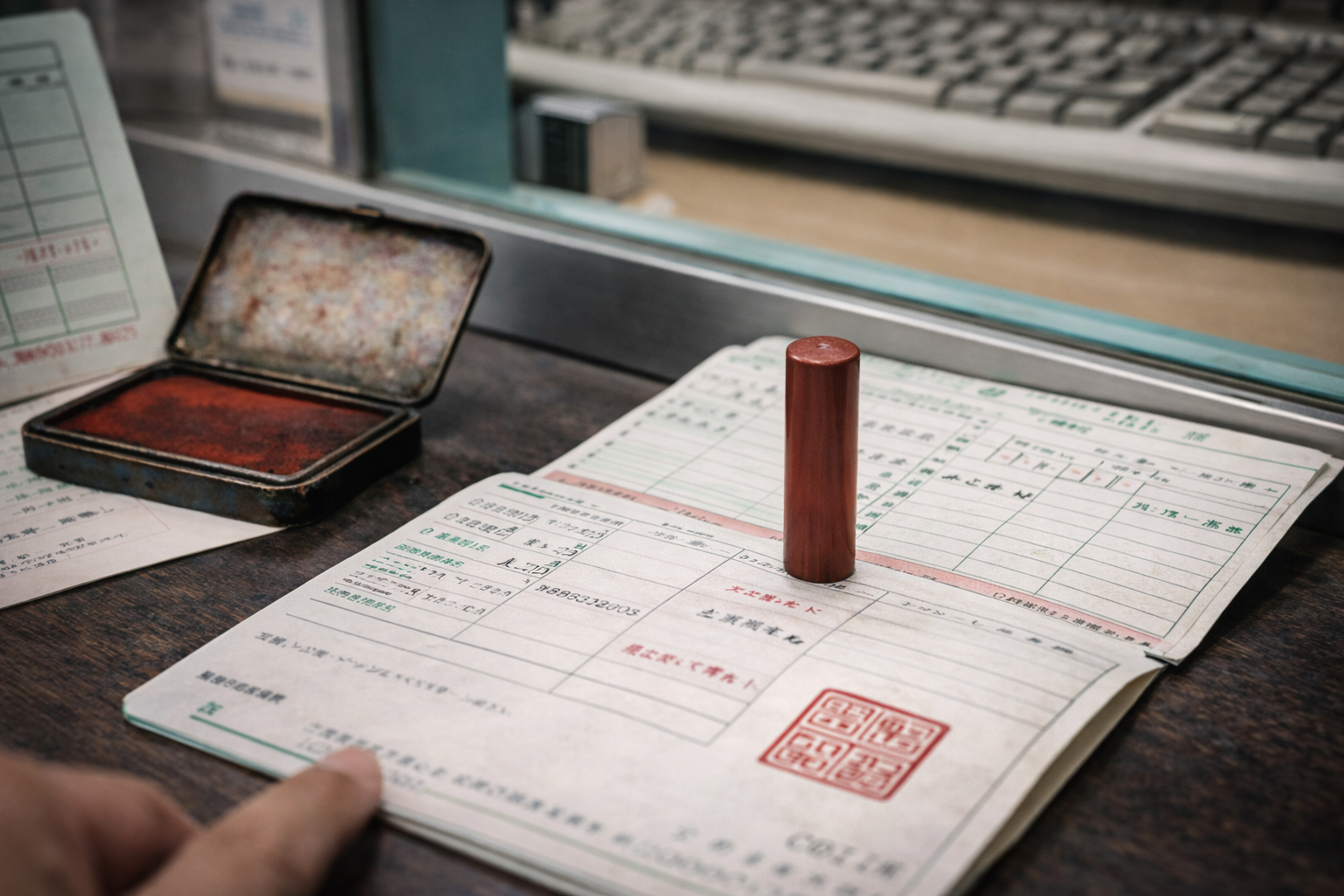
Reason 3: Digital Tools Often Keep Better Records
In daily operations, organizations need more than a mark on paper. They need records that can be searched, shared, audited, and retrieved easily.
Digital workflows often do this better. They can log time, user identity, approval sequence, and document history automatically. For routine internal processes, that is usually more efficient than stamping a paper sheet and filing it away.
So the decline of everyday hanko use is not simply a cultural rejection. In many cases, it reflects a practical preference for systems that are easier to manage.
Reason 4: Younger Workers Expect a Different Environment
Many younger professionals in Japan entered workplaces where digital communication already came first. They share files online, review documents on screen, and use cloud systems for approval and storage.
In those environments, routine stamping feels less natural than it did for earlier generations. As a result, seals are no longer experienced primarily as daily office tools. Instead, they are often encountered during more important life events such as renting, banking, marriage, inheritance, or formal registration.

Why Hanko Did Not Disappear Completely
Even as routine office stamping declined, seals retained value for reasons that go beyond efficiency.
- They can make intention feel visible and deliberate
- They create a sense of formality at important moments
- Some legal and institutional processes still expect them
- They remain culturally legible as signs of trust and seriousness
- They also survive as crafted objects, gifts, and expressions of identity
In other words, daily convenience may have shifted to digital systems, but symbolic and formal weight still gives seals a continuing place.
The Future: From Constant Use to Chosen Use
Routine office seals will likely continue to decline. Internal acknowledgment stamps, circulation stamps, and simple paper approvals are increasingly hard to justify when faster digital tools exist.
Yet that does not mean the cultural meaning of hanko is weakening. In some ways, the opposite is happening. When seals are no longer used casually everywhere, they become more concentrated in moments that matter.
The decline of everyday hanko use is therefore not only a story of loss. It is also a story of refinement: fewer casual impressions, more meaningful ones.
From daily habit to intentional mark
Japan did not stop using seals overnight. What changed was the role of the ordinary office stamp. As digital systems took over routine workflow, hanko moved away from constant repetition and toward selected moments of formality, identity, and cultural meaning.