Type Guide

Personal vs Official Seals

Some seals are used by individuals. Others are used by companies, schools, offices, and public institutions. They may look similar, but they do not mean the same thing. A personal seal shows that a person has acknowledged, approved, or taken responsibility. An official seal shows that an organization or public authority stands behind a document. Understanding this difference makes the larger logic of hanko culture much clearer.

hanko.co.jp Types / Basic Guide Reading time 7–10 minutes

The word “hanko” sounds simple, but actual usage is quite varied. There are everyday personal seals, bank seals, registered seals, company representative seals, square company seals, office seals, school seals, and many other forms.

The clearest way to explain the difference is this: personal seals represent an individual person, while official seals represent an organization, institution, or public authority.

What is a personal seal?

Start with the world of seals used by individuals.

Personal desk with seal and papers

A mark of personal acknowledgment

A personal seal shows that a specific person has acknowledged, approved, or taken responsibility. From the most ordinary everyday seal to the bank seal and registered seal, the unit behind the seal is always the individual.

In other words, a personal seal is centered on the person rather than the institution.

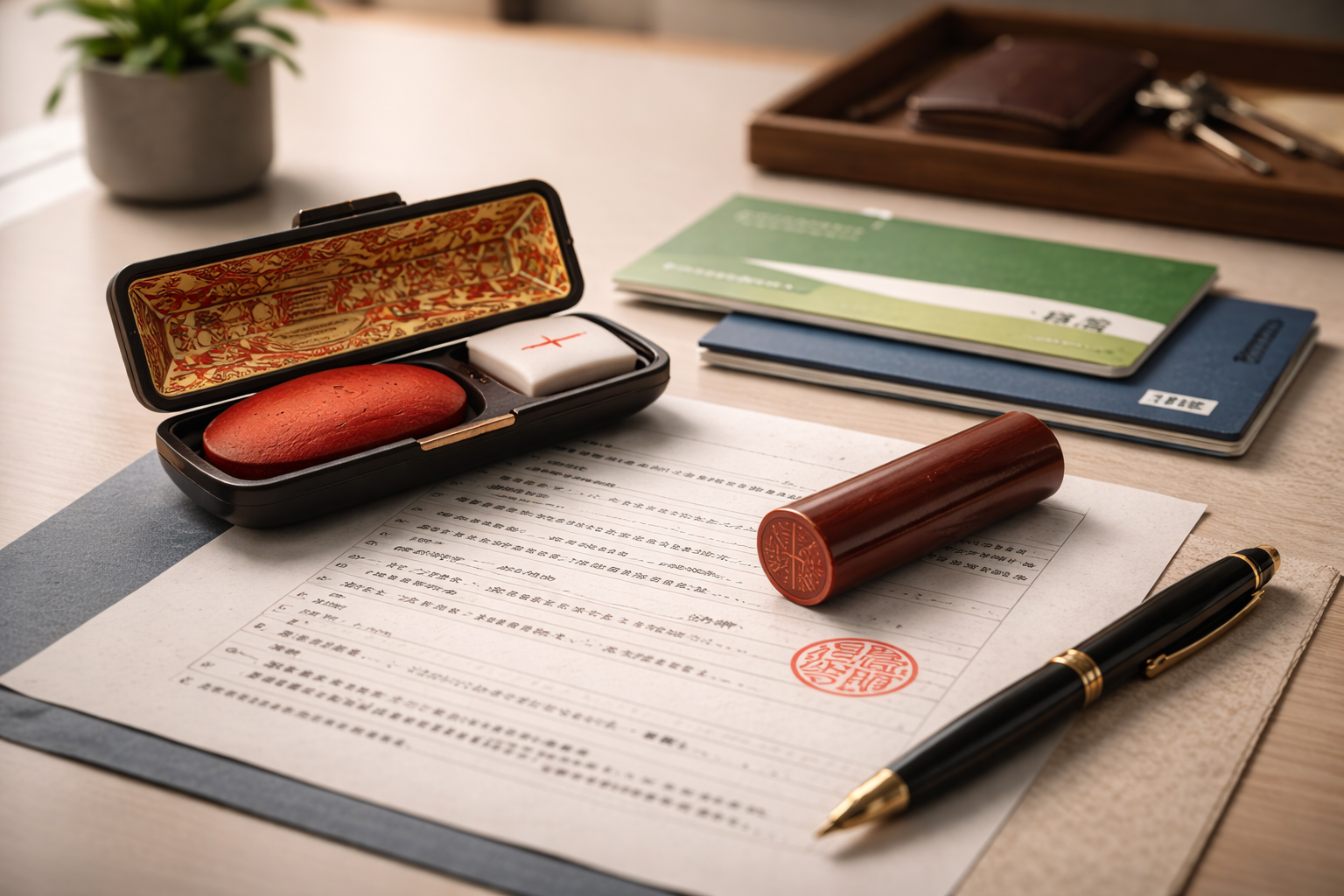
Formal desk with contract and personal seal

Not all personal seals carry the same weight

Personal seals also differ among themselves. An everyday seal, a bank seal, and a registered seal do not all function the same way. Some are used for ordinary confirmation, others for banking, and others for heavier formal and legal contexts.

The meaning changes depending on how much formal confirmation is required.

A personal seal is a seal that shows a person has been involved.
— hanko.co.jp type note

What is an official seal?

Official seals belong to institutions rather than individuals.

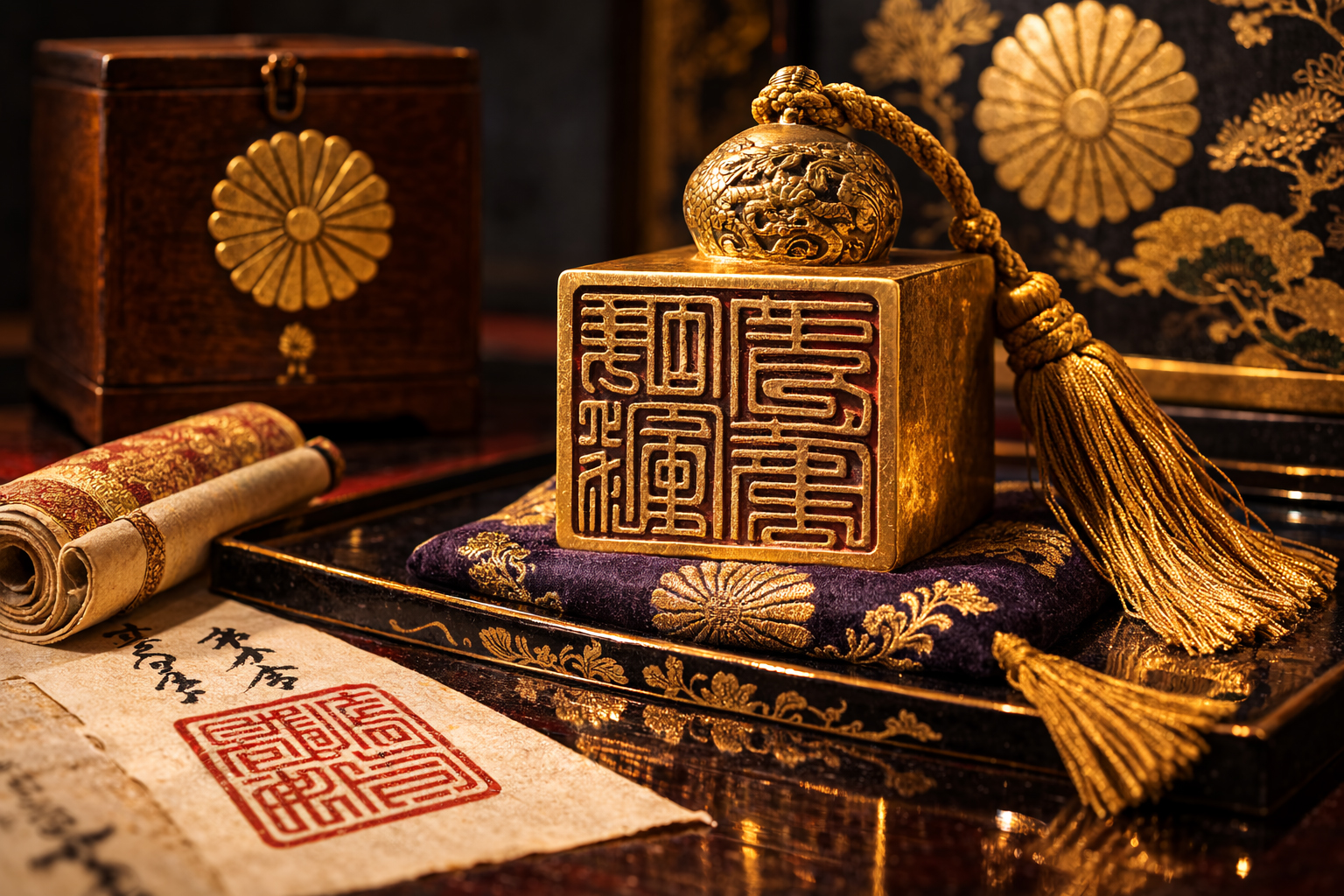
Display evoking official authority seals

A mark of organizational authority

Official seals are used by companies, schools, offices, public institutions, and government bodies. When such a seal is stamped, it usually means not “this person feels so,” but rather “this document is issued under this organization or this authority.”

The crucial point is that the subject behind the seal is institutional, not personal.

Office paperwork with official seal

A wider field of responsibility

Once an official seal is applied, a document may be treated not merely as something checked by a person, but as a formal act of the company, office, or institution itself.

That is one reason official seals usually require tighter control and more careful handling.

A personal seal says “this person.” An official seal says “this organization.”

The key difference is not appearance, but what kind of authority the seal is representing.

Main differences between personal and official seals

The clearest differences can be organized like this.

Personal seals

  • They are centered on an individual person
  • They show personal acknowledgment or responsibility
  • They include everyday seals, bank seals, and registered seals
  • They are used in personal contracts, banking, and daily paperwork
  • The meaning is close to “this person has been involved”

Official seals

  • They are centered on organizations or public authority
  • They show institutional formality
  • They include company representative seals, square seals, and office/public seals
  • They are used in certificates, contracts, and institutional documents
  • The meaning is close to “this organization stands behind this”

Where do company seals fit?

They are often confused with personal seals, but they usually belong on the official side.

Even when a company representative seal includes a person’s name, the seal does not usually function as that person’s private personal seal. If it is being used in the capacity of company representation, it is working as an official seal rather than a purely personal one.

So the real question is not only what words are carved into the seal, but what role the seal is playing when it is stamped.

What does history tell us?

Historically, personal and official seals do not grow in exactly the same way.

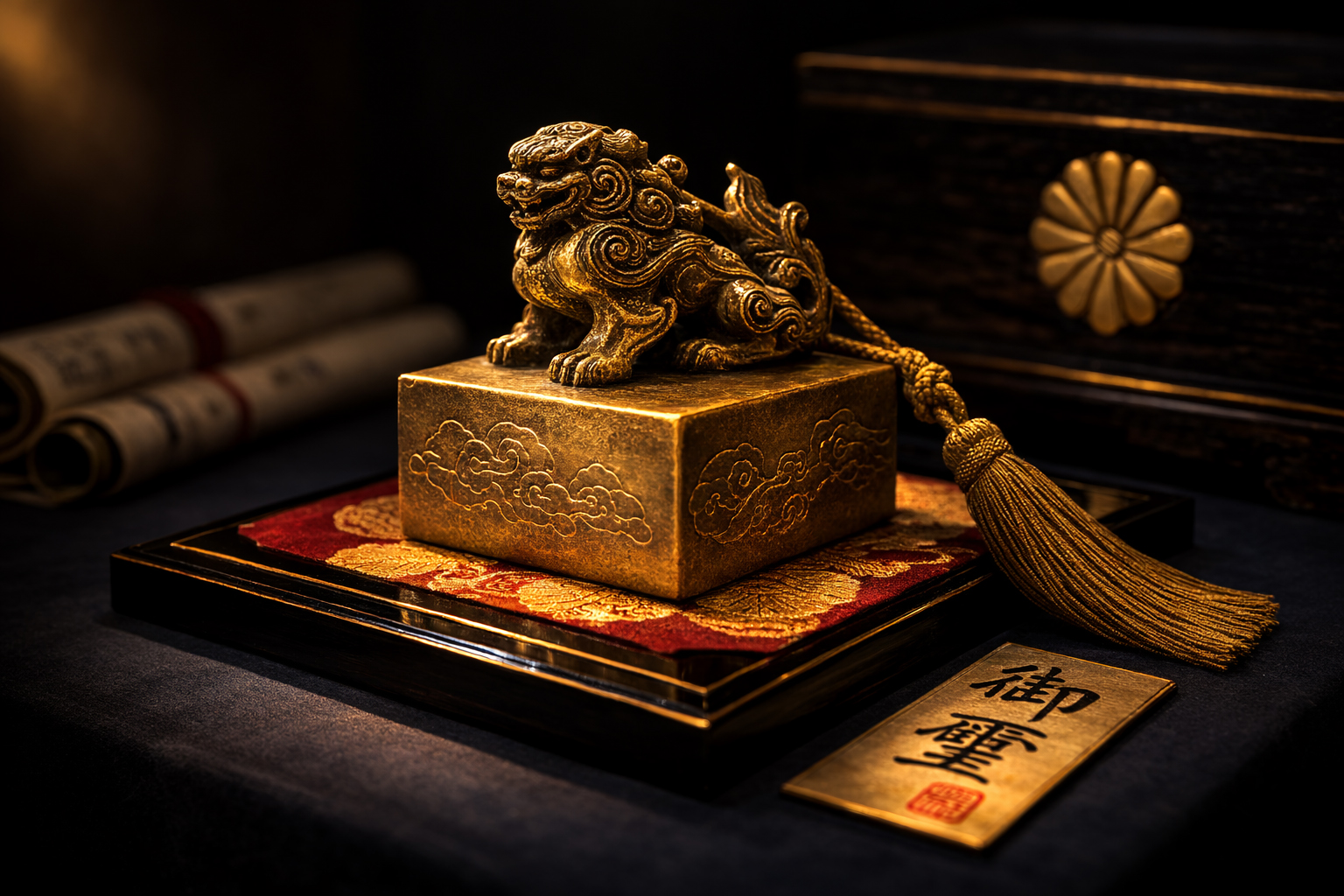
Ancient official seal display

Official seals come first

In the larger history of East Asia and Japan, seals first become powerful on the official side: states, offices, kingship, government, and formal documents.

In other words, the seal begins historically as a public or institutional form before it becomes an ordinary personal one.

Household seal on family desk

Personal seals spread later

Personal seals become more socially widespread through commerce, household practice, and later modern personal registration systems. Edo society broadens the use of seals, and Meiji and later Japan institutionalize them more deeply as forms of personal identity and responsibility.

In that sense, personal seal culture expands on top of an older official seal world.

Historically speaking, the seal becomes strong first as a public form and only later spreads as a personal form.
— hanko.co.jp history note

Why the boundary can still feel blurry today

Modern Japanese life sometimes makes the line between personal and official seals look less obvious.

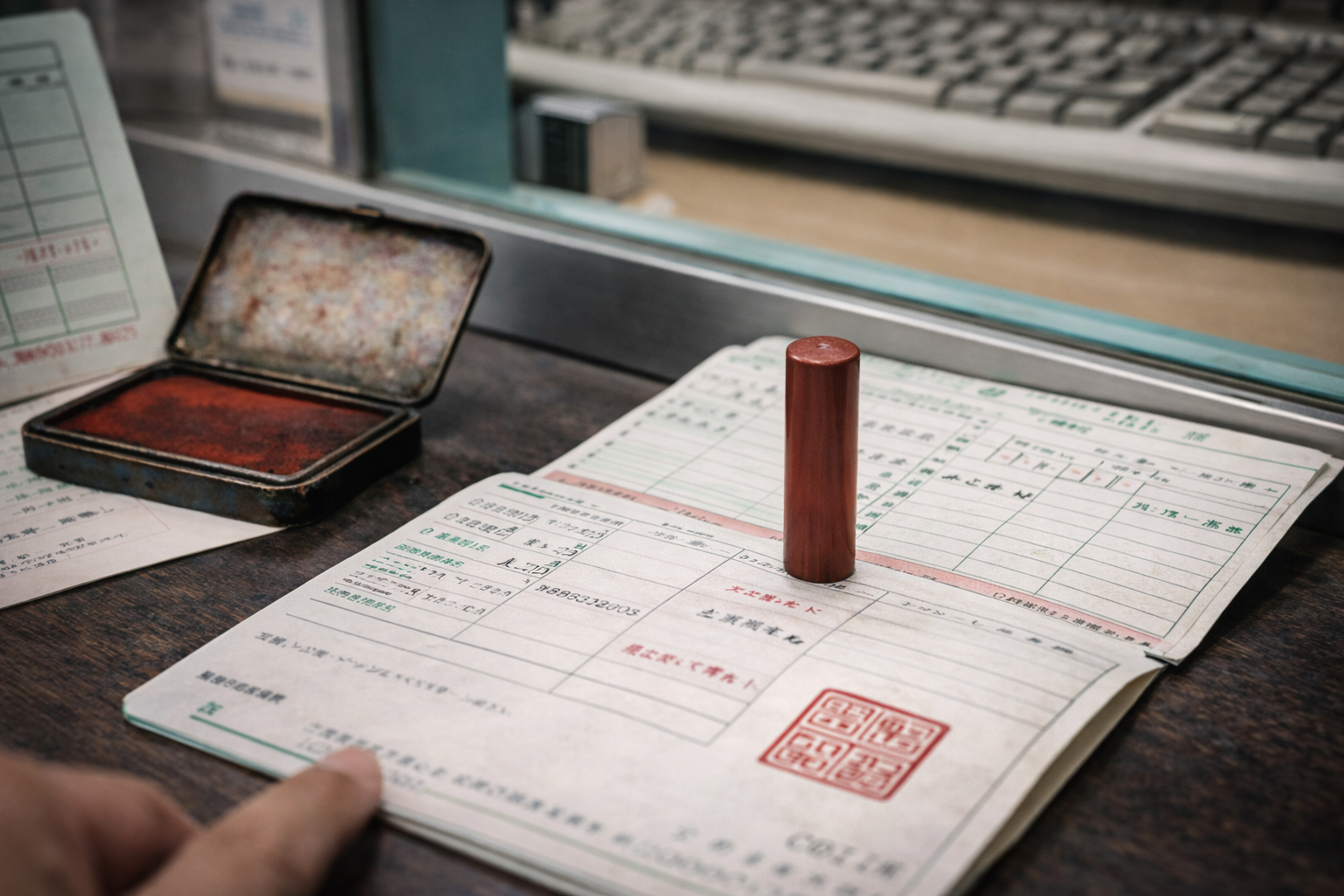
Bank paperwork and seal

Strong personal seals, light official seals

Some personal seals, such as registered seals, carry a very heavy meaning. At the same time, some official seals may be used in relatively routine internal procedures.

That is why “heavy” versus “light” does not fully explain the difference. The more important question is who or what the seal represents.

Bridge between traditional and digital trust

The distinction survives in digital form

Even in the age of electronic signatures and digital approval, personal authentication and organizational authentication remain distinct. In that sense, the old difference between personal seals and official seals continues in new technologies.

The form changes, but the question of representation does not disappear.

Conclusion

The key difference is not size or appearance, but the subject behind the seal.

A personal seal represents the confirmation, responsibility, and formality of one person. An official seal represents the authority of a company, office, school, institution, or public body.

Once that difference becomes clear, the hanko is easier to understand not as a simple object, but as a form that shows who is acting, who is responsible, and what kind of authority stands behind a document. That same logic continues into today’s world of digital approval and authentication.

Related pages

These pages pair well with this guide.