Ancient China
The roots of seal culture
The background to Japanese seal culture lies in the development of official seal systems on the Asian continent, where seals marked authority, office, trust, and documentary legitimacy.
History at a glance
Japanese seal culture did not appear all at once. It grew over centuries through state power, court culture, warrior documents, merchant practice, modern bureaucracy, banking, contracts, and now digital identity. This page gives a clear chronological view of that long story.
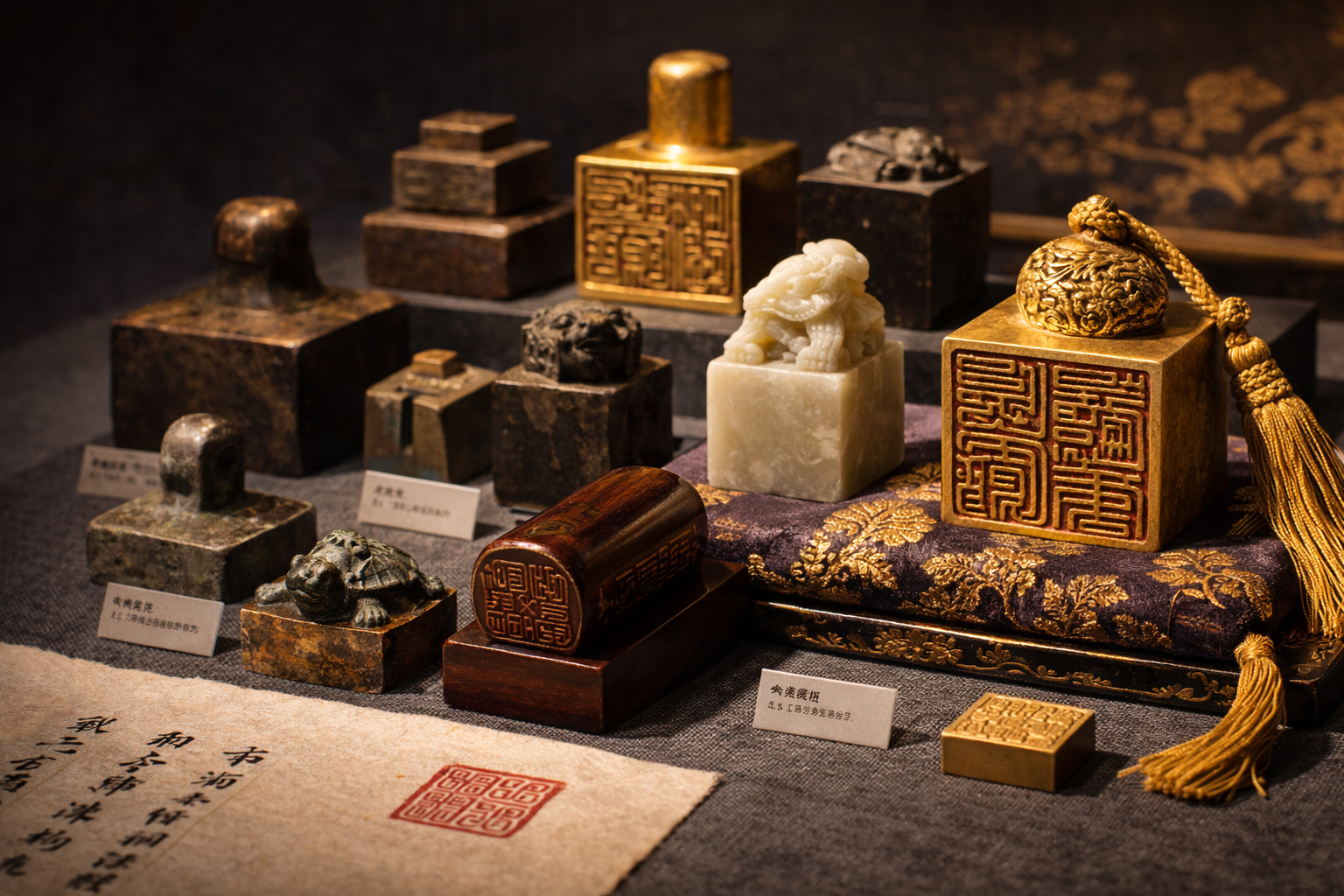
The background to Japanese seal culture lies in the development of official seal systems on the Asian continent, where seals marked authority, office, trust, and documentary legitimacy.
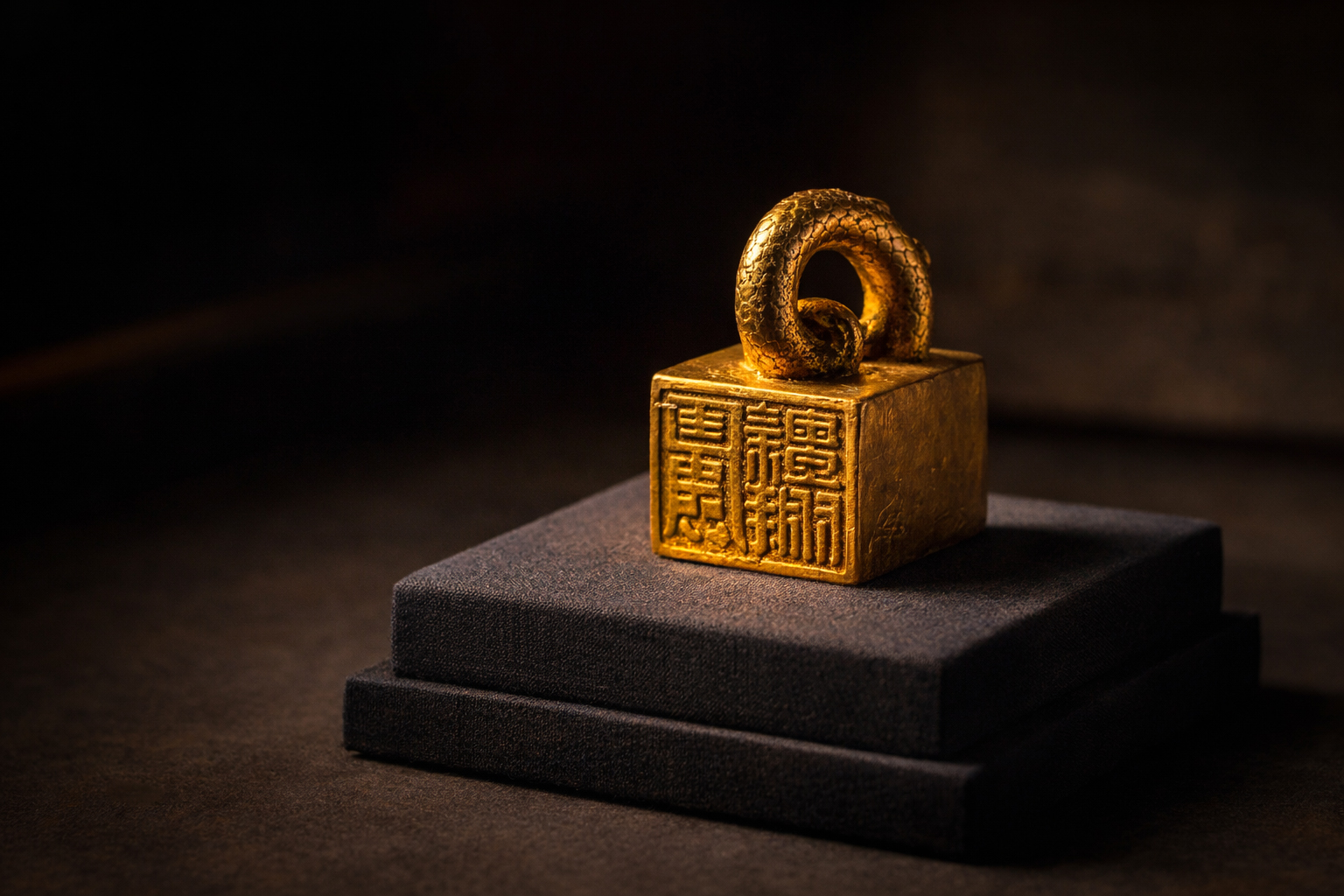
The famous gold seal associated with the King of Na is one of the most iconic symbolic starting points in the story of seals and Japan.
As centralized government took shape, seals became part of official administration. They marked authority and formalized state documents and commands.
Seal use continued within court and official document culture, even as handwriting, style, and other forms of documentary elegance also developed.
Warrior governments relied heavily on written proof, including stylized signatures and seals. Documentary legitimacy became more layered and politically important.
In an age of conflict, proving who issued an order and whether a document was genuine became vital. Seals and other marks of authority gained sharper significance.
As urban commerce flourished, seals spread beyond state and warrior use into the world of townspeople, shopkeepers, bookkeeping, receipts, and ordinary transactions.
As the modern nation-state formed, seals became deeply tied to administration, contracts, finance, registration, and documentary proof. The modern structure of registered seals took shape.
Seals became common not only in government but in banking, household life, company documentation, and everyday social procedure. Different seal roles became more familiar.
By the postwar high-growth decades, seals were deeply embedded in office routine, approvals, finance, administration, and ordinary paperwork. For many people, they felt inseparable from Japanese working life.
Computers, email, PDFs, and online systems spread, but paper procedure remained strong. Japan entered a long period where digital tools and heavy seal-based paperwork coexisted.
Remote work exposed the inefficiency of office visits made only for stamping. This triggered widespread public discussion and faster review of unnecessary seal requirements.
Electronic signatures, My Number Card, and JPKI-based identity systems spread further. Lightweight routine stamping declined as stronger digital systems grew more practical.
Modern hanko is no longer everywhere. But it remains alive in banking, real estate, government paperwork, registered seals, gifts, artistic seals, and other places where visible formality or cultural meaning still matters.
The timeline shows that hanko is not just a leftover custom. It began as a sign of power, became a tool of trade and trust, was institutionalized by the modern state, and is now being selectively redefined in the digital age.