Hanko (ハンコ)
A common everyday word for a seal or stamp. It can refer broadly to personal seals, registered seals, casual seals, and seals in general conversation.
Site glossary
The world of Japanese seals has its own vocabulary. Some terms are familiar in everyday life, while others belong more to administration, law, craft, calligraphy, or history. This glossary gathers the key terms used across hanko.co.jp and explains them in clear English.
A common everyday word for a seal or stamp. It can refer broadly to personal seals, registered seals, casual seals, and seals in general conversation.
A standard Japanese word for a seal. Depending on context, it can mean the physical stamp itself or seals in general.
A more formal word for seal or seal object, often used in historical, academic, legal, or craft contexts.
The seal impression left on paper. This refers to the result of stamping, not the seal object itself.
Vermilion seal paste used for stamping. The red color itself is part of the visual identity of Japanese seal culture.
The seal that has been officially registered with the municipality. It is treated as the strongest level of ordinary personal seal formality.
An everyday seal used for minor acknowledgments, receipts, or routine confirmation. It is not the formally registered personal seal.
The seal registered with a bank or financial institution for account-related procedures.
The municipal procedure by which a personal seal is officially registered. Once registered, it becomes the person’s jitsuin.
The official certificate proving that a registered seal impression is on file for a specific person in the municipal system.
A seal filed in advance with an institution, often used in banking or other formal procedural contexts.
A person’s written name. In modern Japan, signatures are common in international, hotel, courier, and digital contract contexts.
A digital method of showing identity, intent, and document integrity. It is one of the main modern alternatives to physical seals in formal workflows.

A public or governmental seal, especially in historical or institutional contexts.
A privately used seal, often contrasted with an official one.
A stylized personal mark historically used in warrior documents. It is not the same thing as a seal, but it belongs to the broader history of formal documentary marks in Japan.
An artist’s or calligrapher’s seal impression placed on a work. It signals authorship, completion, and artistic identity rather than administrative procedure.
The art of seal carving. It belongs to both craft and fine-art traditions and includes composition, script style, carving technique, and material character.
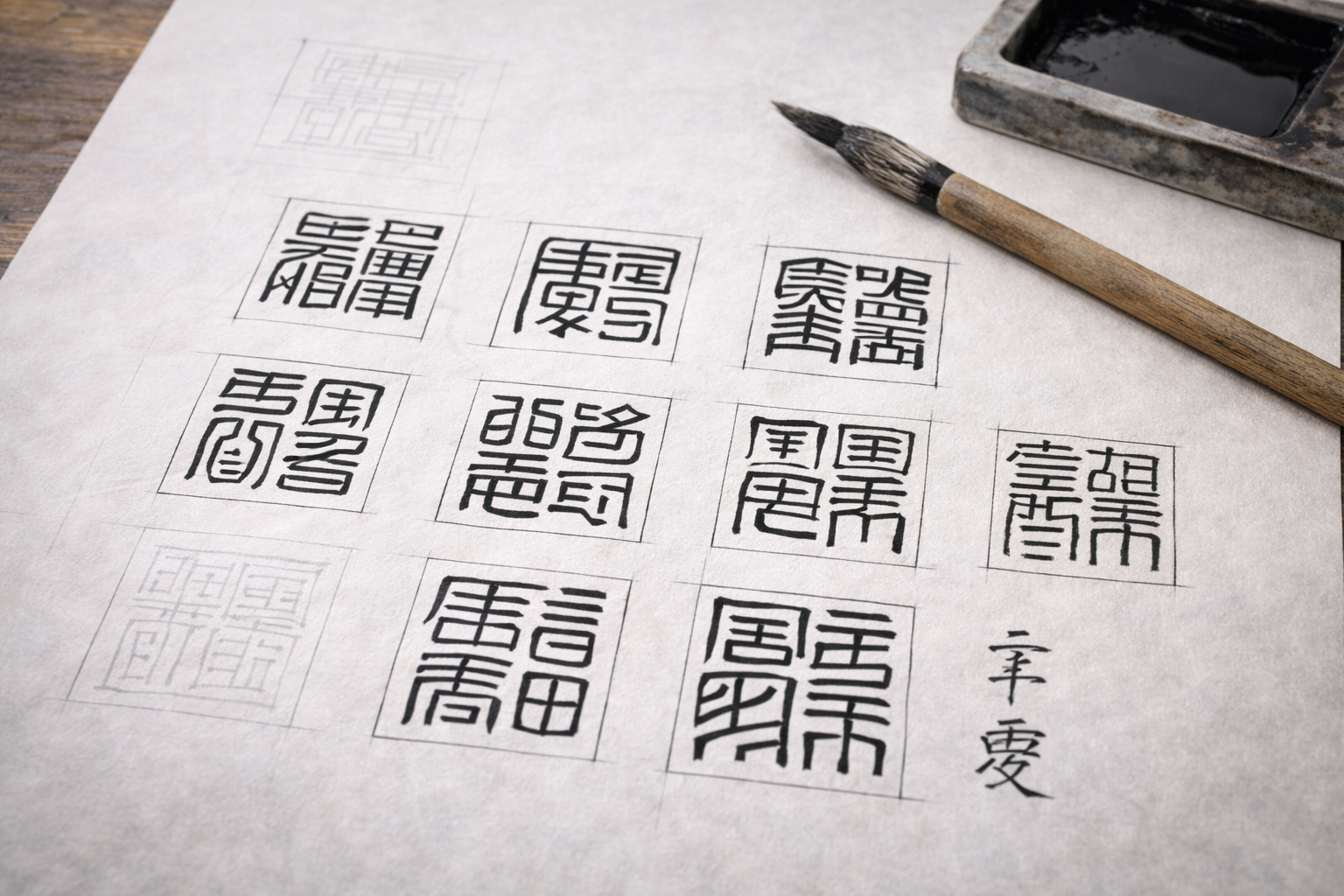
The draft or design layout prepared before carving the seal.
An ancient script style commonly used on seals because of its visual balance, formality, and classical atmosphere.
Two common seal-design styles. In hakubun, the characters appear white against the red impression. In shubun, the characters themselves appear in red.
The material from which a seal is made, such as wood, horn, stone, resin, or metal.
A container for storing the seal. It may be purely practical or may also have craft and gift value.
A richer, more paste-like vermilion medium often associated with artistic seals and rakkan use.
Japanese seal culture is made from overlapping worlds: tools, institutions, history, craft, personal identity, and formal proof. Once the vocabulary becomes clear, the larger picture becomes much easier to understand.